RMS value of Full wave bridge rectifier problem

Thread Starter

Rasan

Joined Feb 15, 2025
4
I have problem with output of Full wave bridge rectifier.
Source: 220V RMS, 50 Hz
Diode: 1N4007
Resistor: 680 ohm (load)
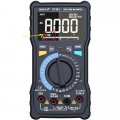
Multimeters: Hioki DT4256 and Zoyi (True RMS)
Is the RMS value the same after you pass it through a full wave bridge rectifer?
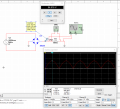
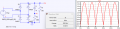
According to the figure below, I connected a resistor to 220V RMS via a diode bridge. I set the multimeter to AC mode and measured the voltage across resistor while applying alternating current as the voltage source.
results:
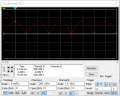
AC voltage across resistor: 94.9v , Vmax : 308v , Irms: 321 mA
Problem: Why is the voltage across the resistor in AC mode is 94 volts while according to the formula Vrms= Vmax/ √ 2 = 308 / √2 = 218v , but multimeter show 94.9v. On the other hand, The current flowing through the resistor (Irms) is 321mA, Vrms= R * Irms = 680 * 0.321 = 218v , but multimeter show 94.9v
 

Attachments

schmitt trigger

Joined Jul 12, 2010
2,056
Per the website you linked above, which explains it in great detail which I am not going to repeat, the answer is a resounding YES!
The RMS value of a rectified sinewave is identical to the original sinewave. Minus diode drops, which are very low.
Why the simulation shows a different value? Because who knows what assumptions the Proteus algorithm is using to calculate this value.
Have you actually built the circuit?
 

kiroma

Joined Apr 30, 2014
80
I agree with schmitt trigger, it's the same value minus diode voltage drops. And that's why I dislike multiSIM, which I stopped using several years ago. Use the circuit simulator (online) of Falstad.
 

crutschow

Joined Mar 14, 2008
38,401
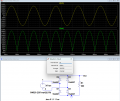
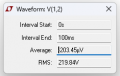
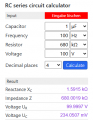
The waveform calculator in LTspice determines the correct values (below):

Falstad is a toy simulator and is used mainly to demonstrate how simple circuits work, not for serious design work.

1739642099666.png
1739642061457.png
 
Last edited:

Thread Starter

Rasan

Joined Feb 15, 2025
4
Per the website you linked above, which explains it in great detail which I am not going to repeat, the answer is a resounding YES!
The RMS value of a rectified sinewave is identical to the original sinewave. Minus diode drops, which are very low.
Why the simulation shows a different value? Because who knows what assumptions the Proteus algorithm is using to calculate this value.
Have you actually built the circuit?
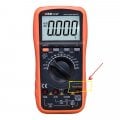
Thanks dear, hioki, Zoyi and VC97 multimeters show this value: 94.9v
 

Attachments

Danko

Joined Nov 22, 2017
2,153
Problem: Why is the voltage across the resistor in AC mode is 94 volts while according to the formula Vrms= Vmax/ √ 2 = 308 / √2 = 218v , but multimeter show 94.9v
Multimeter shows alternate part of voltage across resistor:
1739693108010.png
 
Last edited:

MrAl

Joined Jun 17, 2014
13,680
I have problem with output of Full wave bridge rectifier.
Source: 220V RMS, 50 Hz
Diode: 1N4007
Resistor: 680 ohm (load)
Multimeters: Hioki DT4256 and Zoyi (True RMS)
Is the RMS value the same after you pass it through a full wave bridge rectifer?
According to the figure below, I connected a resistor to 220V RMS via a diode bridge. I set the multimeter to AC mode and measured the voltage across resistor while applying alternating current as the voltage source.
results:
AC voltage across resistor: 94.9v , Vmax : 308v , Irms: 321 mA
Problem: Why is the voltage across the resistor in AC mode is 94 volts while according to the formula Vrms= Vmax/ √ 2 = 308 / √2 = 218v , but multimeter show 94.9v. On the other hand, The current flowing through the resistor (Irms) is 321mA, Vrms= R * Irms = 680 * 0.321 = 218v , but multimeter show 94.9v
Hi,

The bottom line is don't use an AC voltmeter for anything other than regular sine waves.

The short answer is that voltmeters that measure AC voltages are made for measuring sine waves and other symmetrical waves, and they have different ways of calculating the result. A full wave rectified sine wave is not symmetrical about zero volts so it could read differently on different meters.

What this boils down to is that you should not use an AC meter for measuring anything other than a sine wave unless you know the crest factor for that exact waveform, and you know how the meter interprets the waveform. Even that is not a very good method, but you can measure different waves and determine how your meter is measuring the voltage. Even then it's not the best idea because regular meters have frequency limitations which can also skew the reading when more complicated waves are being measured.

So from your measurements so far, your meter seems to be interpreting the wave as a sort of half cycle sine wave with positive peak at 308v and negative peak at 0v. If the meter takes the average of that we get 196v average, and half of that is 98v, which the meter then displays (with some error factor).
It is probable that your meter will always read this way for a full wave rectified sine, but I would not count on this for anything important.

This is one reason why many experienced technicians only use the AC scales for actual full sine waves even though crest factors for other waves are known, unless they use the same meters for the same type of measurements on a day to day basis and understand the limitations.
 

Thread Starter

Rasan

Joined Feb 15, 2025
4
Hi,

The bottom line is don't use an AC voltmeter for anything other than regular sine waves.

The short answer is that voltmeters that measure AC voltages are made for measuring sine waves and other symmetrical waves, and they have different ways of calculating the result. A full wave rectified sine wave is not symmetrical about zero volts so it could read differently on different meters.

What this boils down to is that you should not use an AC meter for measuring anything other than a sine wave unless you know the crest factor for that exact waveform, and you know how the meter interprets the waveform. Even that is not a very good method, but you can measure different waves and determine how your meter is measuring the voltage. Even then it's not the best idea because regular meters have frequency limitations which can also skew the reading when more complicated waves are being measured.

So from your measurements so far, your meter seems to be interpreting the wave as a sort of half cycle sine wave with positive peak at 308v and negative peak at 0v. If the meter takes the average of that we get 196v average, and half of that is 98v, which the meter then displays (with some error factor).
It is probable that your meter will always read this way for a full wave rectified sine, but I would not count on this for anything important.

This is one reason why many experienced technicians only use the AC scales for actual full sine waves even though crest factors for other waves are known, unless they use the same meters for the same type of measurements on a day to day basis and understand the limitations.
Thank you so match
Your answer is absolutely correct and professional. The interesting thing is that the multimeter and the simulator show the rms current value, right. While the current and voltage waveforms are similar.
 
Top