Replace Potentiometer with fixed resistor

ElectricSpidey

Joined Dec 2, 2017
3,336
A pullup resistor on the output of a 555 may have some use driving a signal load but little utility driving a power load.

Just what value resistor would you need to pull a 175mA load to the positive rail?

What kind of load would that resistor place on the 555 when the output is low?

Just design your circuit to deal with the voltage drop.

If you need to the rail output use a low power 555 or add a transistor to the output.
 

panic mode

Joined Oct 10, 2011
5,014
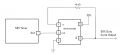
RL is a load if you like. this allows output to have full voltage swing. downside is that this type of load is connected to positive rail which is not always practical. you can also connect load between output and a negative rail. then your load is driven by top side transistor but voltage swing will be reduced by 1.5-2V. that may be fine for your needs ... or maybe you have a driver or buffer stage after it so this does not matter.
 

ElectricSpidey

Joined Dec 2, 2017
3,336
Well, if you want to be pedantic you did say...

" it's a pull-up resistor so the output of a standard BJT 555 goes all the way to the plus supply. "
 

Art Hall

Joined Jul 25, 2018
11
My comment here may be a little off-the-wall, so feel free to ignore me. There is a relatively simple way to shift the 50/50 duty cycle job to another chip. Ti makes a whole line of simple logic gates for when you only need one AND gate, or one OR gate, or in this case, one flip-flop. The Ti SN74LVC1G80 will do this. It's small, 5-pin chip, that can handle the 50% duty cycle. All you have to do is get the output frequency, (pulses) correct.

You will need to double the 555 output frequency since the flip-flop will halve the freq. Also, that chip may need a buffer for your load, which would, of course, add to the parts count. But it is a fairly simple way to handle the 50/50 duty cycle problem.

My 2-cents worth.

Ti Flip-Flop 50% output.png
 

crutschow

Joined Mar 14, 2008
38,533
Well, if you want to be pedantic you did say...

" it's a pull-up resistor so the output of a standard BJT 555 goes all the way to the plus supply. "
Okay, I should have said, "so the output goes to near the plus supply with a high impedance load, such as may be needed when driving a high-side P-MOSFET driver".
Is that better for your (not my) pedantic sensibilities?
 

ElectricSpidey

Joined Dec 2, 2017
3,336
I'm going to concede to crutschow that RL is a pullup resistor and not the load.

When I looked at the schematic, I totally missed the fact that the output was in fact "open".

I don't know why but I seem to be making these kinds of mistakes a lot these days.

So sorry to anybody I mislead or offended.
 

Thread Starter

sab201

Joined Nov 18, 2023
297
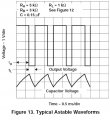
Initially I also thought that was the load resistor, normally "L" stands for load but I also saw in the manual that they gave a typical value of 1 kOhm to this R L. That is why I got this doubt and wanted to know what this resistor is for.
Screenshot_20240608-191158_Adobe Acrobat.jpg
 

Attachments

Top