Repair Low cost Function Generator

Thread Starter

kalemaxon89

Joined Oct 12, 2022
389
Was the problem just the wrong power supply?
I am ashamed to say this but yes, wrong power supply. I think however a dusting/cleaning of the "wheels" to vary frequency and offset should be given ... the signal shown to the oscilloscope wobbles a bit when I rotate them
 

Ya’akov

Joined Jan 27, 2019
10,235
I am ashamed to say this but yes, wrong power supply. I think however a dusting/cleaning of the "wheels" to vary frequency and offset should be given ... the signal shown to the oscilloscope wobbles a bit when I rotate them
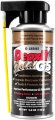
I would suggest you try Caig Deoxit Gold. It can sometimes work miracles. It comes in s spray can, like the link at 5% solution and in small brush applicator bottles of 100% Deoxit. Obviously, the spray is suitable for different things than the point application.

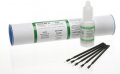
There is also D.W. Electrochemical Stabilant 22A but that is exceptionally costly and I am not sure the cost/benefit justifies it. Well, I am sure it doesn‘t in your application.


1695377105127.jpeg 1695377318538.jpeg
$19.99 vs $110.00
The spray version of Deoxit works as a cleaner, but I suggest you use a traditional contact cleaner first, then apply the Deoxit. The brush applicator of Deoxit and the Stabilant aren’t contact cleaners. They are enhancers. When Stabilant fist appeared, about 40 years ago, I was absolutely convinced about its efficacy by a test I did. Those were the days of Maglites as the best EDC light for your pocket. They used a couple of AA cells and a bi-pin grain of wheat style halogen lamp.

The switching mechanism was a spring loaded moving plate with a set of contacts. Tightening the flashlight bezel would push the plate down and out of contact with the mating contacts above it. Loosening the bezel did the opposite, turning the light on. After a relatively small amount of use, the flashlight would get flaky and flicker (this was common for most cylindrical cell powered lights of the time).

No matter how much cleaning or playing around with the contacts I did, the flicker remained a problem and I’d have to turn the light on and off, or slap it into the palm of my hand to get (temporary) relief. When we received the first samples of Stabilant, I was very skeptical. I worked in an audiophile gear store, and though we were quite careful and rigorous about selling things that could be proven to work and be worth the price paid, we were always being solicited by nonsense vendors.

The first thing I did was put a few of strategically placed drops on the contacts of my Maglite. To my utter surprise, the light lit noticeably brighter and without a hint of flicker! As far as I was concerned this was a miracle, because I had tried everything to make the flashlight reliable, And this was on recently cleaned contacts. I was sold, though the eye watering price did limit the applications.

Deoxit may not be quite as impressive but it has very similar effects, and costs far less. In any case, these are in the class of contact enhancers and will find an application in anything that produces audio or video because you can literally hear and see the difference (concerning contact noise).
 

Ya’akov

Joined Jan 27, 2019
10,235
I would suggest you try Caig Deoxit Gold. It can sometimes work miracles. It comes in s spray can, like the link at 5% solution and in small brush applicator bottles of 100% Deoxit. Obviously, the spray is suitable for different things than the point application.
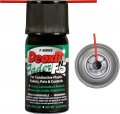
I nearly forgot. For potentiometers, there’s another product from Caig that is purpose made and worth the money

1695378675791.jpeg
Deoxit FN5 fader/potentiometer cleaner and lube. It’s designed for, and is safe to use on, all manner of variable resistors.
 

Thread Starter

kalemaxon89

Joined Oct 12, 2022
389
I would suggest you try Caig Deoxit Gold. It can sometimes work miracles. It comes in s spray can, like the link at 5% solution and in small brush applicator bottles of 100% Deoxit. Obviously, the spray is suitable for different things than the point application.

There is also D.W. Electrochemical Stabilant 22A but that is exceptionally costly and I am not sure the cost/benefit justifies it. Well, I am sure it doesn‘t in your application.


The spray version of Deoxit works as a cleaner, but I suggest you use a traditional contact cleaner first, then apply the Deoxit. The brush applicator of Deoxit and the Stabilant aren’t contact cleaners. They are enhancers. When Stabilant fist appeared, about 40 years ago, I was absolutely convinced about its efficacy by a test I did. Those were the days of Maglites as the best EDC light for your pocket. They used a couple of AA cells and a bi-pin grain of wheat style halogen lamp.

The switching mechanism was a spring loaded moving plate with a set of contacts. Tightening the flashlight bezel would push the plate down and out of contact with the mating contacts above it. Loosening the bezel did the opposite, turning the light on. After a relatively small amount of use, the flashlight would get flaky and flicker (this was common for most cylindrical cell powered lights of the time).

No matter how much cleaning or playing around with the contacts I did, the flicker remained a problem and I’d have to turn the light on and off, or slap it into the palm of my hand to get (temporary) relief. When we received the first samples of Stabilant, I was very skeptical. I worked in an audiophile gear store, and though we were quite careful and rigorous about selling things that could be proven to work and be worth the price paid, we were always being solicited by nonsense vendors.

The first thing I did was put a few of strategically placed drops on the contacts of my Maglite. To my utter surprise, the light lit noticeably brighter and without a hint of flicker! As far as I was concerned this was a miracle, because I had tried everything to make the flashlight reliable, And this was on recently cleaned contacts. I was sold, though the eye watering price did limit the applications.

Deoxit may not be quite as impressive but it has very similar effects, and costs far less. In any case, these are in the class of contact enhancers and will find an application in anything that produces audio or video because you can literally hear and see the difference (concerning contact noise).
Thank you so much for the informations! Very kind
 
Top