Reflow "burn" pcb silkscreen

Thread Starter

jmb.pt

Joined Aug 5, 2025
4
Hello

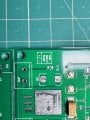
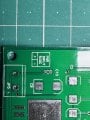
I built a small oven for soldering PCBs using the reflow process. The oven is controlled by Reflow Master Pro. The profile I'm using seems good for soldering, but when the boards come out of the reflow process, the white silkscreen has become more dark and loses its shine. Is this normal, or is there a way to prevent it? I'm using the Chipquick TS391SNL solder paste.
Thank you.

IMG_0503.jpgIMG_0499.jpgIMG_0498.jpg
 

activerfid

Joined May 30, 2020
31
Some discolouration is normal, though you could reduce the max temperature to say 230C as the paste melts at 217-220C. Difficult to see from the photo, but the paste looks not to have flowed properly (the paste may be defective or wet) and / or the pads may have poor surface finish or some corrosion. Perhaps try a lower temperature paste (180C) and ensure the boards are not sitting on a flat base in the oven (needs air circulation underneath). There are silk-screen methods which reduce discolouration but they tend to be too expensive for small runs.
 

Thread Starter

jmb.pt

Joined Aug 5, 2025
4
Some discolouration is normal, though you could reduce the max temperature to say 230C as the paste melts at 217-220C. Difficult to see from the photo, but the paste looks not to have flowed properly (the paste may be defective or wet) and / or the pads may have poor surface finish or some corrosion. Perhaps try a lower temperature paste (180C) and ensure the boards are not sitting on a flat base in the oven (needs air circulation underneath). There are silk-screen methods which reduce discolouration but they tend to be too expensive for small runs.
Thank you very much.
 

du00000001

Joined Nov 10, 2020
189
It's normal that some volatile organic components of soldermask and/or silkscreen evaporate during reflow. This can affect the optimal appearance. A change of color may also happen - either as a result of the beforementioned evaporation or simply as an effect of temperature. As long as the color does not change to brown or black there's little to worry about.
 

Thread Starter

jmb.pt

Joined Aug 5, 2025
4
It's normal that some volatile organic components of soldermask and/or silkscreen evaporate during reflow. This can affect the optimal appearance. A change of color may also happen - either as a result of the beforementioned evaporation or simply as an effect of temperature. As long as the color does not change to brown or black there's little to worry about.
Thank you very much.
 

panic mode

Joined Oct 10, 2011
4,864
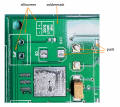
where is the example of the burn or discoloration that was concerning you? can you highlight it in the photos?

silkscreen is the white paint marks used to show text and bounds of parts
soldermask is the green paint covering most of the PCB surface

pads are bare metal. in this case they are silver (tin) in color because this board is done using HASL finish.

1754685090918.png
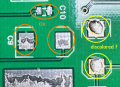
so the only thing that looks discolored are the solder pads. before soldering they are silver. after soldering they appear yellow.
1754685469125.png

reason for this is type of soldering materials or possibly soldering process that you use. most likely it is the crust of some residue. to confirm, try scratching it off or dissolving it with Q-tip dipped in alcohol.
 

Thread Starter

jmb.pt

Joined Aug 5, 2025
4
where is the example of the burn or discoloration that was concerning you? can you highlight it in the photos?

silkscreen is the white paint marks used to show text and bounds of parts
soldermask is the green paint covering most of the PCB surface

pads are bare metal. in this case they are silver (tin) in color because this board is done using HASL finish.

View attachment 353900
so the only thing that looks discolored are the solder pads. before soldering they are silver. after soldering they appear yellow.
View attachment 353901

reason for this is type of soldering materials or possibly soldering process that you use. most likely it is the crust of some residue. to confirm, try scratching it off or dissolving it with Q-tip dipped in alcohol.
Hi.
Thanks for your response.
The problem is on silkscreen (white paint), unfortunately is not much perceptible on the fotos because is only loss of whiteness and shine that existed before the reflow process. But as said on the previous responses, there is normal.
I had never soldered a PCB using this process and so I thought that the paint used would be resistant to the process and would not undergo any changes and so when I saw this result I thought that I might be doing something wrong.
Regards.
 
Top