Radio communication matter

Thread Starter

EXCodeX

Joined Jun 18, 2012
12
need a help to solve the following problem

LOS communication link should be established between two cities where 300km apart. The effective hieghts of the transmitting and the receiving antenna are 150m and 75 m respectively.
the repeater antenna has a maximum effective hieght of 100m. determine the minimum number of repeaters required.

thnks:)
 

Thread Starter

EXCodeX

Joined Jun 18, 2012
12
hi..
mmmmmmmm thanks a lot bertus for the reply.. can u give me few hints to solve this ?:) coz this s bit urget :confused:
 

bertus

Joined Apr 5, 2008
23,001
Hello,

In a homework question, they are assuming that the radio waves go in a straight line.
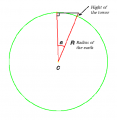
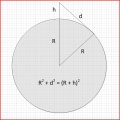
How to calculate the distance from a tower on a sphere like the earth to the horizon and from that point to the next tower?

Bertus
 

Thread Starter

EXCodeX

Joined Jun 18, 2012
12
yap this is a homework questoion... Bt i am still failed to solve it. What is the equestion that should be applied? :confused:
 

Kermit2

Joined Feb 5, 2010
4,159
Just to get you in the Ballpark.

One microwave Link carrying Television programming a distance of 40 miles needed one repeater site. Similar antenna tower heights too. As stated, it depends on the freq very much also.

I worked as an engineer for a TV station before moving to Houston.
 

Audioguru

Joined Dec 20, 2007
11,248
The distance between repeaters depends a lot on the sensitivity of the receiver.
A cheap receiver cannot pickup a strong signal across a narrow street.
 

KJ6EAD

Joined Apr 30, 2011
1,581
Last edited:

WBahn

Joined Mar 31, 2012
33,137
The answer is going to depend a lot on what course the question is covering. For instance, is it a real basic course (at least on this material) that is just looking at true laser-beam type line of sight without worrying about power and loss and refraction and such? Or has the material covered Fresnel zones? Has obstructions and terrain been touched on, or just a simply perfectly-smooth Earth model at this point. Or what?

Assuming the laser-beam over glass-marble Earth, consider the following questions:

Q1) How far away is the horizon for an antenna X feet high?

Q2) So, how far is the horizon for your transmitter, repeater, and receiver, respectively?

Q3) How far can the transmitter be away from the receiver and still see it?

Q4) How far can the transmitter be from a repeater and still see it?

Q5) How far can a repeater be from another repeater and still see it?

Q6) How far can a repeater be from the receiver and still see it?
 

WBahn

Joined Mar 31, 2012
33,137
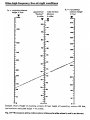
For old timers - remember the nomogram?
I always felt that if you were comfortable enough with the material to construct a nomogram, then you truly had an understanding of the principles. Of course, that's a bit simplistic, but I think there is something to it.
 

KJ6EAD

Joined Apr 30, 2011
1,581

"You can lead a horse to water, but you cannot make him drink."

Part of the process of learning anything is being able to recognize when a question has been thoroughly answered. Have you read the course material, researched the concepts presented, read the forum responses and looked at the links given? If not, you're not facilitating your own education, just looking for an easy answer.
 

mlog

Joined Feb 11, 2012
276
An approximate rule of thumb is to use Range = 1.41 x √h, where h is height in feet and Range is in miles. You can convert units or you can use for kilometers, R = 4.1 x √h, where h is in meters. This is slight farther than the geometric line of sight. Range is the "radio wave" line of sight.

For example, if your transmitter antenna is 100 ft, then the range would be 14.1 miles. If the receiving antenna was also at the same height, it would add an additional 14.1 miles for a total path of 28.2 miles. You can do the same thing by adding repeaters between the two end points. It's best to draw a picture to keep track of your distances.
 

WBahn

Joined Mar 31, 2012
33,137

"You can lead a horse to water, but you cannot make him drink."
My personal variant is:

"You can lead a student to water, but it's still a felony to drown them."

My favorite quote, ostensibly from Jaime Escalante, is

"Students will rise to the level of your expectations."

My personal corollary is:

"... and seldom much higher."
 
Top