PWM based HV power supply

Thread Starter

Tutor88

Joined Feb 8, 2023
306
I am designing an HV power supply for personal experimentation (although it could also be used for classroom demonstrations upon approval), which uses a PWM module, a MOSFET amplifier and a flyback transformer. I have put these items into a block diagram in the graphic below.

My suggestions for its output parameters are: peak output voltage: 1-10kV, max output current: 100mA, max power ~400W. Someone might know of an online video/project describing how best to do this. I have looked on Maker.pro but haven't found a clear one yet. Perhaps the 'MOSFET' part needs to be a half-bridge inverter, depending upon the required output?

HV Supply.jpeg

My main queries are:

1. Which MOSFET is most suitable for this application?

3. Does the MOSFET amplification part need any other components to be effective?

3. If using to demonstrate AC arc discharges rather than DC ones, what modifications are required to generate an AC output?

Thanks
 
Last edited:

Irving

Joined Jan 30, 2016
5,109
Hmmm... maybe you should start by understanding the details of designing such a device by following a few design guides for isolated flyback AC/DC converters such as this one from Rohm, rather than relying on some random examples from the web. Rather than generate the HV directly you would typically use a Cockcroft–Walton voltage multiplier stack as the DC rectifier on the secondary side. Designing a 12V -> 500V converter with a 10 stage multiplier would give 5kV output

For an AC discharge, typically the HV DC would be used to drive a Tesla Coil.
 

Thread Starter

Tutor88

Joined Feb 8, 2023
306
Ok, thank you, that seems a useful link to explore but is AC-DC rather than the desired 12V DC-DC, or even DC-AC that I need. I need the output to be adjustable and presume that could be done with the PWM frequency? Your suggestion sounds like a fixed voltage output, or would one just adjust the converter output using the PWM frequency?
 

Thread Starter

Tutor88

Joined Feb 8, 2023
306
That all looks very useful and will provide some helpful details. Thanks.
I have decided to use a TL494 PWM chip instead of an external module and will draw up a circuit diagram as a prelude to an actual schematic and share that for comment. I will endeavour to build in various safety features (e.g. cap discharging) and suitable clearances, but I expect there will be elements I will miss. I aim to get that up here later in the coming week.
 
Last edited:

Pyrex

Joined Feb 16, 2022
502
1.You said that you will need 400W of power, but from the specifications of 1000V and 100mA we get that you will need 1000W.
Using a 12V power source will require at least 90A of current ( I=P/U) . Why did you choose such a low voltage power source?

2.The output voltage range is very wide, so it is better to use a half bridge topology, not a flyback

3.If you want to get AC voltage at the output, then the block diagram should be as follows:

12V DC power source--- step down ( buck ) regulator --- half bridge inverter--- step-up transformer--- output

And if you want to get DC voltage at the output, add a bridge rectifier at the transformer output.
Buck regulator and inverter can be made using controllers, there are many types of those, and one of the most common is the TL494
 

Thread Starter

Tutor88

Joined Feb 8, 2023
306
1.You said that you will need 400W of power, but from the specifications of 1000V and 100mA we get that you will need 1000W.
Using a 12V power source will require at least 90A of current ( I=P/U) . Why did you choose such a low voltage power source? The LT494 needs a minimum of 7V to operate.

2.The output voltage range is very wide, so it is better to use a half bridge topology, not a flyback

3.If you want to get AC voltage at the output, then the block diagram should be as follows:

12V DC power source--- step down ( buck ) regulator --- half bridge inverter--- step-up transformer--- output

And if you want to get DC voltage at the output, add a bridge rectifier at the transformer output.
Buck regulator and inverter can be made using controllers, there are many types of those, and one of the most common is the TL494
I agree that the output current is far too high an estimate. Perhaps it should be more like 10mA.

Why would you use a buck converter which would lower the supply voltage even further? Is that to increase the supply current?

I am proposing to use a half-bridge amplifier to feed a step up transformer, such as a flyback.

Let me produce a suggested circuit which can then be refined.
 

Pyrex

Joined Feb 16, 2022
502
If we remove the buck converter from the circuit and regulate the output voltage with a half-bridge inverter, then by applying a low voltage to the output, we will get short high voltage pulses and long pauses.
The average voltage during the period will be small, as was setted, but in essence it will only be a highly distorted voltage, the amplitude of which will be large.
 

Thread Starter

Tutor88

Joined Feb 8, 2023
306
If we remove the buck converter from the circuit and regulate the output voltage with a half-bridge inverter, then by applying a low voltage to the output, we will get short high voltage pulses and long pauses.
The average voltage during the period will be small, as was setted, but in essence it will only be a highly distorted voltage, the amplitude of which will be large.
I don’t fully get that but it seems you are talking about regulating the output for stability?

Why would one be applying a low voltage to the output?
 

Pyrex

Joined Feb 16, 2022
502
"My suggestions for its output parameters are: peak output voltage: 1-10kV"

The step-up transformer is to be designed to produce 10kV.
If you set the output voltage to 1 kV, you will need to apply short pulses ( 1/10 of period ) to the step-up transformer, and you will get the same short pulses at the output, only with a larger amplitude.
This is the principle of operation of the PWM circuit
 

Thread Starter

Tutor88

Joined Feb 8, 2023
306
"My suggestions for its output parameters are: peak output voltage: 1-10kV"

The step-up transformer is to be designed to produce 10kV.
If you set the output voltage to 1 kV, you will need to apply short pulses ( 1/10 of period ) to the step-up transformer, and you will get the same short pulses at the output, only with a larger amplitude.
This is the principle of operation of the PWM circuit
Ok, I get that so how will I obtain an ac sine wave at the output using PWM to the transformer primary? I presumed that the output kV, and hence available output current, was a function of the PWM duty cycle.
 

Pyrex

Joined Feb 16, 2022
502
If you need a sinusoidal output voltage, it will not be so easy to generate it.

If we use the block diagram I suggested in the first post, we will get a square-shaped voltage at the output.But its shape will still be more sine-like than without the buck.

To obtain a true sine wave, a Baxandall inverter can be used in a half-bridge cascade.This type of inverter operates with a sinusoidal output voltage, and they have been widely used to adjust the backlight of televisions and monitors. Buck regulator would also be needed with a Baxandall inverter
 

Thread Starter

Tutor88

Joined Feb 8, 2023
306
If you need a sinusoidal output voltage, it will not be so easy to generate it.

If we use the block diagram I suggested in the first post, we will get a square-shaped voltage at the output.But its shape will still be more sine-like than without the buck.

To obtain a true sine wave, a Baxandall inverter can be used in a half-bridge cascade.This type of inverter operates with a sinusoidal output voltage, and they have been widely used to adjust the backlight of televisions and monitors. Buck regulator would also be needed with a Baxandall inverter
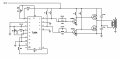
I shall explore that. So the sine wave that a Baxandall produces will be adjustable, just as the quasi sine wave from a 'regular' DC-AC inverter will be? Actually, I am not fully sure yet if the pure sine wave is really required since many of the applications for this flexible power supply will be to create arcs across air spark gaps, but might also be used to trigger oscillations in LC circuits. Anyway here is my just drawn circuit for a regular DC-AC inverter. This doesn't include any buck converter yet as I have not got my head around what it would do. If one were inserted into the 12V supply line, then won't that make the MOSFETs unable to operate? What is the suggested output voltage from it?

Also how would a flyback transformer differ in its output from some other type of transformer? I am thinking of using this one: https://www.hv-experimental.com/product/flyback-transformer-ac.

I expect the power transistors are not beefy enough and I'm not sure which FET would be best.

Thank you for your feedback.

DC-AC Inverter - 1.jpeg
 
Last edited:

Pyrex

Joined Feb 16, 2022
502
The term "flyback" can refer to both a type of inverter and a transformer.
It looks like the transformer you showed here could be used .

The circuit need to be upgraded. The top Mosfet will not drive as it should.

Here is another schematic, it provides better Mosfet control. Capacitors and RC filter are also provided in the +12V rail.
It would be advisable to test this circuit in a simulator before making it.
Since 10kV and 10mA output is required, this will be 100W of power. At first glance, Mosfet transistors IRFZ44N (55V, 49A) should fit.

https://www.allelcoelec.com/blog/Co...ml6esEnKSa_Faa8gnFuGms3uNpp3-mNi-3DLk3nSKZ5dX
 

Thread Starter

Tutor88

Joined Feb 8, 2023
306
The term "flyback" can refer to both a type of inverter and a transformer.
It looks like the transformer you showed here could be used .

The circuit need to be upgraded. The top Mosfet will not drive as it should.

Here is another schematic, it provides better Mosfet control. Capacitors and RC filter are also provided in the +12V rail.
It would be advisable to test this circuit in a simulator before making it.
Since 10kV and 10mA output is required, this will be 100W of power. At first glance, Mosfet transistors IRFZ44N (55V, 49A) should fit.

https://www.allelcoelec.com/blog/Co...ml6esEnKSa_Faa8gnFuGms3uNpp3-mNi-3DLk3nSKZ5dX
Great I will look later and tomorrow. Is there already a SPICE circuit for this for me to do simulations with?
 

Thread Starter

Tutor88

Joined Feb 8, 2023
306
I won't be able to help you with SpiceLT simulation because I don't have much experience myself
No worries. You have been very helpful with your suggestions. I will update my diagram and post later. I expect I will have a couple of queries.
 

Thread Starter

Tutor88

Joined Feb 8, 2023
306
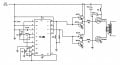
So here is the second design, although I have various comments and queries about it.

HV Supply Design 2.jpeg

Of note is that some of the pin numbers are different compared to the other drawing, namely the pins numbers for E1 and E2. I have revised them but will need to check the actual pinout of whatever brand I get.

My choice of RT and CT are for my frequency range, so those will be different anyway.

My main queries are firstly that the flyback I am planning to use does not have a centre tap on the secondary, so I have redrawn it as best I can to match without one. Please can you check that it still makes sense.

I was wondering why the duty is now being adjusted via pins 1, 13,14 & 15 and not pin 3 as before?

What do you think the 10uF and the 470uF near the output stage should be rated at? 400V?

There is no buck converter, so why is that no longer needed?

Is the voltage output adjusted by a combination of modifying the frequency and the duty, or just the duty?

You seem very familiar with this type of supply, so have you built similar ones before?

Thank you.
 

Pyrex

Joined Feb 16, 2022
502
to Tutor

1. Everything with 494' pins number is OK on both diagrams. Take into account, in one drawing collectors are used, in other- emitters
2. duty cycle can be varied in a different ways for 494' , output voltage-average- depends on duty. Read 494' datasheet for reference
3. capacitors 10uF and 470 uF are rated to 25V.
Replace 10uF to 47uF for better performance, and add a 0.1uF ceramic capacitor in parallel to each of them
4 .yes, I have made a similar inverter before, I needed a low power, galvanically isolated power source
5.You made a mistake in the schematic, near the Mosfets. Connect them as shown in the link I provided, with the middle tap on the transformer. Another mistake concerning 10 Ohm resistor- refer to the link i provided.

Be careful, and don't rush, here is the circuit diagram, it must be accurate

6. add resistor in series with pin 9 , 47 Ohm is OK. Same with pin 10
7. concerning the transformer. As I understand it, the manufacturer must wind the primary winding of this transformer.
The winding is easy to wind - it consists of only about 3-5 turns, the wire diameter is about 1 mm, it is wound with double wire so that both sides of the winding are symmetrical.
 

Thread Starter

Tutor88

Joined Feb 8, 2023
306
to Tutor

1. Everything with 494' pins number is OK on both diagrams. Take into account, in one drawing collectors are used, in other- emitters
2. duty cycle can be varied in a different ways for 494' , output voltage-average- depends on duty. Read 494' datasheet for reference
3. capacitors 10uF and 470 uF are rated to 25V.
Replace 10uF to 47uF for better performance, and add a 0.1uF ceramic capacitor in parallel to each of them
4 .yes, I have made a similar inverter before, I needed a low power, galvanically isolated power source
5.You made a mistake in the schematic, near the Mosfets. Connect them as shown in the link I provided, with the middle tap on the transformer. Another mistake concerning 10 Ohm resistor- refer to the link i provided.

Be careful, and don't rush, here is the circuit diagram, it must be accurate

6. add resistor in series with pin 9 , 47 Ohm is OK. Same with pin 10
7. concerning the transformer. As I understand it, the manufacturer must wind the primary winding of this transformer.
The winding is easy to wind - it consists of only about 3-5 turns, the wire diameter is about 1 mm, it is wound with double wire so that both sides of the winding are symmetrical.
That wasn’t a mistake it just I wasn’t aware I could have a centred tapped primary. Now I see that I have to wind the primary myself so I can make it centre tapped. Is the voltage ratio the secondary windings number over each half of the primary or the total primary number?

I’m not clear what is wrong around the 10 Ohm resistor. What’s the difference between my 12V supply (VCC) and the other 12V shown?

Did you add another circuit image or link since nothing is showing or linking?

What is the maximum power that this can output?

Let me add all the changes in the morning and send over for a ‘final’ check.

I’m hoping to demonstrate in a class (17year olds) some interesting electrical phenomena but it is also for some personal experimentation with resonant circuits.
 
Last edited:
Top