Prototyping - component and connection stability

Thread Starter

sirch2

Joined Jan 21, 2013
1,069
So what do you do for prototyping? I'm asking because I currently have a prototype on a breadboard and it is quite sensitive to having the components jiggled. I think I know the available options, wire wrap, strip/vero board, make a PCB and I've done all those in the past except wire wrap, which seems expensive. I'm still at the stage where I might want to swap out some components so I'd prefer not to do too much soldering. Are there any other options?

I suppose a hybrid might be an option but the sensitive components are amongst those that I might want to change. And because someone is bound to ask, its a bridge circuit driven by a constant current source connected to an instrumentation amp. which drives a bargraph display.
 

Ian0

Joined Aug 7, 2020
13,097
It depends on lots of things, such as: How confident are you that it will work? Who is paying for the prototypes? Do you have to pay import tariffs?
I've designed lots of circuits in my career, so I've a pretty good idea what will work, and what only might work. If it only might work, I simulate in on SPICE.
I design everything in surface mount, so swapping a few resistors is never much of a problem, and the company I work for pays for the prototypes, so I go straight for a pcb. That eliminates any potential problems due to changes in layout going from breadboard to pcb at a later date.
So - my suggestion: design in on KiCad or something similar that checks connectivity, design it in surface mount with not-to-small components and send it off to China and have a few boards made.
You could even post the circuit here and let a few people give you their opinions as to whether it might work (but they may disagree with each other)
 

dl324

Joined Mar 30, 2015
18,219
So what do you do for prototyping?
Mainly solderless breadboards and some homemade PCBs.
I'm asking because I currently have a prototype on a breadboard and it is quite sensitive to having the components jiggled.
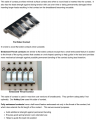
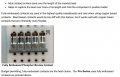
A picture of the parts sensitive to jiggling would be helpful. Are you using #22 wires on boards that don't have contacts that have been abused by inserting leads/wires that were too large?
 

Thread Starter

sirch2

Joined Jan 21, 2013
1,069
It depends on lots of things, such as: How confident are you that it will work? Who is paying for the prototypes? Do you have to pay import tariffs?
I know the circuit works, its nothing complex, as I said a bridge with constant current source and Instrumentation Amp, and its working on the breadboard, its just about tweaking some bridge and op amp parameters. I'm asking a bout prototyping options...
 

dl324

Joined Mar 30, 2015
18,219
No, I wouldn't do that and the breadboard is fairly new
If you're not using #22 wires, what are you using? I've found that anything smaller is more susceptible to intermittent connections that pull out too easily. Solderless breadboards were designed for #22 solid wire.

New, low-quality boards can be problematic. From my experience, it's usually difficulty inserting wires/components because the clips aren't properly aligned with the holes in the plastic substrate. Realigning them usually fixes the problem. However, that doesn't change the fact that inexpensive solderless breadboards use less expensive clips.

1765810922994.png
1765810945945.png

A picture of the parts sensitive to jiggling would be helpful.
 

ElectricSpidey

Joined Dec 2, 2017
3,312
Personally, I think there is a sort of semantic issue here, I consider the breadboarding phase as the part of the design process and the "prototype" as the first finished product.

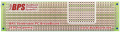
But anyway, to answer your question I prefer to use protoboards with power rails specifically designed to mount ICs.

An example such as this if you wish to directly convert your breadboard layout.

1765817794788.png

Some people prefer stripboard or single hole, but I prefer this type, and BPS offers a number of different models.

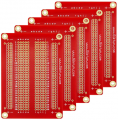
Gikfun also has some boards I like.

1765818309444.png
 
Top