Protect AC\DC Module from 280VAC

Thread Starter

alpesh_borad

Joined Apr 21, 2017
8
Hello,

I am using HLK-PM01 Module to Convert from 230VAC to 5VDC@0.6A. Input voltage range of HLK-PM01 is 90VAC-264VAC.
Now in field, the Input AC Voltage is varies from 230VAC to 280VAC and the Module is damage.

Can anyone help me how to protect the Module from 280VAC?

Regards,
Alpesh.
 

MisterBill2

Joined Jan 23, 2018
27,513
Another choice, which is more expensive but works very well, is to use a SOLA constant voltage transformer. They also protect against spikes in the incoming power, and they keep harmonic energy out as well.
 

Thread Starter

alpesh_borad

Joined Apr 21, 2017
8
Hello,
Thanks to all for the Reply.

Actually I want to go with MOV solution. So please guide me how to use MOV?

Regards,
Alpesh.
 

dendad

Joined Feb 20, 2016
4,637
I dout an MOV will do what you want. They are ok for tranzients but it sounds like your supply volts are high, not just a noise spike. You need to lower the volts with a step down transformer or a buck transformer.
An MOV will burn with prolonged over volts.
 

Norfindel

Joined Mar 6, 2008
326
I suppose that you could put a fuse on the mains wire, and then the MOV across both of the mains wires, but you would need to change the fuse every time there is an overvoltage. I know that there are some components called "resettable fuse", maybe you want to research into them, and see if they will work in this case, replacing the standard fuse.
The device won't work while there is an overvoltage, however. With the transformer, it will.
 

MisterBill2

Joined Jan 23, 2018
27,513
The over voltage condition described in this thread is not a typical transient spike, it is caused by fundamental flaws in the distribution system and thus the high voltage condition lasts for many minutes at a time, probably even hours at a time occasionally. Thus the methods for preventing transient damage are not suitable. A step-down autotransformer would be able to lower the whole range, and so it would bring the range into what the equipment could handle. An adequate active regulator could also work but it would be more complex than the application requires.
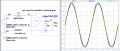
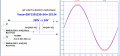
I am not familiar with the device tagged as "U1" in post #8 does, or what the whole illustration is supposed to show. An explanation would be very useful, since my ability to see into the mind of the presenter is very poor. In fact, I have no mind reading ability at all. So please explain.
 

Bordodynov

Joined May 20, 2015
3,431
I applied a small voltage due to the voltage drop across the restrictive diode. As a result, the input voltage of the Converter is reduced. The voltage drop is almost independent of the current consumption. In fact, the limiting diode in this case consists of two Zener diodes included counterclockwise.
The power dissipation of the limiting diode is ~700 mW.
 

Bordodynov

Joined May 20, 2015
3,431
Also I showed three voltages: green is ~280V (amplitude 400 V), blue is ~265V and red is reduced voltage. I also drew a rectifier bridge and a capacitor. Typically, in low-power power supply units such a scheme is used, not counting the noise filtering elements.
 

Thread Starter

alpesh_borad

Joined Apr 21, 2017
8
The over voltage condition described in this thread is not a typical transient spike, it is caused by fundamental flaws in the distribution system and thus the high voltage condition lasts for many minutes at a time, probably even hours at a time occasionally. Thus the methods for preventing transient damage are not suitable. A step-down autotransformer would be able to lower the whole range, and so it would bring the range into what the equipment could handle. An adequate active regulator could also work but it would be more complex than the application requires.
I am not familiar with the device tagged as "U1" in post #8 does, or what the whole illustration is supposed to show. An explanation would be very useful, since my ability to see into the mind of the presenter is very poor. In fact, I have no mind reading ability at all. So please explain.
Hello,

Thanks you Very Much for the Support to all.

OK. You mean to say if the higher voltage is coming for long time than the MOV is not used. Right?.
So please suggest the Step Down Transformer Part# to Step down from 100VAC - 280VAC to 100VAC approximately for my reference.

Regards,
Alpesh.
 

MisterBill2

Joined Jan 23, 2018
27,513
OK, to decide on a transformer first the required power needs to be known. In post#1 you mention the output of the supply as 5 volts at 0.6 amps, which is 3 watts output. Allowing an adequate margin of safety, a transformer should be at least ten watts rating, which is quite small for a transformer. as Max suggested in post #4 would be useful, You would use it in the buck mode to reduce the voltage by 25%, or 20% if that option is available. Most buck transformers come with adequate instructions for connection. If not, others here can create a drawing for you.
 

crutschow

Joined Mar 14, 2008
38,504
If it's not clear, the advantage of a buck-boost type transformer connection is that it is smaller than a standard transformer connection for a given output current.

But note that whatever transformer you use it must be rated for at least 280VAC, otherwise it can saturate and burn up.
 

MaxHeadRoom

Joined Jul 18, 2013
30,658
A couple of advantages to a Buck transformer is that readily available voltages versions are common, for example a readily available 230v-24v secondary transformer used in the buck mode.
The other advantage is that as the primary rises the secondary correction voltage drops accordingly.
Also the earth ground reference is maintained, although this would be trivial to re-reference.
Max.
 
Top