Printed Circuit Board Fault

Thread Starter

JBASport

Joined Jan 15, 2019
41
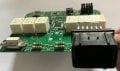
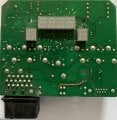
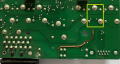
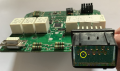
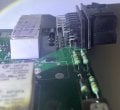
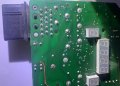
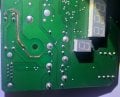
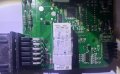
I have a ride on lawnmower that has developed a fault & it would appear the fault lies within the PCB. A new PCB is extremely expensive, so not something I reallt want to do. One of the PCB traces seems to have lifted off the board as can be seen in the image attached. Being a novice I wonder if there any suggestions on what to look for on the board to fault find?PCB 1.jpgPCB 2.jpgPCB 2.jpgPCB 3.jpg Many thanks, Terry

 

panic mode

Joined Oct 10, 2011
4,864
that is a classic result of overcurrent. whatever caused it is still out there waiting to fry the next board.
burned trace is easy to patch up with a wire and soldering iron. i would not be surprised if relay is still ok but would replace it anyway,
1751293490161.png
 
Last edited:

DickCappels

Joined Aug 21, 2008
10,661
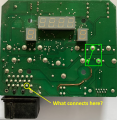
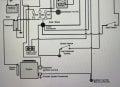
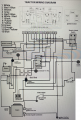
Can you tell where that burnt trace is in the circuit? Looks very sophisticated, so ut must be a nice mower.

I hope you appreciate the humor in this:
 

panic mode

Joined Oct 10, 2011
4,864
i would not give up so easily. problem is clearly on the load side of the relay. that may not be the only problem but it is THE problem.
top pad is relay common or working contact. it is connected to same power rail as the other relays. the two pads near it are relay coil. the bottom two are NO and NC contacts. so whatever fried was on the load side that relay was powering, not logic side or relay coil. I would say it is a good chance that onboard electronics may still be ok. i would try tracing what was the load that this relay was driving and make sure wire harness is not damaged. this is the most important step of troubleshooting. as said before - replacing board is convenient step but it will only fry another board. one should make sure that cause of overcurrent is removed before repaired or new board is connected.
1751294404971.png
 
Last edited:

panic mode

Joined Oct 10, 2011
4,864
Crime Scene Investigation (TV series)
...using fancy forensic tools to connect the dots or clear up or enhance image:cool:

sort of like this:
1751298917942.png
 
Last edited:

Thread Starter

JBASport

Joined Jan 15, 2019
41
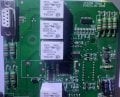
I see what you mean? I have added some more pictures that may help. I apolgise for struggling with the fault finding process. I am happy soldering in new components if required but identifying what does what I struggle with! When you mentioned the relay needs replacing, is that the middle one in the bank of 3 (Image E)? Thanks again for your patience! TerryPCB A.jpgPCB B.jpgPCB C.jpgPCB D.jpgPCB E.jpg
 

Thread Starter

JBASport

Joined Jan 15, 2019
41
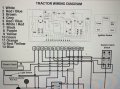
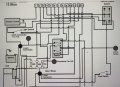
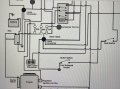
the issue is that this shows something with 13 contacts while photos of device show 18.
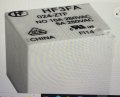
Hi, I hope you dont mind me asking. You have been really helpful and I appreciate your advice. I will check the wiring to see if something has caused the loading of the relay causing it to fail. Meanwhile I will order a new relay. However the ones on the internet have a slightly different number, will that make a difference, as I dont know what the difference referes to. The ones on the board are described as 012 ZST, however the ones on EBay are 012 ZTF (see picture). Many thanks, TerryHF3FA Relay.jpg
 

tribbles

Joined Jun 19, 2015
37
The datasheet is available from here: https://docs.rs-online.com/a625/0900766b81663eba.pdf

012 = 12V (note that your picture is of 024, which would be 24V)
Z = 1 Form C
(nil) = Flux Proofed
T = AgSnO2 contacts
F = Class F insulation

Z = 1 Form C
S = Plastic sealed
(nil) = AgCdO contacts
F = Class F insulation

I haven't done much with the contacts; flux proofed would mean it's suitable for machine soldering (I believe).

I have a vague recollection that one of the contact types would be good for low currents, and the other for higher.
 

Thread Starter

JBASport

Joined Jan 15, 2019
41
The datasheet is available from here: https://docs.rs-online.com/a625/0900766b81663eba.pdf

012 = 12V (note that your picture is of 024, which would be 24V)
Z = 1 Form C
(nil) = Flux Proofed
T = AgSnO2 contacts
F = Class F insulation

Z = 1 Form C
S = Plastic sealed
(nil) = AgCdO contacts
F = Class F insulation

I haven't done much with the contacts; flux proofed would mean it's suitable for machine soldering (I believe).

I have a vague recollection that one of the contact types would be good for low currents, and the other for higher.
Thank you. Terry
 
Top