Facebook
 Google
 GitHub
 Linkedin
Hello,
I am troubleshooting a 3.3 V power-rail startup problem on a multi-supply image-sensor board.
The rail is generated by a MAX38903B LDO:
The issue occurs only when the sensor is connected and becomes repeatable above approximately 48°C.
Observed behaviour
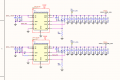
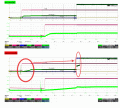
The attached oscilloscope captures show:
In the failing case, the LDO output begins to rise while its input voltage is still at 0 V. The output is therefore being pre-biased through another path.
When the LDO input later rises to 3.5 V, the output takes approximately two seconds to reach 3.3 V.
In the successful case, the output reaches 3.3 V much faster.
The initial system inrush-current issue has already been corrected, and the input current now stays below 500 mA. Removing approximately 400 µF of output capacitance did not eliminate the slow startup.
The problem is absent when the sensor is disconnected.
Possible explanation
Another powered sensor supply or signal may be feeding current into the pixel-supply domain. At higher temperature, the leakage or backfeeding current may increase.
The LDO may then be starting into:
The relevant schematic section and oscilloscope measurements are attached.
Thank you for any suggestions.
I am troubleshooting a 3.3 V power-rail startup problem on a multi-supply image-sensor board.
The rail is generated by a MAX38903B LDO:
- Input: SENS_3.5V
- Output: VDD3.3_PIXEL
- Nominal output: 3.3 V
- Normal load: approximately 400 mA
The issue occurs only when the sensor is connected and becomes repeatable above approximately 48°C.
Observed behaviour
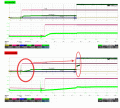
The attached oscilloscope captures show:
- Red: upstream PMIC input
- Blue: LDO input
- Green: LDO output
In the failing case, the LDO output begins to rise while its input voltage is still at 0 V. The output is therefore being pre-biased through another path.
When the LDO input later rises to 3.5 V, the output takes approximately two seconds to reach 3.3 V.
In the successful case, the output reaches 3.3 V much faster.
The initial system inrush-current issue has already been corrected, and the input current now stays below 500 mA. Removing approximately 400 µF of output capacitance did not eliminate the slow startup.
The problem is absent when the sensor is disconnected.
Possible explanation
Another powered sensor supply or signal may be feeding current into the pixel-supply domain. At higher temperature, the leakage or backfeeding current may increase.
The LDO may then be starting into:
- a pre-biased output,
- an abnormal sensor load,
- or a load condition that temporarily activates its current protection.
- How would you practically locate the backfeeding path?
- Should I disconnect the sensor supply rails one by one and measure current into VDD3.3_PIXEL?
- Would an external load switch with reverse-current blocking solve this problem?
- Is active discharge of the pixel rail advisable before enabling the LDO?
- Could the slow rise be caused by current-limit recovery rather than output capacitance?
The relevant schematic section and oscilloscope measurements are attached.
Thank you for any suggestions.
Attachments
-
 212.7 KB Views: 1