power supply problems

Thread Starter

ajoeiam

Joined Mar 26, 2022
19
Greetings

I'm trying to figure out how to get power to industrial rated (-40 - 65 C) SOCs, sensors and the like starting from 120V.
Wallwarts - - - very hard to find information - - - seem to be rated to -20C (not enough).
Switching power supplies - - - find some but seem to only be available in small quantities.
Started looking into POE but then I'm back to a buck convertor and similar temperature ratings as to wallwarts.

Any suggestions - - ideas?

(Need the -40 C rating as we get significantly colder here than -20C - - - can find the microcontroller(s), SoCs but am bogged down on how to power them.)

TIA
 

ronsimpson

Joined Oct 7, 2019
4,660
Wallwarts - - - very hard to find information - - - seem to be rated to -20C (not enough).
Just because something is rated for -20C does not mean it won't work to -40C. Probably the ele. capacitors are not rated for low temp. Probably the ripple voltage will be higher than spec. The caps may not last for 20 years.
If you were to only build one, I would say just do it. I think you are building 1000s and your reputation is standing in these working. Now you have a problem. -40C parts will increase the cost because the volumes are low.
 

drjohsmith

Joined Dec 13, 2021
1,579
sounds like your after warming components so they can be used in temperatures lower than they are rated

rule 1, KISS
if the heater fails cause its to cold, or keeps running when its already to hot , you have problem,

rule 2, you need some system that does not power up your circuit until the system is in the workable temprature range, allowing for different things warming up at different rates.
i.e, if your circuits dcdc does not work correct becausev its to cold , and out of spec , if your lucky , your circuit does not work, if your unlucky smoke escapes !

rule 3. a compromise, you need to ensure enclosure warms up , even under the worst conditions, but not over heat if its behind a window and the sun shines on it .
its an interesting compromise..

if your real small, ptc resistors are great , not least they work on ac or dc.

for bigger heating loads look at simple rod heaters or heating tape for the heating, then mechanical thermostats in series with ptc resistors as backup.

starting your circuit at the right temorature is more interesting .
 

Thread Starter

ajoeiam

Joined Mar 26, 2022
19
If you have 120 VAC, build a housing that is heated and insulated.
It wouldn’t take much power to bring the temperature up to say 10 °C.
I had thought of doing that - - - but how does one heat the wall wart (only for cold temperatures) and then have enough air flow for the summer temperatures which tend to get up to 35C much more often than I'd like.
Needing to have sensors that are connecting with outside the container AND conditioning the container at the same time make for a more than somewhat tricky container design - - - -possible but very fiddly.

thanks for the idea!
 

Thread Starter

ajoeiam

Joined Mar 26, 2022
19
Just because something is rated for -20C does not mean it won't work to -40C. Probably the ele. capacitors are not rated for low temp. Probably the ripple voltage will be higher than spec. The caps may not last for 20 years.
If you were to only build one, I would say just do it. I think you are building 1000s and your reputation is standing in these working. Now you have a problem. -40C parts will increase the cost because the volumes are low.
I was wondering if I could get 'some' life out of things. Its only very cold for usually under 2 months of the year and at the opposite end of things 35C isn't uncommon either.
Maybe its time to consider replacing the capacitors with low temperature parts.
My problem is I likely need between 20 and 30 of these and that's enough for a headache and yet not enough to get something built! You can buy SoCs rated for -40 to 65C operation but they do need some kind of power supply. When you buy said SoCs the same company will sell a wall wart rated for -20 to 55 C - - - - like why would I want the SoCs rating and not the same for the PSU - - - argh! (But that's the issue I'm trying to resolve.)

Great ideas - - - thanks.
 

Thread Starter

ajoeiam

Joined Mar 26, 2022
19
sounds like your after warming components so they can be used in temperatures lower than they are rated

rule 1, KISS
if the heater fails cause its to cold, or keeps running when its already to hot , you have problem,

rule 2, you need some system that does not power up your circuit until the system is in the workable temprature range, allowing for different things warming up at different rates.
i.e, if your circuits dcdc does not work correct becausev its to cold , and out of spec , if your lucky , your circuit does not work, if your unlucky smoke escapes !

rule 3. a compromise, you need to ensure enclosure warms up , even under the worst conditions, but not over heat if its behind a window and the sun shines on it .
its an interesting compromise..

if your real small, ptc resistors are great , not least they work on ac or dc.

for bigger heating loads look at simple rod heaters or heating tape for the heating, then mechanical thermostats in series with ptc resistors as backup.

starting your circuit at the right temorature is more interesting .
I'm buying some mechanical thermostats and heaters for another project - - - if I used electronic thermostat + heater + enclosure + insulation - - - well that enclosure + goodies is easily over $50 EACH and they would make for some significant operating costs (which trying to work my way around - - - lol!). So I have considered this method but I would rather not.

Thanks for the ideas!
 

MrChips

Joined Oct 2, 2009
34,698
I had thought of doing that - - - but how does one heat the wall wart (only for cold temperatures) and then have enough air flow for the summer temperatures which tend to get up to 35C much more often than I'd like.
Needing to have sensors that are connecting with outside the container AND conditioning the container at the same time make for a more than somewhat tricky container design - - - -possible but very fiddly.

thanks for the idea!
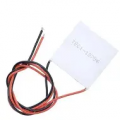
You can have it both ways. You could use a TEC (thermo-electric cooler) and have heating in the winter and cooling in the summer.
 

ronsimpson

Joined Oct 7, 2019
4,660
I was thinking about the diesel engines we used at -50C. There is no way it will start on a cold morning. It was better to let them run 24/7 than to try to start them. I have watch them change oil with the engine running. I must confess, I designed a computer for police cars for a Texas company. My board worked from -40 to the point where the enclosure milted down. A year later they came back, and the board would not startup at -50C. I change one resistor value and it was fine. The gain of a power transistors goes down with temperature. A digital board probably will be just fine. Analog parts, maybe.

Say you have a micro-computer running. The data sheet probably has two different temperature classes. The oscillator runs at 20mhz +/- some amount at ( xxC to xxC) and 20mhz +/- a larger amount (yyC to yyC) and probably has not been tested beyond that. But maybe they did test it for the army but don't want to tell anyone. Probably the part will work much colder if you don't mind the frequency being a little more off.

There could be a voltage reference inside and that will be 0.1% off. Is that OK? Logic gates might pull down harder or less hard at -40C, I don't remember now.
 

Thread Starter

ajoeiam

Joined Mar 26, 2022
19
You can have it both ways. You could use a TEC (thermo-electric cooler) and have heating in the winter and cooling in the summer.
I worked for a company that made thermo-electric stuff.
Don't think I have the finances for decent stuff in that genre.

Thanks for an interesting idea (now if only I had beacoup de bucks!).
 

Thread Starter

ajoeiam

Joined Mar 26, 2022
19
I was thinking about the diesel engines we used at -50C. There is no way it will start on a cold morning. It was better to let them run 24/7 than to try to start them. I have watch them change oil with the engine running. I must confess, I designed a computer for police cars for a Texas company. My board worked from -40 to the point where the enclosure milted down. A year later they came back, and the board would not startup at -50C. I change one resistor value and it was fine. The gain of a power transistors goes down with temperature. A digital board probably will be just fine. Analog parts, maybe.

Say you have a micro-computer running. The data sheet probably has two different temperature classes. The oscillator runs at 20mhz +/- some amount at ( xxC to xxC) and 20mhz +/- a larger amount (yyC to yyC) and probably has not been tested beyond that. But maybe they did test it for the army but don't want to tell anyone. Probably the part will work much colder if you don't mind the frequency being a little more off.

There could be a voltage reference inside and that will be 0.1% off. Is that OK? Logic gates might pull down harder or less hard at -40C, I don't remember now.
Well - - - I've started diesel engines at even below -50C - - - wasn't any fun though and it wasn't simple either!
When you have industrial spec SoCs they are rated for -40 to 60 or 65 or something else. So they are working within their 'normal' design envelope. - - - its getting power to them that I'm struggling with.

Thanks for the ideas!
 

be80be

Joined Jul 5, 2008
2,394
i really wounder if it really matters that little black box makes a lot of heat would it even be cold use a potted one to keep Condensation out and i bet it be the only thing in the room that's not freezing
 
Last edited:

BobTPH

Joined Jun 5, 2013
11,482
I would think there is a good chance self heating would keep the power supply from ever getting to below -20C. Only problem would then be if power was interrupted.
 

Thread Starter

ajoeiam

Joined Mar 26, 2022
19
Greetings

I'm trying to figure out how to get power to industrial rated (-40 - 65 C) SOCs, sensors and the like starting from 120V.
Wallwarts - - - very hard to find information - - - seem to be rated to -20C (not enough).
Switching power supplies - - - find some but seem to only be available in small quantities.
Started looking into POE but then I'm back to a buck convertor and similar temperature ratings as to wallwarts.

Any suggestions - - ideas?

(Need the -40 C rating as we get significantly colder here than -20C - - - can find the microcontroller(s), SoCs but am bogged down on how to power them.)

TIA
SOLVED

With a very large amount of time looking I have found a couple different options.
1. an AC/DC converter that needs an enclosure (or be enclosed) and a power cord that is rated down to -40C.
2. using a wall wart and a buck converter but rated down to -25 and -30C. These will be used where they're easy to get at so if the psu dies it doesn't need a lift or serious scaffolding (at a minimum) to change dead pieces.

(I spent a LOT of time (over 25 hrs) looking including contacting outfits in North America advertising industrial spec and this was the best that I could find.)
 
Top