Potentiometer to 2-10V DC and 4-20mA

Thread Starter

sksanthosh

Joined Jun 15, 2024
4
Hi
I need to design a analog output circuit that will be fitted on a motorized valve of 0 to 90 degree travel.

For this I am engaging a 10K angle sensor potentiometer type
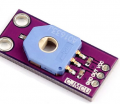
1726311277291.png

The input to the circuit will be 12V DC
The goal is to get 2 to 10V DC ouput as the potentiometer varies from 0 to 90 degree. that is using 27% of 330 degree travel in this pot type.

Then with a dip switch to be able to change output to 4-20mA also

thanks in advance.
 

ronsimpson

Joined Oct 7, 2019
4,647
27% of the 10k pot is 2.7k of travel. That leaves 73% unused. 36.5% is 1/2 of unused.
We can think of the sensor as being 3.65K resistor, 2.7k variable resistor, and another 3.65k resistor.
You put 12V across the 10k. You will have 3.24V across the 3.65K variable part of the resistor.
The center is 6V. The travel is 3.24V. The output will be (6V-1.62V) to (6V+1.62V).
You want an output of 6V at center. End to end travel of 8V.
8V out, 3.24V in so you need to have an amplifier with a gain of 2.47.

Please check my work and see if the math is right. It is 5:30 am on a Saturday and my math engine is not working fully yet.
 

sparky 1

Joined Nov 3, 2018
1,218
A current loop transmitter can sense and send a control signal to power a motorized valve reliably.
Building a small inexpensive control loop for learning calibration, sensing and operation makes sense.
Doing a mock up checking how it works, how and why it fails will no doubt encounter a few modifications.
In the end you won't spend money on things you don't need with murphy's law at work.

Video of an older but reliable MOV using PLCs, this one uses two limit switches and cams. In other systems,
the controller and current transmitter can be situated near an electrical station where it can be monitored and the receive module
located on the MOV located at the end of a length of twisted pair wires ect.

 
Last edited:

MrChips

Joined Oct 2, 2009
34,628
As long as there is sufficient percentage swing, you can use an op amp circuit with offset and gain adjustment to get you the required minimum and maximum voltage output.

Having done that, you can convert any voltage swing to give you 4-20 mA output.
 

MisterBill2

Joined Jan 23, 2018
27,186
Use an op-amp IC and then setting the 2 volt point will be an offset adjustment and the ten volt will be a gain adjustment. Of course they will interact a bit. But then the second half of the 8-pin dip can be the converter for the 4-20Ma output.
 
Top