Pi filter's capacitor burns sometimes

Thread Starter

Goxeman

Joined Feb 28, 2017
176
Hello,

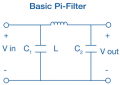
I made a design that contains a DC-DC converter, input is 24VDC (from a truck) and output of the DC-DC is 5VDC. In the input of the DC-DC I use a pi-filter like the image. Before the pi filter I use a fast reseteable fuse and a blade fuse.

Why would C1 burn sometimes? Nothing else is damaged, after replacing C1 everthing works fine. It could be months and everything works and then without any changes C1 just gets damaged.

The weird thing is that C1 and C2 are the same component with 50VDC voltage rating but only C1 is the one getting damaged.
 

Attachments

Thread Starter

Goxeman

Joined Feb 28, 2017
176
I know, auto transients are insane. I have previously done measures of how high the peaks can get and how fast they are, that is why I already tried using an unidirectional TVS diode of 30VDC to suppress any transient above 30VDC.

After last burn I used a TVS diode, but after 5 months, the capacitor burned again, I guess that the transient was too fast (faster than the TVS) or there is another reason, that is why I am sharing here :)
 

ericgibbs

Joined Jan 29, 2010
21,443
hi,
I would try, a 120Vac working Cap for C1, with a fast high current diode that will conduct on negative going spikes

What is the Cap value of C1.?
E
 

Thread Starter

Goxeman

Joined Feb 28, 2017
176
C1 and C2 are MLLC X7R capacitor of 4,7uF

I just remembered that before , I also tried an electrolytic capacitor of 33uF with 63VDC rating within the same node of C1. That time C1 burned too but the electrolytic didn’t (I disconnected the electrolytic from the node and tried using the TVS before the pi filter)
 
What inductor do you use? I was wondering if there is a risk of resonance - could happen if the damping is too low. A resonance could result in high voltages and temperature rise in the capacitor. Inductance in the input wire will also have an effect on resonance.
 

Thread Starter

Goxeman

Joined Feb 28, 2017
176
An extra inductor before the pi filter would limit very fast transient spikes. That's why C2 doesn't blow.
I have been thinking about it. It doesnt make sense to me, why wouldnt the TVS protect against that transient spike? I used the TPSMD30A but as I said it didnt work. The TVS wasnt damaged or anything
 

RPLaJeunesse

Joined Jul 29, 2018
262
I would add some inductance (more than a ferrite bead) before your TPSMD30A to limit the surge current seen by C1. Also, consider using a physically larger device for C1 to allow for a (larger, thicker) more rugged dielectric layer. Alternately change C1 to a self-healing film-foil part.
 

Thread Starter

Goxeman

Joined Feb 28, 2017
176
I used unidirectional one.

The problem is that if I used a TVS with higher clamping voltage, it would also increase the stand off voltage wick is not good for the application. I don’t remember well but the circuit was using a stepdown converter with max input voltage of 32-38VDC (I don’t remember exactly)
 

RPLaJeunesse

Joined Jul 29, 2018
262
You might want to consider a bigger TVS so that under current it will clamp at a lower voltage. Also look at the components in your stepdown converter to see what absolute maximum voltage they will tolerate.
 

PaulNewf

Joined Mar 24, 2020
17
Just a guess: Maybe C1 getting a negative voltage?

If power in cut off then inductor drain C1 past empty, then it could go negative. Try a flyback diode across C1, so when no Vin the flyback supplies current till inductor energy drained.

Check C1 negative rating to guide flyback choice.

Or... Use an unpolarized monolithic ceramic. I use tiny 10u35V often, so you should be able to get unpolarized 4u7_50V or even 4u7_100V.
*Still need the flyback diode as inductors can create extreme voltages when draining relatively small caps. That's how DCDC Boost works :)

Paul
 
Hi Goxeman,
As ericgibbs pointed out, the first cap of the pi filter is connected to the truck’s 24V source. As such, that cap is attempting to stabilize the voltage transients of the truck, which may be causing excessive ripple currents in that cap. The inductor isolates the second cap and therefore doesn’t overheat.
You may wish to add an automotive capacitor to the trucks electrical system (the kind that are installed with high-power audio amplifiers). It’s made for heavy surges, if it’s spec’d for +24V. Then simplify the input of the DC-DC converter to an LC filter (inductor in the lead as KeithWalker recommends).
 

Thread Starter

Goxeman

Joined Feb 28, 2017
176
Hello everyone,

Thank you very much for the help, I really appreciate it.

For sure I will try an inductor in the input of the filter, then I will be creating a LC filter right? I mean, if I add an inductor to the input of a pi filter I obtain an LC filter? I have check designs that use a resistor? I am sorry but I am not familiar with LC filter

As far as I read about automotive capacitors, tests are related to temperature and stability with temperature rise, am I wrong about this? The size of the SMD capacitor was alread "big" as it was 1206
 
Top