ignore the phase shift of π/6(30°) - assume the π had been approximated in your formula to have the value of 3.14 . . . recall the term Angular frequency - Wikipedia
There's no way to know because whoever wrote the question couldn't be bothered with units (except on the phase angle). So is the amplitude 40 V? 40 mV? 40 kV? We don't know. I t measured in seconds? minutes? decades? We don't know.
It's like saying that a person's height is 96. Is that person a really tall basketball player or a really short kindergartner?
ignore the phase shift of π/6(30°) - assume the π had been approximated in your formula to have the value of 3.14 . . . recall the term Angular frequency - Wikipedia
Not so fast. Is this about solving for U or is it about solving for the errors in the equation? How can the equation be restated correctly with missing variables?
The lack of units is irrelevant. The frequency can be solved for in units of 1/t. If t happens to be seconds the answer will be in Hertz. If t is minutes, you might say the answer is in RPM.
The lack of units is irrelevant. The frequency can be solved for in units of 1/t. If t happens to be seconds the answer will be in Hertz. If t is minutes, you might say the answer is in RPM.
That is odd, since the choice of multiplier for t suggests radians. Perhaps sloppy, or perhaps tricky. Depends on how the instructor normally treats the arguments of trig functions.
That is odd, since the choice of multiplier for t suggests radians. Perhaps sloppy, or perhaps tricky. Depends on how the instructor normally treats the arguments of trig functions.
the unit for rad is (1) \( φ=\frac{\text{arc length}}{\text{radius}}=\frac{l\ \left({m}\right)}{R\ \left({m}\right)} \) . . . i see no conflict with the phase-shift expressed in degrees
Not so fast. Is this about solving for U or is it about solving for the errors in the equation? How can the equation be restated correctly with missing variables?
Just as my saying height = 80 is meaningless because height is a dimensioned quantity and therefore must have units of length, the equation without units is ambiguous. This is precisely how airliners full of passengers run out of fuel in mid-flight or hundred million dollar space probes get slammed into planets.
The lack of units is irrelevant. The frequency can be solved for in units of 1/t. If t happens to be seconds the answer will be in Hertz. If t is minutes, you might say the answer is in RPM.
Each term has units of distance. If we want to combine them, we need to do units conversions so that they each have the same scale, but it is perfectly legitimate to leave it just like it is, too.
are all exactly the same thing (assuming I didn't make a silly math error). There it nothing implied about the unit of time, either. If you tell me that t = 900 s I can use any one of those equations and will give you the same number as an answer. If you tell me t = 15 min or T = 0.25 hr, I will still come up with the same answer, namely 1.00, regardless of which equation you give me.
This whole notion that the equation somehow implies what the units are arises because of how used to dealing with WRONG equations we have become. We are forced to be mind readers and guess what the person that sloppily wrote the equation meant. But engineering is not about guessing (not in this sense). The fact that we are pretty good at it is beside the point -- that's how planes run out of fuel and spacecraft slam into planets.
the unit for rad is (1) \( φ=\frac{\text{arc length}}{\text{radius}}=\frac{l\ \left({m}\right)}{R\ \left({m}\right)} \) . . . i see no conflict with the phase-shift expressed in degrees
That is odd, since the choice of multiplier for t suggests radians. Perhaps sloppy, or perhaps tricky. Depends on how the instructor normally treats the arguments of trig functions.
And perhaps fatal. I watched someone die because they were sloppy with their units.
The sad reality is that math teachers don't care about units because, to the overwhelming majority of them, they just "get in the way" of the math and are only there to make the "story problems" seem relevant. If they get a wrong answer because of units, so what? Just work the problem again. They don't see the plane crash or the casing explode or the bridge collapse. So units are just something to be tacked on to the end of answers to make it look meaningful.
Unfortunately, this is where nearly everyone first learns to work with dimensioned quantities and they quite naturally adopt the same sloppy attitudes and practices that their teachers had -- after all, that's what the teacher is there to do!
Then they pursue an engineering degree (or some other technical career) and the see the majority of their teachers doing the same thing and they see it in nearly every textbook. Why? Because the vast majority of people teaching and writing textbooks have little to no real world experience with solving problems that have real world consequences when you get a wrong answer because you messed up the units and didn't catch it because you weren't tracking your units, just tacking the units that you wanted the answer to have onto the end. I have textbook after textbook that right after talking about how critical the proper use of units is, will proceed to within a few pages show an example problem where they don't have a single unit throughout the work and then just tack the unit onto the end. I've even found example problems where they made a mistake that tracking the units would have caught, but they just blasted on through and tacked on the "right" units to a wrong answer.
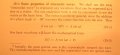
It seemed to me that the standard form was to have the frequency expressed in radians/sec & the phase shift in degrees. So I went back to my first circuits textbook (Linear Circuits, by Ronald E. Scott, 1960, Addison-Wesley Publishing Co.) and found this in the chapter introducing AC circuits.

 Facebook
 Google
 GitHub
 Linkedin