Phase of RC circuits

Thread Starter

Schoppy

Joined Jul 7, 2014
26
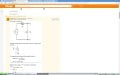
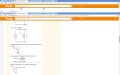
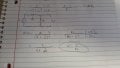
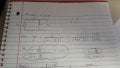
Can anyone explain to me how to arrive at the differences for the phases for these two circuits? I'm assuming it has to do with the characteristic differences between the voltage across a resistor and a capacitor but I'm not quite recalling the actual rule. Thanks in advance guys.
 

Attachments

MrAl

Joined Jun 17, 2014
13,791
Hi,

What do you mean you dont know the math behind it? If you did it already you must know the math right?

You mean the math for the phase?

A network can be broken down into one real and one imaginary part in the numerator and one in the denominator;
(A+B*j)/(C*D*j)

and this can be made into one complex number:
a+b*j

The phase shift is then:
TH=atan2(imag,real)

where
real is the real part, and
imag is the imaginary part, and
atan2(y,x) is the two argument inverse tangent function.

If you've had complex math already then you should be able to do this, if not then you'll need to learn a little complex math first, which isnt that hard to do.
 

Thread Starter

Schoppy

Joined Jul 7, 2014
26
Yea I'm just confused why in the first picture I have -tan^-1 etc but in the second picture I have 90°-tan^-1 etc. Where does the 90° come from?
 

PsySc0rpi0n

Joined Mar 4, 2014
1,786
I can solve for the frequency this way as well which is how I've been doing it but I guess I just don't know the math behind it.
Just a note:

\(\frac{1}{1-j}\cdot \frac{1-j}{1-j}=\frac{1}{2}\left(1-j\right)\)

and not what you have in the 1st picture!
 

PsySc0rpi0n

Joined Mar 4, 2014
1,786
Yea I'm just confused why in the first picture I have -tan^-1 etc but in the second picture I have 90°-tan^-1 etc. Where does the 90° come from?
Ok, I'm not going to tell you the reason directly but I'll try to point you there.

s = jω

A complex number (Z below) has an absolute value (or magnitude) and a phase (or angle).

Z = a + bj, where 'a' is the real part and 'b' is the imaginary part!

To find the magnitude we apply the absolute mathematical function to that Z number this way:

\(\left| Z \right| = \sqrt{a^2 + b^2}\)

and the phase is given by:

\(\theta = \tan^{-1}\left(\frac{b}{a}\right)\)

If you apply this to your case, you'll find the answer for the 90º.

I assume that you know that when \(Z = \frac{a\pm b \cdot j}{c\pm d \cdot j}\) the phase comes \(\theta = \tan^{-1}\left (\pm \frac{b}{a} \right ) - \tan^{-1} \left (\pm \frac{d}{c} \right )\)
 
Last edited:

MrAl

Joined Jun 17, 2014
13,791
Yea I'm just confused why in the first picture I have -tan^-1 etc but in the second picture I have 90°-tan^-1 etc. Where does the 90° come from?

Hi,

When you calculate the phase you have to do both the numerator and the denominator if you choose to keep the fractional form of the equation intact. When you have both the numerator N and the denominator D and wish to use the single argument inverse tangent function, the angle of the denominator subtracts from the angle of the numerator, so you must calculate two angles instead of one.
With the low pass filter (the other picture) we dont have this problem because the numerator is purely real, and the angle for a purely real number is zero. So really we did the same thing, but the angle for the numerator was different in each case:
Case1: 0-atan(x), angle of 0 degrees for the numerator
Case2: 90-atan(x), angle of 90 degrees for the numerator

If you choose to reduce the equation into a single complex number in the form of a+b*j, then you can do it this way:
TH=atan2(b,a)
 

PsySc0rpi0n

Joined Mar 4, 2014
1,786
Hi,

When you calculate the phase you have to do both the numerator and the denominator if you choose to keep the fractional form of the equation intact. When you have both the numerator N and the denominator D and wish to use the single argument inverse tangent function, the angle of the denominator subtracts from the angle of the numerator, so you must calculate two angles instead of one.
With the low pass filter (the other picture) we dont have this problem because the numerator is purely real, and the angle for a purely real number is zero. So really we did the same thing, but the angle for the numerator was different in each case:
Case1: 0-atan(x), angle of 0 degrees for the numerator
Case2: 90-atan(x), angle of 90 degrees for the numerator

If you choose to reduce the equation into a single complex number in the form of a+b*j, then you can do it this way:
TH=atan2(b,a)
I think his struggle is to understand where the 90 comes from!
 

PsySc0rpi0n

Joined Mar 4, 2014
1,786
Yes, I think that's it Papabravo...

He's lacking some maths knowledge...

But he is not replying here anyway!

He needs to know the result of 1/0 and to analyse the trigonometric circle!

I'm saying almost everything!
 
Top