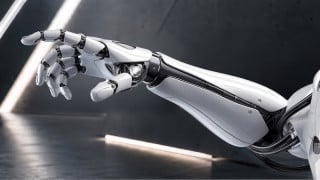
It's basically the same question still arrising.
How do we determine if something is intelligent ?
Let alone a computer , were still arguing as to what animals are / aren't intelligent !
Define the test , and we can check the answer .
Given any answers, we can always define test that are not passed ..
No, this is easy to answer. It's just that (once again) people can't do critical thinking. The problem with all AI development right now is it is bottom-up. They are trying to understand intelligence by building mechanical components of the body. Will never work.
Secondly, AI to human level has already been developed. A corporation I own did it. Here are the basic building blocks to intelligence:
Ability to Self Learn
Ability to Conceptualize
Actually "Think" and make Decisions without 'Training Data'
Ability to be Self-Aware
Ability to choose Better over Worse, in fair or greedy way
Have the ability to Remember & Recall Anything in Finite Memory Space
Basically, what do you think YOU are doing when you think? Same test applies.
There is nothing we did not figure out about how the human mind/brain actually works (including exactly what kind/type of information the 5 senses are actually providing to the brain), including exactly how the neural net actually works, and exactly what the mind stores, how it stores it, and how it retrieves it.
And that is all, for DARPA & NSA reasons, I am legally allowed to say about the project.
Some people love to hear themselves talk. Philosophy in general, makes for bad science. Computer scientists are working to improve today's systems to the point one day it might actually be AI.
Philosophy of science is a obsolete idea IMO (Yes, a philosophical argument). At the practical level, science and engineering are what's really important to progress.
Science is a NO A SUBSET of philosophy. They both are subsets of reality, in modern times with the philosophy subset shrinking, the science subset growing and the intersection of the two decreasing in size and applicability as rational solutions to technical problems.
You don't need to know about the classical arguments for and against induction to use induction to decide what's useful and what's junk. Science models reality, it doesn't necessarily explain it.
Some people love to hear themselves talk. Philosophy in general, makes for bad science. Computer scientists are working to improve today's systems to the point one day it might actually be AI.
Philosophy of science is a obsolete idea IMO (Yes, a philosophical argument). At the practical level, science and engineering are what's really important to progress.
Science is a NO A SUBSET of philosophy. They both are subsets of reality, in modern times with the philosophy subset shrinking, the science subset growing and the intersection of the two decreasing in size and applicability as rational solutions to technical problems.
You don't need to know about the classical arguments for and against induction to use induction to decide what's useful and what's junk. Science models reality, it doesn't necessarily explain it.
I like to hear myself talk? This is coming from a guy who posts on this forum all day everyday. You seem to take a firm position on just about everything and are never wrong.
Sorry mate but this is too fishy for me and I don't like it. I also doubt you are qualified to talk down the points I've raised as they are valid concerns for many modern computer science applications.
And what exactly are your educational and professional qualifications? It's one thing to have a friendly discussion but you've been shitting on me this entire time from a position of authority. Now I'd like to know who I'm really speaking with and then I'll see if you actually specialize in A.I. or just have strong opinions about it.
You'll have to define intelligence because I'm specially trying to not anthropomorphize. I'm strictly speaking about the experience that a machine has as a matter of physical interactions imposed by the environment. At some point, many machines are able to optimize a situation far above baseline or original conditions.
The term "intelligence" is an unfortunate one, it carries connotations and implications that mislead many people.
A better (IMHO) question is, is the human mind a deterministic system? Algorithms are deterministic by definition, but there's no proof that the human mind is deterministic and that is likely what true intelligence requires non-determinism.
If we believe that despite the complexity, the human mind is nevertheless deterministic then I'd agree AI is truly intelligent, not as much as a human but getting there.
The modern hype over AI is largely about leveraging truly huge knowledge bases, larger than any human has in their head and these are truly new, we've never seen anything like it but it is still deterministic, "it" can only follow rules written by humans, it cannot "choose" how to act it can only follow rules and has no ability to choose not to do so.
This point tends to get sloughed over when A.I. is discussed because it suggests there is nothing special about the human body in the sense that we are programmed genetically. Further, if we really are a collection of atoms bouncing around in space, then any agency we have is as much as an illusion as it is to the machine.
I tend to reject the premises of all of this as a sort of pseudo-science because we are looking at it through the eyes of an intelligent agent, which is to your point. However, I can't get over the fact that A.I. is hyper aware and capable at certain tasks.
An as a matter of meta-physics, there is really no way for me to know that you the reader are an intelligent agent yourself. What measures then are at our disposal that don't depend on some aspect of faith? I'm forced to conclude that A.I. is at least somewhat conscious pending further evidence that it's actually not.
The term "intelligence" is an unfortunate one, it carries connotations and implications that mislead many people.
A better (IMHO) question is, is the human mind a deterministic system? Algorithms are deterministic by definition, but there's no proof that the human mind is deterministic and that is likely what true intelligence requires non-determinism.
If we believe that despite the complexity, the human mind is nevertheless deterministic then I'd agree AI is truly intelligent, not as much as a human but getting there.
The modern hype over AI is largely about leveraging truly huge knowledge bases, larger than any human has in their head and these are truly new, we've never seen anything like it but it is still deterministic, "it" can only follow rules written by humans, it cannot "choose" how to act it can only follow rules and has no ability to choose not to do so.
The human mind as you put it is certainly not a deterministic system as defined by Wikipedia but it does have deterministic qualities.
Consider this example: You are driving in your car and you come to a red light. You look around and there are a few other cars waiting just like you. If I were to ask, are the colors of nearby cars random to you or are these deterministic in the sense that you knew exactly what they would be.
I can't speak for you but for me the answer is each car or truck or van or whatever will have what I perceive and experience to be a random color.
The interesting part about my example is that while the logical conclusion that a vehicle's color will be random is true, this truth is based on premises that are all deterministic in the sense that they are also all true truth claims:
1) You were driving because walking is really slow and requires energy.
2) You know there may or may not other vehicles on the road otherwise street lights would be serve no purpose.
3) You know that other cars exist and have a quality called color.
4) You know that colors come in an immense variety.
While it's true I can't say where these premonitions come from, I think it's conclusive through personal scientific inquiry that we are dominated by at least some deterministic qualities affecting us in real time. Another is that I experience gravity. Why or how I feel it is somewhat separable from the base truth that I simply experience gravity.
The point I'm building towards is all these logical truths (if you accept them as such of course) are equally applicable to all machines made by humans because it's through the (collective) human mind that these machines were made to begin with.
This says to me that whatever a machine is, its underlying structure is some aspect of the human makers mind that is now essentially it's own mind physically divorced of the maker(s). It may not be equivalent to the maker but its function in space-time is effectively equivalent to if the maker where to do the the task themselves.
Stated another way, my argument is that the intelligence or sentience or awareness, etc. of a machine may be in units or of a form that is very difficult or perhaps impossible to comprehend. But as a matter of truth, there are some things I can point to that apply to both humans and the machines we make. The biggest truth I can think of is that a machine replaces or creates some function that is useful but also physically separate of the maker.
I have to highlight that the machine is separate from the maker and not just an idea in their head. If it were an idea in their head, I think we can agree it fits the definition of intelligence just fine. Now that it's outside the mind (brain, body..), how is it no longer intelligence? I argue that it is intelligence and it is somewhat aware otherwise intelligence and awareness become non-nonsensical and self-contraindicating terms.
Whatever "it" is, it's now an entity of its own and possesses some faculties of its own which of course demand further inquiry. Interestingly, a faculty is defined as "an inherit mental or physical power" which I think nicely sums up my argument that machines do posses intelligence and awareness and for some machines, super-intelligence and super-awareness. I'll go a step further and say that it's truly alive, albeit at a very primitive level.
That's not a very good response. Saying that to me without showing how is offensive and unscientific. Besides, I asked what your qualifications are and you ignored me. Now you talk more trash as if I didn't notice. You could have said I disagree and here's why but you when you take an authoritarian tone without actual credibility, you become narcissistic by definition.
The discussion if something is conscious, intelligent or aware will always be metaphysical. Or at least until we advance in some kind of higher state of consciousness.
The discussion if something is conscious, intelligent or aware will always be metaphysical. Or at least until we advance in some kind of higher state of consciousness.
The human mind as you put it is certainly not a deterministic system as defined by Wikipedia but it does have deterministic qualities.
Consider this example: You are driving in your car and you come to a red light. You look around and there are a few other cars waiting just like you. If I were to ask, are the colors of nearby cars random to you or are these deterministic in the sense that you knew exactly what they would be.
I can't speak for you but for me the answer is each car or truck or van or whatever will have what I perceive and experience to be a random color.
The interesting part about my example is that while the logical conclusion that a vehicle's color will be random is true, this truth is based on premises that are all deterministic in the sense that they are also all true truth claims:
1) You were driving because walking is really slow and requires energy.
2) You know there may or may not other vehicles on the road otherwise street lights would be serve no purpose.
3) You know that other cars exist and have a quality called color.
4) You know that colors come in an immense variety.
While it's true I can't say where these premonitions come from, I think it's conclusive through personal scientific inquiry that we are dominated by at least some deterministic qualities affecting us in real time. Another is that I experience gravity. Why or how I feel it is somewhat separable from the base truth that I simply experience gravity.
The point I'm building towards is all these logical truths (if you accept them as such of course) are equally applicable to all machines made by humans because it's through the (collective) human mind that these machines were made to begin with.
This says to me that whatever a machine is, its underlying structure is some aspect of the human makers mind that is now essentially it's own mind physically divorced of the maker(s). It may not be equivalent to the maker but its function in space-time is effectively equivalent to if the maker where to do the the task themselves.
Stated another way, my argument is that the intelligence or sentience or awareness, etc. of a machine may be in units or of a form that is very difficult or perhaps impossible to comprehend. But as a matter of truth, there are some things I can point to that apply to both humans and the machines we make. The biggest truth I can think of is that a machine replaces or creates some function that is useful but also physically separate of the maker.
I have to highlight that the machine is separate from the maker and not just an idea in their head. If it were an idea in their head, I think we can agree it fits the definition of intelligence just fine. Now that it's outside the mind (brain, body..), how is it no longer intelligence? I argue that it is intelligence and it is somewhat aware otherwise intelligence and awareness become non-nonsensical and self-contraindicating terms.
Whatever "it" is, it's now an entity of its own and possesses some faculties of its own which of course demand further inquiry. Interestingly, a faculty is defined as "an inherit mental or physical power" which I think nicely sums up my argument that machines do posses intelligence and awareness and for some machines, super-intelligence and super-awareness. I'll go a step further and say that it's truly alive, albeit at a very primitive level.
Consider these questions, what is the simplest algorithm that one could say "It has awareness"? If you could watch an animation of a chess program, running slowly so we could see each step, it would seem mundane, just lots of steps and data being moved around over and over and that's all it really is.
As for determinism it cannot cause non-determinism, we can't get non-determinism from determinism but we can get determinism from non-determinism just by choosing to act deterministically.
AI as actual intelligence doesn't currently exist. We currently have very powerful autocomplete programs that use existing human intelligence as the training sets for the statically basis of the next work to use.
Out of interest , you say x is not intelligent , but do we have a definition or test of what intelligence is ? .
And what's the threshold ? A few cells avoiding heat ? Is that intelligence ? An earth worm coming above ground when it rains , is that intelligence ?
As it should be when there is ZERO evidence to support something. There is NOTHING wrong with bias if it's justified. The justification today is easy,as, they are,machines, they act like machines and the people building them say they are machines.
NOBODY says otherwise today but crackpots.
Yes, I am shouting and, it's totally justified IMO.
By declaring everybody is crackpots if they make claims you doubt that kind of means your mind is closed doesn't it? I sincerely believe we are on the threshold of such a machine. My question is whether we would recognize it as sentient or not if it did appear. And because of everybody declaring it's impossible I do not believe that anyone will notice when it is done and done.
By declaring everybody is crackpots if they make claims you doubt that kind of means your mind is closed doesn't it? I sincerely believe we are on the threshold of such a machine. My question is whether we would recognize it as sentient or not if it did appear. And because of everybody declaring it's impossible I do not believe that anyone will notice when it is done and done.
Show me one bit of actual evidence of this belief.
I'm closed minded on lots of things, like equal rights for all, no matter the race, gender or sexual preferences. I very gladly to be closed minded on opposing bigotry and injustice.
It's been my experience, there is a reverse relationship between education and intelligence on these sorts of things. The more you know about the subject, the less likely you are to miss the magic trick that looks like real magic to others.
This AI today is a magical illusion, that's very good but easy to detect by those in the magic trick business.

 Facebook
 Google
 GitHub
 Linkedin