Facebook
 Google
 GitHub
 Linkedin
I know there are plenty of posts on passive sign convention (PSC) in the forums and I've looked at them, but this deals with a specific on PSC that's really bothering me.
I searched PSC on Google and the first hit is this wikiuniversity link that describes it and gives a few exercises. The link is here: http://en.wikiversity.org/wiki/Passive_sign_convention
In particular, I was observing Example 1.3 where they give the current as entering the negative terminal and ask to calculate the power with both the voltage and current negative. Now, I know they say it's a resistor and all resistors dissipate power (i.e. power is positive) however, that is beside the point I want to make here.
In the example they show the diagram as following active sign convention, but they don't add the sign to the power equation when they calculate power and they end up calculating it as it should be (with current in the opposite direction). They explain the logic and I understand it, but shouldn't you make all calculations based on what the diagram says? So, sense the diagram doesn't follow PSC, shouldn't the power be negative i.e. p = -v*i?
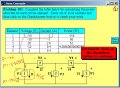
I have a program called circuit tutor written for a circuits class (here's the site for validity reasons: http://ewh.ieee.org/soc/es/Aug1996/002/cd/ms.htm) it's an old software program that basically generates circuit problems. However, I've been using the following mental process (Follows PSC, don't add sign, p=vi OR Doesn't follow PSC, add sign, p=-vi) and I've been getting the problems right. A completed problem is attached.
I just need someone to verify this confusion. Because I've always been confused by PSC because every time I try and figure it out, I get in a confusing situation like this where theory isn't meshing with application.
Thank you, I appreciate your help if given.
I searched PSC on Google and the first hit is this wikiuniversity link that describes it and gives a few exercises. The link is here: http://en.wikiversity.org/wiki/Passive_sign_convention
In particular, I was observing Example 1.3 where they give the current as entering the negative terminal and ask to calculate the power with both the voltage and current negative. Now, I know they say it's a resistor and all resistors dissipate power (i.e. power is positive) however, that is beside the point I want to make here.
In the example they show the diagram as following active sign convention, but they don't add the sign to the power equation when they calculate power and they end up calculating it as it should be (with current in the opposite direction). They explain the logic and I understand it, but shouldn't you make all calculations based on what the diagram says? So, sense the diagram doesn't follow PSC, shouldn't the power be negative i.e. p = -v*i?
I have a program called circuit tutor written for a circuits class (here's the site for validity reasons: http://ewh.ieee.org/soc/es/Aug1996/002/cd/ms.htm) it's an old software program that basically generates circuit problems. However, I've been using the following mental process (Follows PSC, don't add sign, p=vi OR Doesn't follow PSC, add sign, p=-vi) and I've been getting the problems right. A completed problem is attached.
I just need someone to verify this confusion. Because I've always been confused by PSC because every time I try and figure it out, I get in a confusing situation like this where theory isn't meshing with application.
Thank you, I appreciate your help if given.
Attachments
-
 92.2 KB Views: 75