Parametric Speaker driver

Thread Starter

No_Kaleidoscope

Joined Apr 8, 2025
4
Hello,

I'm currently working on a parametric speaker. The speaker consists of several piezo transducers in parallel (those are basicaly capacitive loads) wich i need to drive with high voltage (+/- 40V) high current (+/- 15mA for each piezo). The input of the driver is provided with an already AM modulated signal at 39Khz (wich is the resonnant frequency of my piezo's), wich comes from a DAC (this signal is +3/-3V peak-to-peak). Until now i was using a small array of 15 transducers and an OPA551 in non inverting amplifier (+ a capacitor in the feedback loop to avoid oscillation) was enough but i now want to scale it up to a 100 and i need more current.
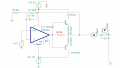
My plan is to use a push-pull current booster at the ouput of my opamp (as shown in the attached schematic), does that seem like a good solution?
I observe some harmonic distortion when i run my simulations, any idea on how to improve it? And lastly, do you know an already integrated solution that i don't know of?
So to resume the question, what would be a good way to drive a 200nF capacitive load with a 39khz signal with as little distortion as possible?

Thank you!
Capture d'écran 2025-04-08 172627.png
 

LowQCab

Joined Nov 6, 2012
5,101
This is for a Speaker ???
At ~39kHz ???
At 39kHz the Current will likely be high enough to
cause over-heating and failure of the Piezo-Elements.

Are You trying to create a Horn-Tweeter-Driver ?, or maybe an Ultra-Sonic-Cleaner of some sort ?

Providing more information on what You are trying to accomplish will get You better answers.
.
.
.
 

Thread Starter

No_Kaleidoscope

Joined Apr 8, 2025
4
Oh, sorry about that, parametric speakers are ultra directionnal speakers. The basic principle is that you modulate your audio signal in AM at a high frequency to "get" the directionnal property of higher frequencies, then the non linear property of air at those frequencies naturally demodulate the signal. Arrays of piezo are used in this application instead of standard loudspeaker that can't go this high.
An exemple :
 

nsaspook

Joined Aug 27, 2009
16,268
Oh, sorry about that, parametric speakers are ultra directionnal speakers. The basic principle is that you modulate your audio signal in AM at a high frequency to "get" the directionnal property of higher frequencies, then the non linear property of air at those frequencies naturally demodulate the signal. Arrays of piezo are used in this application instead of standard loudspeaker that can't go this high.
An exemple :
Sort of interesting.

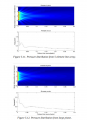
Phased array (Beam Forming) intermodulation distortion to project sound with ultrasonics. It works but not very well so I can see why you need more power.
9. Discussion
9.1. Source of non-linearity
To hear the intermodulation products of ultrasounds with human
ears, the non-linearity transmission of sound through air produces audible sounds [32]. When sound waves have sufficiently large amplitudes, their propagation through the air can no longer be modeled by
the traditional linearization of fluid dynamics equations. Due to the
nonlinearity effect of the air, sound waves are distorted as they travel,
and the inaudible ultrasounds can generate audible sounds. Although
human hearing is also reported to be non-linear [33], it is difficult to
quantify the extent that non-linearity of the ear contributes to the
sensation of intermodulation products, particularly when human ears
receive ultrasound with difficulty. Therefore, we tend to assume the
non-linearity of the air is mostly responsible for the audible sensation of
ultrasounds in human ears. For microphone recordings, the non-linearity of both the air and the microphone are involved in the transformation process. Thus, there is a finite difference between the AP news
audio and the sound that the diplomats actually heard.
https://www.diva-portal.org/smash/get/diva2:832881/FULLTEXT01.pdf

1744135999344.png
 
Last edited:

LowQCab

Joined Nov 6, 2012
5,101
You need to provide the Data-Sheet-PDF for the Elements that You intend to use.

This information will allow us to determine what the actual Load is likely to be at ~39kHz.

My initial guess is that each element will require its own Resistor, ( value to be determined ).

My next initial guess is that you Power-Supply supplies far too high of a Voltage.

My next assumption is that there are better ways to amplify this Project,
I'm thinking an OPA548 would be more appropriate,
and no Current-Boosting Transistors required,
and built-in Adjustable-Current-Limiting.
.
.
.
 

Attachments

LowQCab

Joined Nov 6, 2012
5,101
I don't think he knows what his yet to be announced arrays are rated at.
I'd be surprised if they can withstand more than ~30-Volts Peak to Peak without overheating.
.
.
.
 

MisterBill2

Joined Jan 23, 2018
27,283
Certainly this is an interesting project. I suggest, however, that the TS take a good look at the power stages of higher power commercially mage HiFi amplifiers. My thinking is that the emitter resistors are much to high a resistance value.
 

Thread Starter

No_Kaleidoscope

Joined Apr 8, 2025
4
You need to provide the Data-Sheet-PDF for the Elements that You intend to use.

This information will allow us to determine what the actual Load is likely to be at ~39kHz.

My initial guess is that each element will require its own Resistor, ( value to be determined ).

My next initial guess is that you Power-Supply supplies far too high of a Voltage.

My next assumption is that there are better ways to amplify this Project,
I'm thinking an OPA548 would be more appropriate,
and no Current-Boosting Transistors required,
and built-in Adjustable-Current-Limiting.
.
.
.
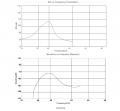
I joined the datasheet of the transducers i'm using, they can take up to 80Vptp, wich is why i want to use the OPA454. I had absolutly no heating problems with the transducers with my first proto going up to 55Vptp (OPA551 based non-inverting amplifier, 15 transducers array and a inductance between them for impedance matching). I precise that this proto is already working okay-ish, i'm now trying to make it work well.
I already considered the OPA548 but it's max voltage is not enough, i did not find any already integrated solution as of now.

Certainly this is an interesting project. I suggest, however, that the TS take a good look at the power stages of higher power commercially mage HiFi amplifiers. My thinking is that the emitter resistors are much to high a resistance value.
I'll check some, do you have some reference you consider to be suitable?

You need power amplifiers that are truly stable to drive those types of capacitive loads at high power.

Fancy, and likely expensive.
https://www.ebay.com/itm/363115976465
https://www.apexanalog.com/resources/appnotes/an25u.pdf

Cheaper bridged setup.
https://www.ti.com/lit/an/snaa021b/snaa021b.pdf

https://www.instructables.com/LM3886-Power-Amplifier-dualbridge/
wow, those are indeed expensive, i try to make not to costly it so i'll first try other solutions i think.
I'll read the papers, seems interesting

Thanks to all of you
 

Attachments

Thread Starter

No_Kaleidoscope

Joined Apr 8, 2025
4
Forgot to tell that on the first proto i mentioned, the input to amplify is around +3/-3V, the amplifier has a gain of 5 and with those parameters i consume around 120 mA.
 

AnalogKid

Joined Aug 1, 2013
12,081
We still do not know the desired positive and negative peak output voltages and currents - ?

And - is 39 kHz the only output frequency?

ak
 

LowQCab

Joined Nov 6, 2012
5,101
The PDF that the TS provided says 80-Volts-P/P,
I find that somewhat hard to believe,
and, if the TS builds an Amplifier with 100-Volt-Rails as shown,
I think he will smoke them all.

39-kHz is stated as the "Resonant" "Operating" Frequency.

AM-Modulating at the Resonant-Frequency seems to me to be automatically problematic,
but, who knows, maybe it will work just fine.
.
.
.
 

nsaspook

Joined Aug 27, 2009
16,268
The PDF that the TS provided says 80-Volts-P/P,
I find that somewhat hard to believe,
and, if the TS builds an Amplifier with 100-Volt-Rails as shown,
I think he will smoke them all.

39-kHz is stated as the "Resonant" "Operating" Frequency.

AM-Modulating at the Resonant-Frequency seems to me to be automatically problematic,
but, who knows, maybe it will work just fine.
.
.
.
We AM modulate (usually a low power levels) RF in circuits with tuned elements, with bandwidth sufficiently wide, to handle the sidebands created, it's not a problem with a linear amplifier (the opamp) that can handle the entire signal envelope from that modulator.
 

MisterBill2

Joined Jan 23, 2018
27,283
It seems to me that the biggest possible challenge would be ringing of the resonators, which might possibly cause a phase delay in the negative portion of the modulation curve. But that might depend on the "damping factor" of the driver amplifier. WOW! That is a term describing amplifiers from way back! At the time it was all about the bass speakers ringing.
 

nsaspook

Joined Aug 27, 2009
16,268
It seems to me that the biggest possible challenge would be ringing of the resonators, which might possibly cause a phase delay in the negative portion of the modulation curve. But that might depend on the "damping factor" of the driver amplifier. WOW! That is a term describing amplifiers from way back! At the time it was all about the bass speakers ringing.
Exactly. The low resistance, higher damping factor, of the amplifier short-circuits energy returning back from the transducer. It was mainly a problem with tube amplifiers with factors of 20 or below vs solid-state amps with factors in the thousands. Once you get much above 50, IMO the extra is not audible.
 
Last edited:

nsaspook

Joined Aug 27, 2009
16,268
Top