Oxidation of the IC pin

Thread Starter

Fatimah93

Joined Mar 10, 2023
8
Hi Everyone,

I have the IC pin oxidized problem, detected during the final inspection. The quantity affected is quite high. Suspected the whole carton.
My concern is what can cause these problems. Does the temperature of the storage room affect the IC pin?
Is there any suggestion to overcome this issue?

The IC components used are the IRM 3738T series from Everlight.

Please share your thoughts about this issue.
 

Papabravo

Joined Feb 24, 2006
22,058
Temperature alone is unlikely to be the sole source of the problem. Oxidation is a specific chemical reaction that requires a couple of things including a metal, an oxidizing agent, and a solvent such as water. Temperature will affect the speed of the reaction if the other elements of it are present. See the following article.

Oxidation–reduction (redox) reactions (article) | Khan Academy

To get to the root cause of the problem you need more information about the metals and the results of the oxidation.

ETA: You might also be using the term "oxidation" to describe other types of corrosion that can occur in the presence of other chemical agents.

ETA2: Integrated circuit lead frames are made of copper with an annealed matte tin plating or Nickel-Palladium-Gold plating.
 
Last edited:

dl324

Joined Mar 30, 2015
18,216
My concern is what can cause these problems.
Lead corrosion can extend inside of the IC cavity where it will cause problems.
Does the temperature of the storage room affect the IC pin?
Chemical reactions speed up with increased temperature.

I have dozens of IC's from the late 70's that were stored in an antistatic foam that attracted moisture and caused significant corrosion of the leads. Most of the leads are still intact. I removed as much rust/corrosion as I could with white vinegar and put them in antistatic bags/tubes, but the reliability is now questionable. Some are irreplaceable and I'll use them if I need to, but not in anything critical.
 

MisterBill2

Joined Jan 23, 2018
27,159
My experience is that many electronic components intended for reliable construction are delivered packaged in airtight material with anti-corrosion chemical packets included. Those devices also have "expiration " dates on every package.
This implies that storage environment and atmosphere are far more important than temperature. Of course there are also storage temperature limits published but those temperatures are above allowable operation temperatures.
Years ago I had to service electronic systems that often included circuit boards with IC sockets sold by "TI". It was well known to our service group that the equipment failures were primarily caused by corrosive failure of those sockets, and the rapid repair was to re-seat all of the ICs on those circuit boards.
That plating was a tin plating of poor quality. That same poor quality tin plating on IC leads will certainly lead to the inability to reliably solder them into a circuit without additional steps taken, such as a better solder flux in a greater quantity than is standard..

So the fact is, Fatimah93, that certainly there may be a real problem. If the ICs are to be soldered into a PCB then at the least, additional solder flux is required. At worst, resoldering with a much better flux may be needed.
 

MrChips

Joined Oct 2, 2009
34,626
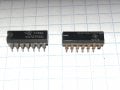
Here are two examples of old and badly corroded IC pins.

The one on the left, dated from 1967, has oxidation on the pins. The pins need to be cleaned with some abrasive material before using.

The one on the right, dated from 1977, is badly corroded and is useless. The pins break off at the slightest touch.

IC corrosion.jpg
 

dl324

Joined Mar 30, 2015
18,216
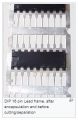
IC leads go through the encapsulation and have die bonds inside. The corrosion will go through the encapsulation and cause more problems there.

From Wikipedia:
1709050521223.png
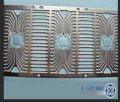
Some random picture from the internet:
1709050632443.png
 

MisterBill2

Joined Jan 23, 2018
27,159
Some lead-frame materials are inferior, and that is well known, but some organizations buy the poor quality parts anyway.
Storage conditions for electronic parts that will be soldered is always critical, thus both engineers and supervisors and purchasing folks need to understand that. Doing it "right" does require more effort, but doing it wrong is rather expensive.
 
Top