Output cap on LM386 — too large?

Thread Starter

ricebridge

Joined Jun 24, 2017
30
Looking at the datasheet for the LM386, the recommended output cap (circled) is specified at 250μF. Isn’t that quite large?

Moreover, there’s another 50nF cap (underlined) going through 10Ω to ground. Why? And are the values important?
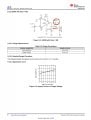
IMG_3754.jpeg
 

Papabravo

Joined Feb 24, 2006
22,068
I'm curious to know why you think it might be too large. Do you understand the purpose of that capacitor? After we square that away, we can talk about the other RC network.
 

sghioto

Joined Dec 31, 2017
8,634
Looking at the datasheet for the LM386, the recommended output cap (circled) is specified at 250μF. Isn’t that quite large?
Depends on the what the amp is intended for. For music, as an example, a smaller cap will reduce the bass response as the impedance of the cap increases as the frequency decreases.
If intended for voice only as in a intercom or 2 way radio a 47uf cap would suffice.
 

BobTPH

Joined Jun 5, 2013
11,488
That capacitor and the speaker form an RC filter. For the typical sneaker of 8Ω, the cutoff frequency is 79Hz. Often, capacitors as large as 4000uF are used to get flat response down to 20Hz in high end amps. So, no, it is too small, if anything, for full range audio.
 

Thread Starter

ricebridge

Joined Jun 24, 2017
30
Right. I’ve read up on Zobels now, and I have a follow-up question:

My design is for a headphone amp, but different makes vary a bit when it comes to impedance. However, when I calculate various Zobels for 32 to 50Ω, I get wildly differing results. I’m inclined to just settle for 32 and hope for the best, but is that a bad idea? Is there a suitable compromise?
 

Papabravo

Joined Feb 24, 2006
22,068
ok thx, you learn something new every day. I thought it would be too taxing for an op but there you go.
Besides blocking DC, it might be useful to review the formula for capacitive reactance. This is measured in Ohms, just like resistance and inductive reactance. It is different at each frequency so you would normally compute this reactance at several different audio frequency values, e.g. 200 Hz, 2 kHz, and 12 kHz. The formula for capacitive reactance, Xc is given as:

\( X_C\;=\;\cfrac{1}{2\pi f C} \)

For C=250µF and f=200Hz that gives

\( \cfrac{1}{2\pi \times 200\times 250 \times 10^{-6}}\;=\;3.18\Omega , \)

which is roughly comparable to the lower bound on the average speaker reactance.
 

LowQCab

Joined Nov 6, 2012
5,101
Since Headphones normally have a much higher Impedance than the average Loudspeaker,
the Output-Capacitance of ~250uF is likely to be just fine regarding Bass-Response.

An Amplifier design containing "Split-Supplies" ( Plus and Minus and Ground )
will not require Output-Capacitors at all,
and is less likely to cause possible Headphone damage and will
eliminate the nasty, and very loud, "POP" when switching the Amplifier-Power On-and-Off.

The Zobel-Network is good insurance against possible Amplifier-Oscillations but "may" not be absolutely required.
.
.
.
 
Last edited:

MisterBill2

Joined Jan 23, 2018
27,362
Usually, the capacitor size is already selected to be the MINIMUM THAT WILL PROVIDE THE REQUIRED PERFORMANCE. So if poor low-end sound is acceptable, then you can get away with a music amplifier that sounds like a paging system, and use a smaller capacitor value.

In an amplifier with dual power the theoretical DC voltage out is zero with no signal, but in reality that demands an amplifier that is perfectly balanced. They are common in books about theory, much less common in the real world.
 

Thread Starter

ricebridge

Joined Jun 24, 2017
30
the nasty, and very loud, "POP" when switching the Amplifier-Power On-and-Off.
Thanks. BTW, what else can I do in terms of design to reduce or eliminate pops? The amp I'm working with needs to be as foolproof as humanly possible because of its intended application.
 

Thread Starter

ricebridge

Joined Jun 24, 2017
30
Usually, the capacitor size is already selected to be the MINIMUM THAT WILL PROVIDE THE REQUIRED PERFORMANCE.
Thanks. So I could use an even higher value then?

The reason I'm surprised by this is that as far as I've understood it, large caps mean large currents, and from other places and other contexts (not necessarily about the LM386) I gather that not all op's might be able to cope with that.
 

MrChips

Joined Oct 2, 2009
34,714
All I know is that it’s there to block DC. Apart from that, enlighten me.

ok thx, you learn something new every day. I thought it would be too taxing for an op but there you go.

Thanks. So I could use an even higher value then?

The reason I'm surprised by this is that as far as I've understood it, large caps mean large currents, and from other places and other contexts (not necessarily about the LM386) I gather that not all op's might be able to cope with that.
You are basing your judgement from hearsay.

Let us look at the fundamentals.

1) Any value capacitor in series will block DC.
DC means 0 Hz.
But at what frequency would signal start to pass?

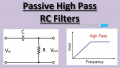
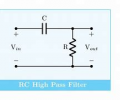
This is a high pass RC filter.

1730111509141.png

The cutoff frequency is determined by
fc = 1/(2πRC)

Suppose we use the example,

R = 8 Ω
C = 250 μF
fc = 80 Hz

At the cutoff frequency, the voltage gain is -3 dB. In other words, the voltage has fallen to 70% and the power has fallen to 50%.

Hence, yes, the capacitor does block DC. More importantly, the capacitor will begin to reduce the power to the load at frequencies that are lower than the cutoff frequency.
 

Attachments

Thread Starter

ricebridge

Joined Jun 24, 2017
30
You are basing your judgement from hearsay.
Yes, I probably am, since I have only a little formal education in this field and need to read up as much as I can from various sources, including this one. Since there is a risk of hearsay, of course I need to cross-check the facts, such as asking the questions I just did here where I can get some response and feedback. Thank you for your kind explanations.

Let us look at the fundamentals.
Yes, I'm well aware of those, but it's very easy to forget to take the speaker/headphone impedance into consideration, as well as other thinks too that might come after a coupling cap.
 

MisterBill2

Joined Jan 23, 2018
27,362
Please understand that indeed the "cutoff frequency" is defined as the output half power point. So how much bass volume is actually required for this specific application? AND, many GOOD headphones tend to handle the bass quite well, at least that has been my experience.
It is probably possible to add a output connection delay relay like is included in many high quality audio amplifiers. And even quite a few medium quality ones.
 

LowQCab

Joined Nov 6, 2012
5,101
Many Audio-Amplifier-Chips have a "Mute"-Pin that can be used to gradually turn-On the Output
specifically to reduce or eliminate Pops and give the Amp some time to stabilize the Output.
.
.
.
 

liaifat85

Joined Sep 12, 2023
200
LM386 operates at low audio frequencies. High capacitance is needed for minimal low-frequency signal attenuation. If you use a Low-value capacitor, the audio sound will be weak in the lower range.
 
Top