Oscilloscope Probes?

Thread Starter

ESSO

Joined Feb 14, 2015
30
Hi everyone!

Last week in class, we were using an oscilloscope in a lab for Op Amp, well we have 2 channels, 1 - for input and 1 - for output; The probes were different colors, the channels were setup the same (Probe 1x) However Probe 2 (output ) was not given any gain, actually it was less, only until we change the Probe 2 to 10X (in the Oscilloscope) is when we were able to see the gain to what we calculated. After changing the probe to the same color, we were able to see our gain, with the 2 channels setup equally setup to 1x. I assume the probes different colors have different setup? Is this true? or we had the Oscillos setup wrong - (Teacher review setup and everything was ok) ? I read in the forums about impedance and frequency, Is this had something to do with our reading?

Thanks for sharing

Gera
 

alfacliff

Joined Dec 13, 2013
2,458
did anyone check the adjustment on the probe? most scopes have a square wave output to calabrate the probe, and a variable capacitor on the probe to adjust it.
 

Thread Starter

ESSO

Joined Feb 14, 2015
30
did anyone check the adjustment on the probe? most scopes have a square wave output to calabrate the probe, and a variable capacitor on the probe to adjust it.
Both Probes have a buttom, 1x-10x, both were set at 1X, Did not know about the other adjustment and I believe neither the instructor, since he did not mention anything
 

alfacliff

Joined Dec 13, 2013
2,458
x1 probes are passive. also x10 probes with passive attenuatores. there is usually a small screwdriver slot adjustment to compensate the internal LC of the probe to the osciliscope. adjust for best square wave when hooked to "cal" on scope.
 

Roderick Young

Joined Feb 22, 2015
408
It does sound like the second probe that did not show gain was a 10x probe, or was an adjustable probe set to 10x, meaning it would deliver only 1/10 of the signal to the oscilloscope. If your readings were off by exactly a factor of 10, that would strongly suggest that this was the case.

My apologies for the the slight content drift, but I would strongly suggest that you continue to pursue the matter until you understand exactly what the issue was. More than 30 years ago, one of my first managers advised me that if there is something that doesn't seem quite right in an experiment, always look into the root cause; that is, don't ignore a problem that seems to have vanished without knowing why, because that little problem will come back later and bite you in the *** (I'm censoring his exact word). That character trait of not letting go until one fully understands seems to be the mark of a good engineer.
 

Reloadron

Joined Jan 15, 2015
7,889
When it comes to scope probes, some probes are 1X, some probes are 10X and some probes are 100X. Some probes have a switch to select 1X or 10X. So a 1X probe offers no attenuation to the incoming signal, a 10X probe attenuates the signal by a factor of 10. Some probes have the ability to communicate what they are to the scope and the scope will range the vertical input gain accordingly and some probes do not have this ability and nor does the scope they are connected to. With a focus on only passive attenuator probes. Oh wait, some probes that are 1X or 10X even have a Ground center position which grounds the scope's vertical amplifiers, it does not ground the probe tip.

When using a 10X or 100X probe the probe needs to be calibrated to the scope vertical channel it is used with for frequency response. If we look at the vertical input channels on most scopes they tell us the input impedance generally 1 M Ohm and they also show a capacitance which shunts the vertical input channel. Something like 1 M Ohm / 25 pF. The probe needs to be compensated to the vertical input channel. Alfacliff mentions this. Most scopes have a signal that can be used for probe compensation. Generally a 1 KHz square wave around 1 or 5 volts in amplitude. The probe has small holes allowing for adjustment.

A few examples:

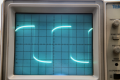
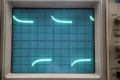
Under Comp.png

High Frequency Attenuation, note how the leading edge of the square wave is attenuated. The probe is not properly matched or compensated to the vertical input channel.

Over Comp.png

High Frequency Accentuation. The accent is on the high frequencies of the waveform.

Normal Comp.png

Just right where the square wave corners are nice and sharp. This is normal compensation.

Everything about scopes and passive probes is a matter of the scope used and the probe used.

Ron
 

Thread Starter

ESSO

Joined Feb 14, 2015
30
Good stuff!, Definately I will go back next week and look into it more, At this moment I dont have the model of the Oscilloscope.. or the probes. I am not sure if school ever send the Scope to Calibration or instructors do it.. Thanks guys.. I used a scope 15 years ago in school and never used it again in the industry that i am in .. Now that I went back for my B.S. in EE is where I am starting to play again :)
 
Top