Facebook
 Google
 GitHub
 Linkedin
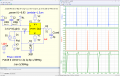
I am using an OPA846 as a TIA to detect a 38 MHz pulse train with 12 ps pulse duration. The photodiode is a Lumentum EPM605 (2 GHz bandwidth, 0.75 pF capacitance). The circuit has been implemented on a PCB, and the schematic is shown below. Including the photodiode capacitance (0.75 pF) and the OPA846 input capacitance specified in the datasheet (3.8 pF), the total input capacitance is approximately 4.55 pF.
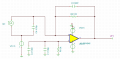
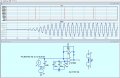
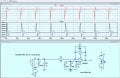
Initially, the feedback network consisted of a 510 Ω resistor and a 0.3 pF capacitor. However, I observed oscillations at the output (osicllates at 300-500MHz). I then increased the feedback capacitor to 1 pF, but the oscillation is still there. After changing back to 0.3 pF, the oscillation still remained, although I noticed that the current drawn from the power supply decreased from 67 mA to 61 mA. I am unsure whether this reduction in current indicates that the oscillation has been partially reduced, since I have read that oscillating circuits can exhibit increased supply current.
The reason I reverted to 0.3 pF is that the OPA846 datasheet states that the device is stable for gains greater than 7. My understanding is that, in a TIA, this corresponds to the high-frequency noise gain, given approximately by
Noise gain ≈ 1 + Cin/Cf.
Therefore:
For Cf = 1 pF:
Noise gain ≈ 1 + 4.55/1 ≈ 5.6
For Cf = 0.3 pF:
Noise gain ≈ 1 + 4.55/0.3 ≈ 16.2
Based on this, I would expect the 0.3 pF case to be more stable. Please correct me if my understanding of the gain requirement is incorrect.
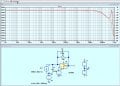
To investigate further, I performed a loop-gain analysis and evaluated different combinations of feedback resistor and capacitor values. I ran the AC transient and plot the ratio of open loop to noise gain to get the loop gain, and find the corresponding phase at which the loop gain intersects at 0dB gain. of The corresponding phase margins are shown in the attached figure.
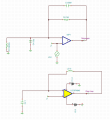
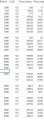
According to the simulation, a feedback resistor of 4 kΩ together with a feedback capacitor of 0.5 pF gives a phase margin of approximately 45°, suggesting that this combination should provide adequate stability.
However, I have the following concern:
Since increasing the feedback resistor from 510 Ω to 4 kΩ increases the transimpedance gain by nearly a factor of eight, would this not cause the output voltage to become excessively large and potentially drive the OPA846 into saturation?
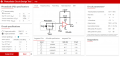
And another thing that I dont quite get is I tried to put these values to TI's PD circuit design tool and they gave me a different values of capacitor and resistor for the feedback network.
I would appreciate any comments or suggestions regarding whether this interpretation is correct and whether the 4 kΩ / 0.5 pF combination is a practical solution.
Thanks.
Initially, the feedback network consisted of a 510 Ω resistor and a 0.3 pF capacitor. However, I observed oscillations at the output (osicllates at 300-500MHz). I then increased the feedback capacitor to 1 pF, but the oscillation is still there. After changing back to 0.3 pF, the oscillation still remained, although I noticed that the current drawn from the power supply decreased from 67 mA to 61 mA. I am unsure whether this reduction in current indicates that the oscillation has been partially reduced, since I have read that oscillating circuits can exhibit increased supply current.
The reason I reverted to 0.3 pF is that the OPA846 datasheet states that the device is stable for gains greater than 7. My understanding is that, in a TIA, this corresponds to the high-frequency noise gain, given approximately by
Noise gain ≈ 1 + Cin/Cf.
Therefore:
For Cf = 1 pF:
Noise gain ≈ 1 + 4.55/1 ≈ 5.6
For Cf = 0.3 pF:
Noise gain ≈ 1 + 4.55/0.3 ≈ 16.2
Based on this, I would expect the 0.3 pF case to be more stable. Please correct me if my understanding of the gain requirement is incorrect.
To investigate further, I performed a loop-gain analysis and evaluated different combinations of feedback resistor and capacitor values. I ran the AC transient and plot the ratio of open loop to noise gain to get the loop gain, and find the corresponding phase at which the loop gain intersects at 0dB gain. of The corresponding phase margins are shown in the attached figure.
According to the simulation, a feedback resistor of 4 kΩ together with a feedback capacitor of 0.5 pF gives a phase margin of approximately 45°, suggesting that this combination should provide adequate stability.
However, I have the following concern:
Since increasing the feedback resistor from 510 Ω to 4 kΩ increases the transimpedance gain by nearly a factor of eight, would this not cause the output voltage to become excessively large and potentially drive the OPA846 into saturation?
And another thing that I dont quite get is I tried to put these values to TI's PD circuit design tool and they gave me a different values of capacitor and resistor for the feedback network.
I would appreciate any comments or suggestions regarding whether this interpretation is correct and whether the 4 kΩ / 0.5 pF combination is a practical solution.
Thanks.