One question to begin, decent, plain talking description of what a Voltage Reference is.

Thread Starter

Confusedbyscience

Joined May 18, 2025
3
Hi folks,
I'm not exactly a newbie at electronics but have just 'rekindled' my interest after a long time away from the subject. There's only one thing that reference books don't cover (or I haven't been able to find). I've not been able to find a decent, plain talking description of what a Voltage Reference is. Is it simply a link provided from a stable power source (from +V rail on a stable PSU) or does it involve the use of a voltage regulator????

The circuit I'm building is an analogue VCO used in music synthesis (in case that helps).
 

MrChips

Joined Oct 2, 2009
34,627
Hi folks,
I'm not exactly a newbie at electronics but have just 'rekindled' my interest after a long time away from the subject. There's only one thing that reference books don't cover (or I haven't been able to find). I've not been able to find a decent, plain talking description of what a Voltage Reference is. Is it simply a link provided from a stable power source (from +V rail on a stable PSU) or does it involve the use of a voltage regulator????

The circuit I'm building is an analogue VCO used in music synthesis (in case that helps).
Welcome to AAC!

A Voltage Reference could simply mean a Known Voltage Potential. For example, earth ground can be called a Voltage Reference.

You have to put it in its proper context.
Give us your example of where a Voltage Reference is used.
 

Thread Starter

Confusedbyscience

Joined May 18, 2025
3
Welcome to AAC!

A Voltage Reference could simply mean a Known Voltage Potential. For example, earth ground can be called a Voltage Reference.

You have to put it in its proper context.
Give us your example of where a Voltage Reference is used.
Hi Mr Chips, I've uploaded the circuit I'm building (Chainsaw-v1), it was a free schematic so no copyright problems. The circuit is made to house up to 5 modulation oscillators which are basically copies of the original circuit (except for C3). Hope this helps.
 

Attachments

Ian0

Joined Aug 7, 2020
13,097
A device which is known as a "Voltage Reference" is generally a "Bandgap Reference". It is generally a two-terminal device supplied via a resistor from a higher voltage supply, and gives and accurate and temperature-stable voltage across it. A zener diode is a voltage reference, but not a very good one.
 

ronsimpson

Joined Oct 7, 2019
4,646
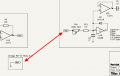
In your case Ref is "ground" or 0Volts.
Bottom left Ref is shorted to ground.
Top right is an oscillator. The Ref at this point is 0V, but could be 1V or 2V and the oscillator would run at a different frequency.
Probably the oscillator was drawn at a different time and "Ref" was some voltage. Later it was all added together. Now it is 0 Volts.
1747595503004.png
 

Tonyr1084

Joined Sep 24, 2015
9,744
A voltage reference, or VR, is a point of reference with a fixed voltage. For instance, my VR might be 2.5V. It’s a reliable and steady voltage used to hold a set voltage. Another device might use the VR as a threshold. If a test voltage exceeds 2.5VR, it may trigger an alarm, pump, or light. Conversely, if it drops below 2.5VR, it may trigger an alarm, pump, or light. The VR isn’t a regulated power supply; it’s a user-set trigger point for initiating actions.

In a ground point VR, you might work with a varying AC source. When the AC sine wave exceeds zero volts, it triggers an action. Similarly, when it goes below zero, it triggers an action. You might have multiple VRs or set points. If an AC source offset by a DC voltage runs between the upper and lower set points, it triggers an action when it exceeds or falls below the set points.
 

Tonyr1084

Joined Sep 24, 2015
9,744
A set of VR's might be set to positive and negative levels. An audio source that stays within the thresholds might remain silent, such as the squelch on a CB radio. But if the amplitude of the audio source or radio source exceeds the set points then the amplifier may pass the signal through to the user.
 

ElectricSpidey

Joined Dec 2, 2017
3,312
In my opinion a "voltage reference" is just that a "reference" a voltage that is compared to or measured against in contrast to a source used to power a load.
 

MisterBill2

Joined Jan 23, 2018
27,164
Ian says it firs in post #4! Actually, there are components specific items called voltage references because under specific conditions they do provide a stable known voltage. So that is what you get when you purchase the voltage reference part.
BUT, IN ADDITION there are also "voltage standards" that also are called "standard cells" that can serve as known voltage references. They generally cost quite a bit.

Besides that, there are portions of a circuit, that are designed to hold a steady voltage, that are used to serve as a reference point for some other part of an attached portion of the circuit.

So in almost every case, the term "voltage reference" is intended to define a stable known voltage point that is not used to supply power, but rather to define some voltage level.
 

WBahn

Joined Mar 31, 2012
32,702
Hi folks,
I'm not exactly a newbie at electronics but have just 'rekindled' my interest after a long time away from the subject. There's only one thing that reference books don't cover (or I haven't been able to find). I've not been able to find a decent, plain talking description of what a Voltage Reference is. Is it simply a link provided from a stable power source (from +V rail on a stable PSU) or does it involve the use of a voltage regulator????

The circuit I'm building is an analogue VCO used in music synthesis (in case that helps).
In general terms, the name says it all -- a voltage reference is a voltage that is used as a reference, usually for the purpose of comparing, in some way, other voltages to.

Very commonly, it is intended to be a stable, known voltage that doesn't vary even as other things, such as the supply voltage powering the circuit, might.

Imagine you have a circuit that is designed to output a current of 10 mA though some load that might vary from as little as, say, 100 Ω up to as much as 500 Ω. How might you do this?

One way would be to put the unknown load resistance in series with a known resistance of, say, 100 Ω. Now apply a voltage across the series combination until the voltage across the known resistance, which acts as a "current sense" resistor, is 1 V.

But how do you know when you have 1 V across it?

One way to do that is to compare it to a fixed 1 V signal.

But how do you get that?

Say you are powering the circuit from a 9 V battery. You might think that you can use a voltage divider to produce the 1 V signal, but your battery will start out at some initial voltage and drop as the battery is drained. It will also fluctuate as the circuit it is powering draws different amounts of current. This is where a voltage reference circuit come into play. It could be as simple as a Zener diode with a resistor in series with it (or, even simpler, two or three regular diodes in series with a current limiting resistor). The voltage produced is relatively constant over the range of usable battery voltages and a voltage divider can then be used with that to provide a reasonably stable 1 V signal for your comparisons.

The complexity of the voltage reference circuit depends on what is, and what is not, important. How much can the reference voltage vary by and still be acceptable? How much noise is tolerable in the reference voltage signal? How much power can be consumed by the voltage reference part of the circuit? How much can the voltage change as the temperature changes? How much can the circuit cost and not be a budget breaker? All of these, and more, go into deciding what kind of reference circuit is good enough to the intended application.
 

Thread Starter

Confusedbyscience

Joined May 18, 2025
3
In your case Ref is "ground" or 0Volts.
Bottom left Ref is shorted to ground.
Top right is an oscillator. The Ref at this point is 0V, but could be 1V or 2V and the oscillator would run at a different frequency.
Probably the oscillator was drawn at a different time and "Ref" was some voltage. Later it was all added together. Now it is 0 Volts.
View attachment 349482
Hey, Ronsimpson, I can't believe that I missed that. Thanks for your help, makes things a lot more clearer.
 
Top