Oil breakdown voltage tester

Thread Starter

Mdali911372

Joined Nov 14, 2024
2
Hello everyone
I want to know how the oil breakdown voltage tester sense the oil breakdown is it do by sensing current and stop the injection?
 

Tonyr1084

Joined Sep 24, 2015
9,744
Welcome to AAC.

No one understands what you're asking.
Oil Breakdown? Let's discuss that first.
What is oil breakdown?
Next, how do you expect to use a voltage tester to determine if oil has broken down?
Finally, what is "stop the injection?"?
 

Tonyr1084

Joined Sep 24, 2015
9,744
If you're talking about automotive applications; injectors inject fuel into the engine. If oil "Pressure" drops below a certain point the engine needs to shut down right away. Thus, shutting off the fuel injectors. This is done by the computer, the PCM (Power Control Module). Or maybe known by a different acronym.

Oil breakdown, as I know it, is when oil loses its ability to provide sufficient lubrication. You can still have oil pressure but poor protection against wear to engine components.

Pressure is sensed by a pressure sensor. In years gone by the sensor has been a spring triggered switch. If oil pressure is present the switch is activated. Either by opening or closing a switch. Electrical current flows through the switch and the PCM determines if there's enough oil pressure to safely run the engine. At startup there is no pressure yet. But the PCM will still start the engine. If oil pressure isn't detected within a set period of time the engine will shut down and the computer will (or should) throw a code.

If you want to test a pressure sensor you need to test it from its terminal to the body of the sensor. Depending on whether it's open or closed at rest a VOM (Volt Ohm Meter) (or other test meter) will determine if the switch is open or closed. THEN you need to apply sufficient pressure to the sensor to switch its state from open to closed or closed to open. The meter should change its reading. The meter needs to be on OHMS. When the switch is closed it should read close to zero ohms. 0.01 or 0.1 ohms is considered a closed switch. "OL" is considered an open switch. If you get OL regardless of the pressure then you have a bad sensor. Or vice versa, if it's closed and doesn't change then again you have a bad sensor.

Helpful?
 

Thread Starter

Mdali911372

Joined Nov 14, 2024
2
Welcome to AAC.

No one understands what you're asking.
Oil Breakdown? Let's discuss that first.
What is oil breakdown?
Next, how do you expect to use a voltage tester to determine if oil has broken down?
Finally, what is "stop the injection?"?
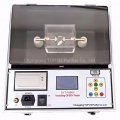
For testing the transformer oil we use a device which is called the oil breakdown tester the device show breakdown of oil il attached a photo for you.
 

Attachments

Tonyr1084

Joined Sep 24, 2015
9,744
More modern sensors require voltage on two lines and a third line sends back an actual pressure in the form of a small voltage. Typically anything from 1 to 5 volts. The PCM understands what that means and takes action according to the reading.
 

Tonyr1084

Joined Sep 24, 2015
9,744
For testing the transformer oil we use a device which is called the oil breakdown tester the device show breakdown of oil il attached a photo for you.
This is helpful. Unfortunately it's a subject where I have no understanding of how this works. So I can't answer your question. Perhaps one of our more experienced members will be able to answer your question.

Again, welcome to AAC.
 

Tonyr1084

Joined Sep 24, 2015
9,744
I've been gazing at the picture. MY GUESS - I said "GUESS" is that as the oil ages it will become electrically conductive. This can be a bad thing in a transformer (I would assume). IF a given amount of oil conducts a certain (or higher) amount of current it will mean the oil has degraded and should be changed. Again, this is way over my head and I probably shouldn't be answering your question at all. But I've been known to occasionally get it right. All too often I've gotten it wrong too.
 

JohnSan

Joined Sep 15, 2018
121
The one I saw used years ago was an 11kV to 110V control transformer (maybe 100va or so) with a variac off a 110v supply.
The variac fed the 110V winding and the 11kV winding was connected to two brass balls in a glass beaker with a specific gap.
Can't remember what the gap was. Oil taken from a transformer was poured in the beaker then the variac turned up slowly. If there was any sign of an arc (or maybe bubbles) across the balls, the oil needed changing.
I always thought it was fing dangerous but I gathered it had been used for years.
So start with finding a 11kv to 110v control transformer..
 

Tonyr1084

Joined Sep 24, 2015
9,744
I always thought it was fing dangerous but I gathered it had been used for years.
The reason why it's not dangerous is because there is a lack of oxygen. The fuel is the oil, the heat is the spark but the oxygen is needed to complete the combustion (or fire) triangle. You can fill the beaker with pure hydrogen and then run a spark through it and nothing will happen. Without oxygen or an oxidizer there will be no fire or explosion.
 

MisterBill2

Joined Jan 23, 2018
27,186
Certainly an insulation test involves monitoring the current as the voltage is increased. It would be reasonable to monitor on the low voltage end of the leakage path fixture, so that the sensing electronics will not need to withstand the high voltage. For safety purposes there will probably also be some sort of provision to detect current on the high voltage side that is not flowing to the opposite test point, although with adequate isolation and guarding that may not be required.

Watching for arcs in a beaker seems a bit crude by current standards. AND, certainly such a test is dangerous, not so much because of any fire hazard, but rather because of having a human operator close enough to see when a spark first starts. Eleven kilovolts, even at only a few milliamps, is rather hazardous. Today such a procedure would make an OSHA inspector very upset. The other problem is that contaminated oil might be conductive enough to break down without any arc showing.

Is the TS wanting to understand the testing better, or seeking to create an oil breakdown test machine???
 
Last edited:

Tonyr1084

Joined Sep 24, 2015
9,744
such a test is dangerous, not so much because of any fire hazard, but rather because of having a human operator close enough to see when a spark first starts.
I recall monitoring Hi-Pot tests where a high potential voltage was sent down one wire and the meter was looking for current down another wire. This tested the insulation for high voltage breakdown. If the wire passed the test it was put into service. The Hi-Pot tester has two probes. There have been times when an operator sitting at a table conducting these tests dropped the energized probes in his lap. I never experienced it but having known a few guys and girls who got the shock of their lives have lived to tell about it. Not even a trip to the hospital. It's PROBABLY similar to static discharge, when you walk across the carpet and build up 50KVS (KV Static) and grab the doorknob and the shock released caused your arm muscle to contract violently, the greater danger is in your hand hitting something potentially sharp.

The threat of getting shocked by two high voltage probes in a glass jar filled with oil seems rather minimal to me. Don't know if others agree or not, but that's my position and reasoning.
 

MisterBill2

Joined Jan 23, 2018
27,186
The actual hazard may indeed be very little, but the OSHA rules are intended to protect the totally incompetent folks, who do not understand basic safety precautions at all, and so an interlocked insulated test chamber would be mandatory.
 
Top