Facebook
 Google
 GitHub
 Linkedin

Well I am unable to determine if the device is a true NRF24L01+ or perhaps some weird clone. There is a "legitimate" clone named Si24R1 and that is described as compatible except for having an incompatible handling of payload acks (if one is using that feature) and there are all kinds of rumors about truly bizarre fakes that just misbehave.
I've spent enough hours to convince myself that there are no more software possibilities, I've tried a variety of different settings that are implied in the docs but not explicitly stated in them and nothing I have tried seems to allow the TX to receive an ack.
The TX is expecting an ack, that much is true and that shows that the TX is very likely to be correctly setup and that the RX might be at fault.
But frankly there are just a finite number of registers and fields involved here and I've explored many different edge cases to no avail.
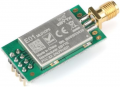
I ordered some other inexpensive modules that are different physically (they have a faraday cage around the RF hardware) so I will see how these behave.
I'd be very interested to hear from anyone here who has used these devices and managed to get the auto-ack feature working.
I've spent enough hours to convince myself that there are no more software possibilities, I've tried a variety of different settings that are implied in the docs but not explicitly stated in them and nothing I have tried seems to allow the TX to receive an ack.
The TX is expecting an ack, that much is true and that shows that the TX is very likely to be correctly setup and that the RX might be at fault.
But frankly there are just a finite number of registers and fields involved here and I've explored many different edge cases to no avail.
I ordered some other inexpensive modules that are different physically (they have a faraday cage around the RF hardware) so I will see how these behave.
I'd be very interested to hear from anyone here who has used these devices and managed to get the auto-ack feature working.