NPN output circuit with current limit

Thread Starter

pedro_nf

Joined May 24, 2020
5
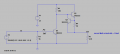
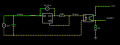
I have this circuit that is between a 3.3V uController output and the input pin of a device that I want to trigger. The device's input is in fact an optocoupler with current limiting, the cable between my uController and this device is long so I'm using 24V for the output.
My issue is, sometimes someone mixes up the wires and makes a short on the output, and the transistors blow up. What would be the easiest solution to prevent a short on the output? Can a PTC do the job or do I need a current limiter circuit?

This is my circuit, LTspice file attached to this message
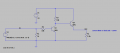
1759433601021.png
 

Attachments

dl324

Joined Mar 30, 2015
18,216
Welcome to AAC!
My issue is, sometimes someone mixes up the wires and makes a short on the output, and the transistors blow up.
How is the connection being made to the load? Are the wires color coded? Is there a connector? If there's a connector, can a polarized connector be used?
 

panic mode

Joined Oct 10, 2011
4,864
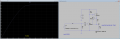
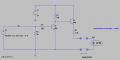
This is 24V circuit, likely interfacing to PLC or similar. the advantage of adding Q3 is that voltage drop across Q2 is reduced, (except when current limit kicks in).

RL=2k2, IL=10mA
RL=1k, IL=12.5mA
RL=0.1 Ohm, IL=14mA

Q2 will still be subject up to some 340mW heat dissipation.

1759442171350.png
 
Last edited:

MisterBill2

Joined Jan 23, 2018
27,159
In post #3, P.M. has described just what I would also suggest.
AND, I am trying to imagine how long the wire would be that there would be a 20 volt drop at ten milliamps current. How many miles long is this wire?? OR are there also additional conditions that we are not told about??
 

Thread Starter

pedro_nf

Joined May 24, 2020
5
Welcome to AAC!

How is the connection being made to the load? Are the wires color coded? Is there a connector? If there's a connector, can a polarized connector be used?
The cable and connector are made by the production team and they make mistakes... not often but always when I have no time to spare and we are low on trigger board stock :-|
 

panic mode

Joined Oct 10, 2011
4,864
.., I am trying to imagine how long the wire would be that there would be a 20 volt drop at ten milliamps current. How many miles long is this wire?? OR are there also additional conditions that we are not told about??
we are still not told what this is about...

if it interfacing to industrial devices like PLCs, there will be some limits that need to be met. input on device A may expect minimum current of 10mA while voltage at the input is at least 12V. that may be enough to drive small relay too.
input on device B may be ok with 2mA and 16V or whatever....

then every now and then you see people doing funny things like daisy chaining devices (sensors) because they run out of I/Os or don't have access to software or source code so they are forced to MacGyver things. like inserting sensor(s) into existing signals to create wired AND.

typical industrial sensor may have a voltage drop of 0.2 - 2.5V. and once 3 of them are in series that may be 7.5V. many devices will have minimum input voltage such as 12-20V. suddenly the 24V that we started with is melting away.... so it may not be about the length of wire.

again, not sure what the intent is and there is a world of possibilities out there. so a hint of what is this for could help with answers that are better suited.

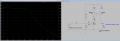
for example if more current is needed while ensuring low voltage drop and current limit something like this may do the trick.
1759509150494.png
 
Last edited:

sghioto

Joined Dec 31, 2017
8,633
The TS said the input or load was an optocoupler current limited at 10ma.
Assuming 24 volts at 10ma = 2400 ohm load.
A 24 guage conductor has appx 26 ohms at 1000 ft.
A half mile complete loop is 137 ohms.
If the other end was shorted that's equal to a current draw of 175ma.
So apparently the line is somewhat shorter if the transistor is destroyed each time.
 

panic mode

Joined Oct 10, 2011
4,864
not necessarily... transistor failure may not be due to current but due to power dissipation.
10mA*137 Ohm = 1.37V, so transistor would have to dissipate nearly 4W

(24V -1.37V)* 175mA = 3930mW

also wiring mistake (short circuit) may happen not only on the remote end. if short is at the output then 137Ohm is not there to limit current.
 

MisterBill2

Joined Jan 23, 2018
27,159
There is not enough information in the original post, and " and they make mistakes... " suggests to me that there is a lot more to the story.
 

Thread Starter

pedro_nf

Joined May 24, 2020
5
There is not enough information in the original post, and " and they make mistakes... " suggests to me that there is a lot more to the story.
The cable has around 10m but the short circuit can be in either side of the cable so I need to protect it for 0 ohm load.
 

Thread Starter

pedro_nf

Joined May 24, 2020
5
This is 24V circuit, likely interfacing to PLC or similar. the advantage of adding Q3 is that voltage drop across Q2 is reduced, (except when current limit kicks in).

RL=2k2, IL=10mA
RL=1k, IL=12.5mA
RL=0.1 Ohm, IL=14mA

Q2 will still be subject up to some 340mW heat dissipation.

...
Thank you @panic mode this solution looks good. Had some emergencies at work so this project is in standby...
There is no PLC, as I said in my initial post this is a trig signal for a device and the device is a camera that has an optocoupler input.
The cable is around 10m but I need to protect the circuit against a 0 ohm load, so I'm sure someone will not blow my circuit again.
I prefer the all NPN circuit version, I'm using a SOT-26-6 with a couple of transistors inside so it will be easier.
 

panic mode

Joined Oct 10, 2011
4,864
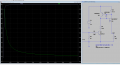
optocoupler input needs only few mA and has low Vf. so simply using series resistor will do the trick.
not sure what transistors you use, but the RL need to handle power (at least 250mW). this is the simplest change and Q2 will hardly see change in load regardless if opto is shorted or not.
1761246277631.png
 

Thread Starter

pedro_nf

Joined May 24, 2020
5
optocoupler input needs only few mA and has low Vf. so simply using series resistor will do the trick.
not sure what transistors you use, but the RL need to handle power (at least 250mW). this is the simplest change and Q2 will hardly see change in load regardless if opto is shorted or not.
...
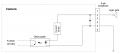
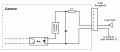
For info, on the camera side, according to documentation, I have something like:
1761299866782.png

or

1761299886447.png

also from camera doc:
max input is 30V
logical 0 is 0V
1761300620961.png

I measured around 10mA when connected to 24V

the transistors I'm using:
ZXTD09N50DE6TA
Bipolar Transistors - BJT Dual 50V NPN
 
Last edited:
Top