Noise Issues with PIR Sensor Circuit .. #2

MisterBill2

Joined Jan 23, 2018
27,530
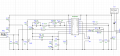
A PIR sensor that is directly coupled, as the one shown in the wiring diagram in post #1, will have an output level related to the ambient temperature of the sensing area observed. Also, the effective sensitivity will increase as the temperature in the viewed area drops, and that increase is rather complex to avoid.
 

ericgibbs

Joined Jan 29, 2010
21,442
A PIR sensor that is directly coupled, as the one shown in the wiring diagram in post #1, will have an output level related to the ambient temperature of the sensing area observed. Also, the effective sensitivity will increase as the temperature in the viewed area drops, and that increase is rather complex to avoid.

Hi Bill.
Where do you get the output related to temperature idea????
What you are confusing with a thermistor is a Light/Dark detector/

E
 
Last edited:

MisterBill2

Joined Jan 23, 2018
27,530
Consider that at all times and under all conditions the PIR sensor is constantly getting background IR from everything in it's viewing area. The PIR sensor detects motion exclusively by objects warmer than the background moving. THAT is the whole mechanism of PIR detection. Thus, with a reduction in the background constant signal, the resulting signal to noise ratio is increased, This results in an effective increase in sensitivity.
Aside from that, E.G., THE PIR sensor is either an IR sensing photocell or sometimes an IR sensitive, fast responding, thermistor. The explanation for the increase in system sensitivity is the same. It is the change in the S/N ratio that does it.
 

ericgibbs

Joined Jan 29, 2010
21,442
Hi Bill,
The TS has posted a specific circuit, a version I have used many times and I have never had any problems to which are referring.
There is no mention of a fast responding, thermistor in his posts or circuit.

It does not help if you persist in confusing and creating doubts with TS's problems unrelated to their queries.?
E
 

MisterBill2

Joined Jan 23, 2018
27,530
The response to background is not trivial and may even be what the problem is. Response to the background is real and certainly worth understanding, even if it is not found to be the culprit.
Consider that if the noise floor rises just a bit that some other noise could then be crossing the threshold.
 

MisterBill2

Joined Jan 23, 2018
27,530
I have used the microwave sensors and they work very well. BUT they have a different issue, which is that they see thru walls quite well. They also see thru doors that are not metal. This means that they require more effort in setup and adjustment, and more thinking as far as how they are aimed.
 

Janis59

Joined Aug 21, 2017
1,894
RE:"" The PIR sensor detects motion exclusively by objects warmer than the background moving. THAT is the whole mechanism of PIR detection. ""

Not exact!! No doubt that temperature difference is needed. Thus, one way of alter system`s sensitivity is to cool the sensor. For example by means of Peltier cooler.

But the main thingmade these PIR sensors may exist is Fresnel lense. It is made in the manner that every picture it sees it cuts into hundreds of small point-shaped identical multiplicated picictures. Thus, the hundreds of "intruders" are slwly moving over the T sensitie POINT (!!) of the sensor. And those hot points are moving again and again and again over the sensor until intruder have been gone. Thus - very much probably, Your lense have been dirty,or became matt. In the case if PIR is not fresh enough.
 

MisterBill2

Joined Jan 23, 2018
27,530
RE:"" The PIR sensor detects motion exclusively by objects warmer than the background moving. THAT is the whole mechanism of PIR detection. ""

Not exact!! No doubt that temperature difference is needed. Thus, one way of alter system`s sensitivity is to cool the sensor. For example by means of Peltier cooler.

But the main thingmade these PIR sensors may exist is Fresnel lense. It is made in the manner that every picture it sees it cuts into hundreds of small point-shaped identical multiplicated picictures. Thus, the hundreds of "intruders" are slwly moving over the T sensitie POINT (!!) of the sensor. And those hot points are moving again and again and again over the sensor until intruder have been gone. Thus - very much probably, Your lens have been dirty,or became matt. In the case if PIR is not fresh enough.
The PIR sensor works by sensing the difference in temperature between whatever is moving and the background. THAT is indeed the purpose of that lens with all of the stripes. So the amplitude of the variations is due to the difference in temperature between the moving object and the background.
As I study the wiring diagram/schematic from post #1, I am guessing that 1+, 1-, and 1o are connections to an op-amp in that IC, and that 2- and 2o are connections to a second op-amp, whose non-inverting input we do not see.
We do not get to see the circuit that drives the LED, nor what drives the relay. and I will not guess about those. So it appears that the TS has decided where the problem is located, and that it is not in the portion that we do not see.
Given that we have not any information about the signals at any point in the circuit except the relay control, which we are not shown, there is no way to offer any useful evaluation.
 
Top