Newbie: Wiring a self-made cooling device, safely.

Thread Starter

Matthew Hilton

Joined May 28, 2017
6
Hi All,

So I'm trying to build a cooling system, that will ultimately pump cool water to cool a project of mine.

The parts I'm using are (all purchased off Amazon, if that helps):
  • Brushless DC Pump, DC12V, Power 4.5W, (Model DC30A-1230)
  • 40mm 12V cpu/gpu cooler fan (.09A)
  • Bigstone TEC1-12710 Thermoelectric Cooler Peltier 12V (154W)
Ideally, I'd like to create a little "control board" (I've got a 3d printer) that has individual on-off switches with LEDs to turn off each component and then a master on-off switch. I'd like to power the whole thing through a 12V wall-wart, if possible.

How can I safely power these devices, using the same power supply?

I've got some working knowledge of power, resistors, capacitors, and my soldier skills are okay, however, electrical engineering (safely) is not a strong area of expertise for me.

Based on my testing so far, I think the Peltier can run at 4.5V for my desired temperature, although, being able to control both the peltier and the fan with a potentiometer (to adjust/decrease speed) would be cool.

Thanks all in advance for your support and assistance.
 

MaxHeadRoom

Joined Jul 18, 2013
30,688
Probably one efficient way would be through a micro-processor of some kind.
Depending on the depth of your expertise.
There is also a PLC-Like Smart Relay for small projects.
Max.
 

tcmtech

Joined Nov 4, 2013
2,867
The biggest issue is the simple power consumption involved.

As you state your peltier cooler uses 154 watts which at 12 volts is near 13 amps which is way beyond what any small 12 volt will wart will produce. In fact its approaching near double what most laptop power bricks will put out.

Also at 5 volts your 12 volt Peltier unit may not even eturn on or if it does the overall heat pumping capacity may be very low.

As for control that depends on how simple or complicated you want to make it and what you can handle working with. Doing a basic PWM control with a 555 IC or similar device and a thermistor is not all that difficult to work with.
 

#12

Joined Nov 30, 2010
18,224
My tendency would be to let the fan run at maximum all the time because there is no such thing as too much air flow. A PWM circuit is excellent for power control because it keeps the Peltier in its proper range for voltage and current, just turning on and off fast enough that the load can't change temperature as fast as the modulator frequency...another thing not difficult to do. You could run the PWM as slow as 1 second intervals and it will work just fine.
 

Thread Starter

Matthew Hilton

Joined May 28, 2017
6
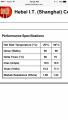
Sorry. I may have posted the wrong specs. Here are the specs on the peltier. (Attached)

Looks like it's only ten amps at max. And I plan to run it lower than max voltage. I've tested it and it does work at around 4.5v.

So in theory, is run the fan at 9v, the peltier at 4.5v, and the pump at 12v

And regrading the control. For now. And on off switch for each device will be fine. Maybe let's start that way.
 

Attachments

Thread Starter

Matthew Hilton

Joined May 28, 2017
6
My tendency would be to let the fan run at maximum all the time because there is no such thing as too much air flow. A PWM circuit is excellent for power control because it keeps the Peltier in its proper range for voltage and current, just turning on and off fast enough that the load can't change temperature as fast as the modulator frequency...another thing not difficult to do. You could run the PWM as slow as 1 second intervals and it will work just fine.
Thanks. The fan is just a bit noisy at 12v, that's why I was going to run it lower. That said, I could put a temp sensor around the unit and control the fan based on temp if I want.

I could program an arduino to monitor/control all units if someone can help me on that side... component lists. Etc. but I wanted to run it "static" in the beginning. Just to check it out as a proof of concept.
 

Thread Starter

Matthew Hilton

Joined May 28, 2017
6
Thanks Wayneh.

The more I'm thinking about this, perhaps I should buy some sort of pre-made unit.

Ultimately, I'm trying to basically created a loop of cold water to run through another application... nothing too crazy. My idea was to basically just hook up a small radiator (which I have), attached the TEC to it, cold side down, a heatsink and fan on the hot side and then a pump to push the water through it.

But given some of what I've seen discussed so far, perhaps I'm out of my league here.

I certainly can use a computer PSU and I like to tinker, but I am trying to also make it as energy efficient as possible, as it will likely run 24x7. in my ignorance, I thought 12V - I should be able to just get a 12V power, hook them all up in-line with one another, and use resistors or something as I go down the line to reduce the draw.

For example:
12V output to pump > limiter > 9.x V to the fan > limiter > 4.x V to the peltier TEC. : shrugs :
 

wayneh

Joined Sep 9, 2010
18,117
Nope, it's not that simple. They could all run in parallel at full blast, if you can supply enough power. But dialing them back requires quite a bit more circuitry. Nothing too tough but maybe more than you had hoped for.
 

#12

Joined Nov 30, 2010
18,224
Too much over designing without the benefit of any specifications. Start with how much heat you need to move and how accurate you need it. All the computers you have won't do any good if you need 200 watts of cooling out of a 150 watt Peltier and I don't believe you need to keep the water within 1/10th of a degree from the target temperature.

Microprocessor with PWM? How about a Klixon at +/- 10 degrees F?
 
Top