Newbie has one question

Thread Starter

Volttrekkie

Joined Jul 27, 2017
63
Hi. I bought this book on projects for beginners and it has lots of schematics and projects for breadboarding. My questions is this: I see that it gives you the various sizes for capacitors in the circuits. How are those sizes determined? How do you know what size capacitor to use and where? Is there a formula? I know you are supposed to use different types for different purposes. That I understand. But how do you calculate the correct size? How do you know to use a 0.1uF instead of a 1uF or a 1pF and so forth.
 

MrChips

Joined Oct 2, 2009
34,807
Hi. I bought this book on projects for beginners and it has lots of schematics and projects for breadboarding. My questions is this: I see that it gives you the various sizes for capacitors in the circuits. How are those sizes determined? How do you know what size capacitor to use and where? Is there a formula? I know you are supposed to use different types for different purposes. That I understand. But how do you calculate the correct size? How do you know to use a 0.1uF instead of a 1uF or a 1pF and so forth.
Without trying to be facetious, how do you know what size of anything to use?
... the size of a resistor, battery, wire, fuse, shoes, hammer, nail, nut and bolt, etc.?
For every size requirement, there must be some kind of criteria. With time, knowledge and experience you will come to learn the required size.
 

MrChips

Joined Oct 2, 2009
34,807
So let us take a resistor as our first example.
What is the property of a resistor? What is the function of a resistor?

A resistor resists the flow of current. How much current will it allow? We would apply Ohm's Law:

I = V/R

Hence we can size a resistor if we knew the voltage across the resistor and the amount of current through it.
Conversely, if we knew the current through the resistor, we can control the voltage across the resistor.

Let's not forget the wattage rating of the resistor. We can calculate the power dissipate using any of the three formulas:

P = I x V
P = I x I x R
P = V x V / R

After we calculate the actual power dissipated by the resistor, we double this value to give us some engineering margin and choose this higher wattage (or some rounded value) for our resistor wattage rating.

Now, let us examine a capacitor.
What is the property of a capacitor? What is the function of a capacitor?
A capacitor has two properties and perhaps two functions.

(1) A capacitor stores charge.
How much charge do we want to store?
The charge on a capacitor is given by the formula:

Q = C x V

where Q is the charge in joules
C is the capacitance in Farads
and V is the voltage in Volts

How long do we want to keep this charge? How much charge are we willing to give up in what length of time?
Once we set the criteria for our given application we would be in a position to size the capacitance.

(2) A capacitor also has a property similar to that of a resistor, called reactance (units in Ohms). A capacitor resists the flow of AC current whereas a resistor resists the flow of DC and AC current equally.

The reactance of a capacitor is given as

Xc = 1/(2 x pi x f x C)

The higher the capacitance C, the lower the reactance.
The higher the frequency f, the lower the reactance.

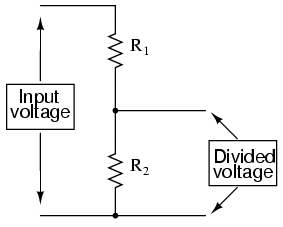
We can build a voltage divider using two resistors.


Similarly, we can replace R1 or R2 with a capacitor.

Circuit (A)


Circuit (B)


Both circuits (A) and (B) are also voltage dividers, but for AC signals. Since the reactance of C is a function of frequency, the voltage out will be different for different frequencies. Since the location of C differs in circuit (A) and (B) we would expect opposite effects as we change frequencies. Yes, in fact, one is a low-pass filter and the other is a high-pass filter. Can you guess which is which?

So, back to your question, how do we know what value of C to choose? If we select the value of R, we can control the frequency response by choosing the value of C. If we fix the value of C and vary the value of R (which is easier to do than varying C) we now have a tone control circuit.

Hence we choose component values to suit our circuit function and application based on known criteria.
 

wayneh

Joined Sep 9, 2010
18,104
Form follows function. You have to first identify what function is required, step by step and block by block in a larger design, and then you choose the components to accomplish that function. The challenge is often to balance cost and simplicity against the specifications. The cheap solution may not be as precise or as robust as the more costly design. Bicycle versus BMW. Both have a role.
 

Thread Starter

Volttrekkie

Joined Jul 27, 2017
63
Oh, OK. So, it depends on experience. There is no formula like V = IR or Q = CV that can be applied to get the correct size. Interesting. I can see how selecting the resistor size has to do with V = IR. Like, if you have a 9V power supply, obviously affects what size resistor you will use.

Oh wow. I am going to noodle with this. Thank you do so much
 
Last edited by a moderator:

wayneh

Joined Sep 9, 2010
18,104
Oh, OK. So, it depends on experience. There is no formula like V = IR or Q = CV that can be applied to get the correct size. Interesting. I can see how selecting the resistor size has to do with V = IR. Like, if you have a 9V power supply, obviously affects what size resistor you will use.
There most certainly are calculations involved. The tools you use require knowledge and experience to wield properly.
 

MrChips

Joined Oct 2, 2009
34,807
Oh, OK. So, it depends on experience. There is no formula like V = IR or Q = CV that can be applied to get the correct size. Interesting. I can see how selecting the resistor size has to do with V = IR. Like, if you have a 9V power supply, obviously affects what size resistor you will use.
Absolutely not. How could you possibly arrive at that conclusion after all I wrote?
Of course, I left out all the necessary formulas lest we overwhelm you.

We can provide you with all the formulas when you are ready and prepared to understand them.
 

WBahn

Joined Mar 31, 2012
32,823
Oh, OK. So, it depends on experience. There is no formula like V = IR or Q = CV that can be applied to get the correct size. Interesting. I can see how selecting the resistor size has to do with V = IR. Like, if you have a 9V power supply, obviously affects what size resistor you will use.
Not so much on experience but on what purpose you are trying to achieve.

Just knowing V=IR does not always allow you to select the proper resistor. What size pullup resistor should you use? Not an obvious decision. You need to delve deeper into what it is you are trying to achieve and what factors are working against you. Even more subtle would be things like noise generation and noise pickup of different types and sizes of resistors.

Capacitors are more troublesome because they are used for many different purposes from energy storage to noise suppression to timing to ground plane stitching to signal filtering. So first you need to identify what your purpose is (or combination of purposes are) for each of the capacitors in the circuit. Then, because capacitors are inherently frequency selective, you often have to consider second order affects such as parasitic inductance and resistance at the frequencies of interest -- above a certain frequency most physical capacitors look more like inductors than capacitors because the parasitics dominate above that certain frequency.
 

MrChips

Joined Oct 2, 2009
34,807
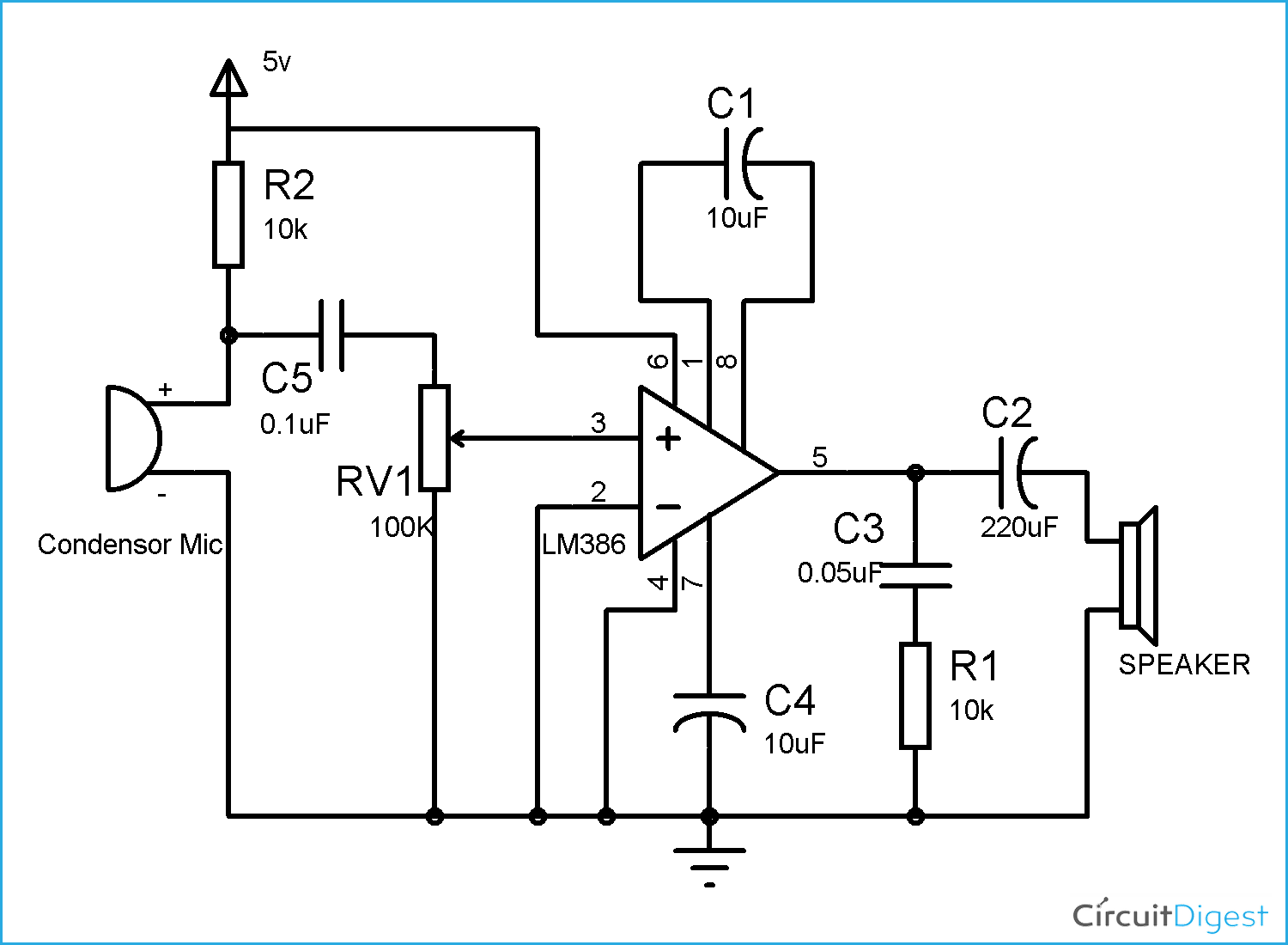
Here is a relatively simple and popular audio amplifier circuit:


There are five capacitors in this diagram, C1 to C5.
Each one has a specified value. Did the circuit designer pull the numbers out of a magic hat?
Absolutely not. Each capacitor has a function and the desired value can be calculated based on the criteria of its function.
 

Thread Starter

Volttrekkie

Joined Jul 27, 2017
63
Based on the criteria of its function? Now I am really confused. What criteria? This is where precisely I get lost. HELP PLEASE!!!
 

AnalogKid

Joined Aug 1, 2013
12,126
Oh, OK. So, it depends on experience. There is no formula like V = IR or Q = CV that can be applied to get the correct size.
Yes, there is.

BUT there is no *one* equation for all applications. The equations to calculate the capacitors in audio amplifier tone controls is very different from the one to calculate the size of the bulk filter capacitor in a linear power supply, or the output filter capacitors in a switching power supply, or the timing capacitor in a 555 oscillator, or or or ...

Sticking with capacitors, for many applications the equations have their origins in one or two basic equations. One relates how the impedance of a capacitor changes with the frequency of the signal going through it. The other relates how long it takes to charge a capacitor up to a specific voltage given the voltage source available and the type of charge current limiter. Both of these are derived from the basic equation that defines a capacitor and how it relates to voltage and current.

ak
 

Thread Starter

Volttrekkie

Joined Jul 27, 2017
63
Please tell me more, Obi Wan.

This is precisely where I get confused. I can see C1 through C5. Now, how are you supposed to decide the value for each?

I mean, seems to me, anybody can just read the schematic and plug in the necessary components into a breadboard without knowing why. Obviously, that does not mean you know electronics.
 
Last edited by a moderator:

AnalogKid

Joined Aug 1, 2013
12,126
Perhaps you should tell us your experience level. Differential and integral calculus describe perfectly the "right" value for C5, the input coupling capacitor, but would that tell you anything useful?

Also, you are missing a critical component - the requirements for the circuit. These don't come from equations, they come from the circuit user. There is a huge pile of differences between the technical requirements of an EEG preamp and a phono preamp. Those requirements drive the overall circuit topology and the corresponding design equations. So, for example, how did the designer decide that 0.1 uF was an acceptable value for C5, the input coupling capacitor? First, by knowing how much, or how little, audio "quality" he wanted the circuit to have. There is no equation *for* that. The design equations come *from* that.

And back off the "hello" attitude. This is a volunteer help line, not a 24/7 contract support service. You need to adjust your expectations for 12:25 am.

ak
 
Last edited:

wayneh

Joined Sep 9, 2010
18,104
I mean, seems to me, anybody can just read the schematic and plug in the necessary components into a breadboard without knowing why. Obviously, that does not mean you know electronics.
Absolutely true. Just as following a recipe doesn't make you a chef. Knowledge and experience is what comes into play, at the electronics lab bench or in the kitchen, when you follow the recipe and something goes wrong. Can you fix it? If you have enough understanding of the components and their function in the recipe (schematic), you have a chance.
I can see C1 through C5. Now, how are you supposed to decide the value for each?
You don't so much "decide" the values as choose a value that meets the functional goal. Suppose I need egg yolk to emulsify my mayonnaise. I'll select the yolk of a single, jumbo egg instead of two medium. In an audio amplifier, I might choose to filter out any frequency above or below the audio range, in order to prevent power being wasted in those areas of the spectrum. An RC filter to roll off above 20kHz requires specific values and you have to calculate them, or rely on experience if you've already done it many times.

Again, form (the specific components selected) follows function.
 

Thread Starter

Volttrekkie

Joined Jul 27, 2017
63
Sorry about the hello. I meant no offense.

You guys are great. Thanks so much for the help. And my experience level in electronics is beginner. I mean, I know how to use a multimeter to check if a capacitor is bad but component level electronics is a whole new thing for me. I am trying to learn to use an oscilloscope.

In response to Mr.Chips, I think B is low filter because the resistor is at Vin and the capacitor is parallel to it. Since a parallel capacitor sinks AC signals, it leaves DC/low frequency signal to go to Vout. I am not sure though why there are two arrows and no GND symbol.
A is high filter because right after Vin there is a capacitor which stops DC and allows AC to go to Vout. The resistor I guess is needed to limit current through the capacitor, to not overload it.
 
Last edited by a moderator:
Top