Need PIR to sleep after activation

Thread Starter

jerryrp

Joined Jun 19, 2017
11
I have a micro PIR that I need to go to sleep for 4 hours after activation. My circuit is limited to battery supply of 3 volt lithium battery.

Specs of the PIR
Current Drain: <.5mA
Output: 0V Low/>3V High (Detected Movement)
<300uA Source
Recycle Delay: ~2sec after hold time
Continuous Movement yields Continuous Output
Hold Time: ~2 sec.

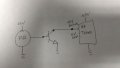
The output of the Output of PIR is attached to an open collector transistor.

Any direction would be grateful.
 

ericgibbs

Joined Jan 29, 2010
21,439
hi jerry,
Welcome to AAC
Is it the PIR that you want to 'sleep' for 4 hrs after it has been activated due to detecting movement or being switched ON.
E

BTW:
If its a PIR Module, it may have a required working supply of 5V thru 20V
 

Thread Starter

jerryrp

Joined Jun 19, 2017
11
Trying to maintain the greatest battery life I thought it would be better to cycle the PIR off since the PIR has such a short recycle time.
So once the PIR detects movement and provides output to my open collector circuit, hold power for 2 seconds and then sleep the PIR. The open collector circuit is acting as a switch to my RF transmitter.

The PIR does have a working supply of 2.75 volts to 12 volts but I'm limited to supply of 3 volt lithium battery.
Space is minimal and hope that this can be done without using some kind of micro controller.
Thanks
 

ericgibbs

Joined Jan 29, 2010
21,439
OK,
The IR modules I have run on 5V thru 20v, in standby they draw 50uA, activated approx 3mA.
Can you say what the PIR output operates when activated.
You could use a MOSFET to cut the supply to the PIR module, using a MCU pin to its Gate pin.
E
 

ericgibbs

Joined Jan 29, 2010
21,439
hi j,
As the PIR will work from a 3.3v supply, have you considered powering it from a MCU output pin.?
Use a 4hr software time out.
The problem with an external timer it could use more power than the < 50uA the PIR is in standby.
E
 

Alec_t

Joined Sep 17, 2013
15,117
hope that this can be done without using some kind of micro controller.
A micro would be the least current-hungry way of getting a 4-hr delay. A small footprint one with an internal clock, a minimal number of pins and the ability to put itself to sleep should do the trick. There's likely a PIC that would meet the bill (someone here can probably suggest a candidate).
 

ericgibbs

Joined Jan 29, 2010
21,439
When the PIR is activated, the open collector provides an active high to a RF transmitter.
hi j,
Do you have a sketch you could post, the description is not clear.?
Is the transistor being used to switch the power to the TX.?
 

ericgibbs

Joined Jan 29, 2010
21,439
I see, the TX is powered directly from the 3Vs.
If you can program a PIC, there are low power versions, that will run on 3.3v and have sleep mode, that IMO would require the lowest current drain as a Timer.
I agree with Alec. post #6
 

Thread Starter

jerryrp

Joined Jun 19, 2017
11
I see, the TX is powered directly from the 3Vs.
If you can program a PIC, there are low power versions, that will run on 3.3v and have sleep mode, that IMO would require the lowest current drain as a Timer.
I agree with Alec. post #6
Everything is pointing in that direction. I was trying to avoid going down that path cause I didn't want the added labor in programing the PIC's since this is a one thousand piece production product.

Any suggestions for PIC?

Thanks
 

ericgibbs

Joined Jan 29, 2010
21,439
hi jerry,
I would recommend that you measure the actual current draw of the PIR when in Standby and when its activated.
This will give us some idea of the 'target' current that we need to draw with an external Timer.

Did John's link in post #14 suggest any solutions.?

E
 

Thread Starter

jerryrp

Joined Jun 19, 2017
11
hi jerry,
I would recommend that you measure the actual current draw of the PIR when in Standby and when its activated.
This will give us some idea of the 'target' current that we need to draw with an external Timer.

Did John's link in post #14 suggest any solutions.?

E
Current draw with PIR only in idle mode is 14uA

John's post#14 looks good as well. This might be better since I don't have to worry about programing a chip.
 
Top