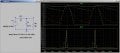
The goal of rectification is to convert AC to DC. If there is no energy storage between the rectifier and the DC load, the pulsing DC voltage across the load will sag below some low limit. Adding energy storage (capacitors or inductors) can supply the load current until the next time the rectified AC input voltage is above the desired minimum DC level...
Look at this simulation: The voltage across the load R1 is plotted as a function of time at various values of filter capacitance... C1 = 1fF, 1uF, 10uF, and 100uF is shown in Green, Red, Blue, and Yellow, respectively. 1fF is very close to zero capacitance...
The ripple has a peak to peak voltage. What is the minimun voltage the ripple can sag to without causing a problem for the downstream circuit(s)? For example, when using a linear regulator, it has a "dropout voltage" where if the input voltage sags below that level, the regulator stops regulating.
Full wave rectification means that the filter capacitor has to hold up the voltage for half the time compared to halfwave rectification. If low ripple is critical, then use fullwave. If ripple has too much sag with just a simple filter capacitor, then add an expensive inductor. It is usually cheaper to increase the transformer secondary voltage to allow for more sag than to use an inductor (Pi filter).

 Facebook
 Google
 GitHub
 Linkedin