Need help with fritzing diagram

dl324

Joined Mar 30, 2015
18,384
So I need to not connect my 3.7v batteries to VIN and instead ONLY connect them to the servos? Am i right in saying that?
Yes. Doing that will prevent current draw from the servos from affecting power to the Nano. You also need to take care in how you connect the grounds for the servos to ground for the Nano. You want to minimize "ground bounce" which could also disrupt the Nano.
 

djsfantasi

Joined Apr 11, 2010
9,237
Wait, I think i know what you mean. So I need to not connect my 3.7v batteries to VIN and instead ONLY connect them to the servos? Am i right in saying that?
Yes! This is exactly what I’ve been trying to say. Re-read post #11 with this revelation now in mind.
 

Thread Starter

ConnorG

Joined Nov 23, 2023
22
Yes! This is exactly what I’ve been trying to say. Re-read post #11 with this revelation now in mind.
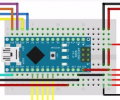
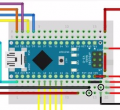
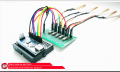
The further I get into this project, the more i realize that this diagram REALLY sucks. This circuit is supposed to fit on a micro breadboard which only has 17 pins in one row. While the fritzing diagram is using a 20 pin breadboard. In the project pictures themselves I can clearly see he uses a micro breadboard. So now I have to figure out this circuit that was made on a 20 pin breadboard and fit it on a 17 pin breadboard.
 

djsfantasi

Joined Apr 11, 2010
9,237
The further I get into this project, the more i realize that this diagram REALLY sucks. This circuit is supposed to fit on a micro breadboard which only has 17 pins in one row. While the fritzing diagram is using a 20 pin breadboard. In the project pictures themselves I can clearly see he uses a micro breadboard. So now I have to figure out this circuit that was made on a 20 pin breadboard and fit it on a 17 pin breadboard.
Breadboards SUCK when used to create a final working circuit. They are intended only to test a circuit or part of a circuit and even have issues then. The patch wires create antennas that mess up logic circuits and microprocessors and add capacitance where you don’t want it. Plus, the wire joints are impermanent, often disconnect unexpectedly and are unreliable.

After a successful test is performed. You should move to a perfboard and solder everything together. You have to learn another skill and another debugging skill.

If you plan on using a circuit once for a few minutes, then a breadboard will work. Otherwise, consider moving on to the next step.
 

Thread Starter

ConnorG

Joined Nov 23, 2023
22
Breadboards SUCK when used to create a final working circuit. They are intended only to test a circuit or part of a circuit and even have issues then. The patch wires create antennas that mess up logic circuits and microprocessors and add capacitance where you don’t want it. Plus, the wire joints are impermanent, often disconnect unexpectedly and are unreliable.

After a successful test is performed. You should move to a perfboard and solder everything together. You have to learn another skill and another debugging skill.

If you plan on using a circuit once for a few minutes, then a breadboard will work. Otherwise, consider moving on to the next step.
Yea, I kind of just went off the tutorial so I'm stuck now. I'm not planning on running this circuit for long. At this point I'm looking for it to run at all. This is a project for school and my deadline is on monday so this forum was really my last resort.
 

dl324

Joined Mar 30, 2015
18,384
This circuit is supposed to fit on a micro breadboard which only has 17 pins in one row. While the fritzing diagram is using a 20 pin breadboard. In the project pictures themselves I can clearly see he uses a micro breadboard. So now I have to figure out this circuit that was made on a 20 pin breadboard and fit it on a 17 pin breadboard.
Only 17 of the 20 rows are being used. You just need to use the row that's under the right edge of the Nano.
1700950815001.png
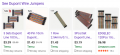
Since the only nets with multiple connections are power and ground, you can ditch the solderless breadboard and use wire jumpers between modules.
1700951161727.png
If you're handy, you could customize length and connector polarity; though they sell male-male, male-female, and female-female in at least a couple lengths.

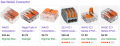
You could solder the power and ground wires together. If you can't solder, you can crimp them with solderless connectors or use Wago connectors:
1700951114516.png
1700951064671.png

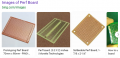
If you need something to mount the Nano on, you could use perf board:
1700951278769.png
 

Thread Starter

ConnorG

Joined Nov 23, 2023
22
Only 17 of the 20 rows are being used. You just need to use the row that's under the right edge of the Nano.
View attachment 308398
Since the only nets with multiple connections are power and ground, you can ditch the solderless breadboard and use wire jumpers between modules.
View attachment 308401
If you're handy, you could customize length and connector polarity; though they sell male-male, male-female, and female-female in at least a couple lengths.

You could solder the power and ground wires together. If you can't solder, you can crimp them with solderless connectors or use Wago connectors:
View attachment 308400
View attachment 308399

If you need something to mount the Nano on, you could use perf board:
View attachment 308402
Yea, I crimped the grounds together, I'd love to use a perf board but unfortunately I'm too far into the project to switch that out now. I did notice that only 17 rows are used, however the row that that you would plug in the wire to connect the ground of the battery with the ground of everything else is blocked by the nano. I could try and connect a wire through the screw hole of the nano however that is not a definite.
 

dl324

Joined Mar 30, 2015
18,384
I did notice that only 17 rows are used, however the row that that you would plug in the wire to connect the ground of the battery with the ground of everything else is blocked by the nano.
I'm assuming your Nano has male headers to connect to the solderless breadboard. That should give you enough clearance under the right side of the Nano to use it for the ground connections. You only need 4 holes and don't need to use the jumper wires shown in the wiring diagram for power or ground.

Plug ground from the battery into one of the ground holes circled in black:
1700952454212.png
 
Last edited:

Thread Starter

ConnorG

Joined Nov 23, 2023
22
I'm assuming your Nano has male headers to connect to the solderless breadboard. That should give you enough clearance under the right side of the Nano to use it for the ground connections. You only need 4 holes and don't need to use the jumper wires shown in the wiring diagram for power or ground.
Really? I didn't know that. So i would connect all my grounds to the pins under the nano?
 

dl324

Joined Mar 30, 2015
18,384
Really? I didn't know that. So i would connect all my grounds to the pins under the nano?
Assuming the 6 pin header on the Nano isn't long enough to make contact with the solderless breadboard.'

Refer to the picture I just put in post #28.
 

djsfantasi

Joined Apr 11, 2010
9,237
I'm not planning on running this circuit for long. At this point I'm looking for it to run at all. This is a project for school…
OK, the breadboard should be fine. The members have given you plenty of advice regarding fitting it on your breadboard and you have a whole day before Monday, so you should be all set. Good luck!
 

Thread Starter

ConnorG

Joined Nov 23, 2023
22
OK, the breadboard should be fine. The members have given you plenty of advice regarding fitting it on your breadboard and you have a whole day before Monday, so you should be all set. Good luck!
Thanks! Honestly, this forum has been a godsend. Everyone has been very kind. I'll check back in tomorrow when i have my glove done, so see you guys then!
 

dl324

Joined Mar 30, 2015
18,384
Honestly, this forum has been a godsend. Everyone has been very kind.
For future reference, you should post schoolwork in homework help so we don't give you answers, which would be cheating. That's not likely in this case unless you were supposed to figure out the wiring questions you had.
 

Thread Starter

ConnorG

Joined Nov 23, 2023
22
For future reference, you should post schoolwork in homework help so we don't give you answers, which would be cheating. That's not likely in this case unless you were supposed to figure out the wiring questions you had.
Nah, we where just supposed to build something. A couple of kids in my class did Unity, it was more about just learning something and making a working product. Although this might have been a little bit of an ambitious first try heh heh.
 
Top