If it had been wrong that would have been an easy fix! It was easy enough to check, and it would have caused the fuse popping.
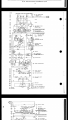
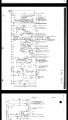
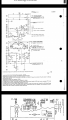
I have not been able to see the bottom section of the schematic to see where the problem might be, or even to see where in the circuit that fuse is. I don't know if you can do a copy and paste from the online manual, all I need to see is the circuit. Diagnosing equipment has been a large portion of my career so I may be able to help without asking you to check all the parts. Probably it is only one bad part, but it may also be a wrong connection if something was not put back into the right place. I have seen that before. Also, I have seen problems from a screw fallen into an assembly. So there is another thing to check. That could be an easy fix still.
If it had been wrong that would have been an easy fix! It was easy enough to check, and it would have caused the fuse popping.
I have not been able to see the bottom section of the schematic to see where the problem might be, or even to see where in the circuit that fuse is. I don't know if you can do a copy and paste from the online manual, all I need to see is the circuit. Diagnosing equipment has been a large portion of my career so I may be able to help without asking you to check all the parts. Probably it is only one bad part, but it may also be a wrong connection if something was not put back into the right place. I have seen that before. Also, I have seen problems from a screw fallen into an assembly. So there is another thing to check. That could be an easy fix still.
Sorry to take so long responding, I don't see the attachment. The one screen shot that shows the top half, up to the second transformer, I am able to enlarge and read very well. So screen shots work for me.
As for the resistor that heats up so fast. what is in the line in front of it? There must be something controlling that device, unless it is just serving as a current limiter, which is probably why it is there. In that case, what is the load part of that line? Most ladder drawings show the load at the right hand end of the rung.
Sorry to take so long responding, I don't see the attachment. The one screen shot that shows the top half, up to the second transformer, I am able to enlarge and read very well. So screen shots work for me.
As for the resistor that heats up so fast. what is in the line in front of it? There must be something controlling that device, unless it is just serving as a current limiter, which is probably why it is there. In that case, what is the load part of that line? Most ladder drawings show the load at the right hand end of the rung.
Thanks for the complete image. I think that you mentioned earlier that if you unplug the circuit board that the fuse does not pop. If that is the case then at least one of the SCR devices is good. To check for short circuited SCRs you need either an ohm meter with a low resistance range, say 100 ohms half scale if it is an analog meter, or a cheap continuity beeper, or a battery and bulb continuity checker. You would be looking for a direct short circuit that shows the same no matter which way the polarity across it is. If it only shows shorted one way then it is a diode. Then next check the diodes in the gate leads of the SCRs, they should show continuity in one direction but not the other. If none of those show a short circuit then it is time to check the devices on the circuit board. Unplug the board before checking!!
The reasoning for this is that if both SCR devices are not shorted, then they are being triggered .
You are looking in the right direction but the list of suspects is larger. The system is an SCR inverter circuit, and either SCR might be the problem. Unfortunately the sequence of my response is re-arranged. At this point the problem appears to be either a short circuited part in the SCR loop, or the triggering is all wrong, either would pop the fuse. So first thing is checking for short circuited parts in the SCR section. Disconnecting the anodes will make the results easier to 8understand. The following words relate to checking parts on the circuit board. I somehow got my reply a bit scrambled in sequence. Sorry about that.
But since you are checking for a short circuit you don't need to disconnect them to check. Just probe across each two leads, since at this point you don't even need to know which is which. But use a meter for this resistance check, not a continuity checker. Also you will need to check each of the diodes, which must show open in one direction and a bit of resistance in the other direction.
OK, the circuit drawing helps a whole lot. If R5 is the one in line 70, connected between TI-9 and something below, then the cause is current flowing through one or both of the SCR devices. And if disconnecting and unplugging the circuit board keeps it from happening, then probably the problem is on the circuit board, and not a failed SCR. Of course it might still be that the controls board is getting a wrong command signal. One trick to save popping a lot of fuses would be to substitute a 100Watt light bulb for each fuse. The lights would need to be outside of the welder, the wire would not need to be very heavy since with a lamp in place the max current will be less than 2 amps.
If disconnecting the circuit board does not stop the popping fuses then the problem is a short circuit in that section between lines 70 and 80. I also recommend examining the actual connections and comparing that circuit to the published one. Sometimes connections get changed by those who have no clue, and this could be one of those. Also, you can check the connections to the actual welding area, because they also could be short circuited.
Thanks Bill I'll get to checking this weekend and let you know what I find I really appreciate your assistance with you this. Line 71 has r5 when I meter it I show a constant 36 volts if that helps.
Thanks Bill I'll get to checking this weekend and let you know what I find I really appreciate your assistance with you this. Line 71 has r5 when I meter it I show a constant 36 volts if that helps.
Thanks Bill I'll get to checking this weekend and let you know what I find I really appreciate your assistance with you this. Line 71 has r5 when I meter it I show a constant 36 volts if that helps.
OK, then I am guessing that one of the transformers on the opposite side is the output to the welding electrodes. AND I am guessing that you are reading the 36 volts with at least one of the fuses removed, or open, and that you are reading the voltage between the two gray wires. Unfortunately, from the notation on the transformer, it should be about 180 volts, given that there are two windings connected in series aiding.
I am going to have to read the manual that you attached, if I can. What it looks like is that the 2 SCRs are supposed to conduct alternately, with each sending 90 volts across the actual welding transformer, the conduction time depending on the current setting. But it is also possible that I have got it wrong.

 Facebook
 Google
 GitHub
 Linkedin