Need an automatic switch with hesitation to control AC motor

Thread Starter

Blieu Foster

Joined May 2, 2017
9
I have a fairly new washing machine with a bad control board. I would like to use it to dye fabric in and have figured out how to make it work EXCEPT for switching the motor back and forth to control the agitation.

I think I need an electronic switch I can put 120 volts into and it output 120 on one leg for @10 seconds, hesitate for a couple of seconds, then switch the 120 output to a different leg for @10 seconds and continue to do so as long as I want. That would allow my machine to agitate clockwise then pause (letting the motor stop) then agitate counter clockwise. Make sense? Where can I find such a switch?

I apologize for my ignorance.

Thanks in advance.

Blieu
 

Dodgydave

Joined Jun 22, 2012
11,395
If it's an Universal motor, you have to reverse the feed to the brushes to reverse direction, usually washing machines will have two relays, one for power on the other for direction change, speed is controlled by a Triac drive,. Your option is to use a 10second clock chip like a cd4017 with a 555 as a clock, and use alternate outputs like 1,3,5 to drive the relay, that will give you the rotaton time and delay between direction change. Or use a microcontroller.
 

Thread Starter

Blieu Foster

Joined May 2, 2017
9
Thanks for the reply Dodgydave!

Unfortunately, I am afraid you are over my head. I am unsure how the motor reverses. All I know is when I energize the orange wire it turns CW and if I energize the red wire it turns CCW. I googled cd4017 but did not find what I was hoping to find. AS I am sure you have guessed building something from components is way over my head. Anyway to purchase an out of the box solution?

Thanks again,
Blieu
 

MaxHeadRoom

Joined Jul 18, 2013
30,562
You need to show or find out the motor technology, there has been at least three types of motors used on W.M.'s over the years.
The 'fairly new' ones use a Fischer-Paykel motor.
Take pic of the motor if possible, or at least does it have a large capacitor mounted close to it?
Max..
 

#12

Joined Nov 30, 2010
18,224
building something from components is way over my head
Is posting the country you are in a possibility?
Or the brand name of the washing machine?
Or the model number?

"Agitator doesn't wag" isn't really enough to work with.

Here's a really hard question: Why are you asking electronic site if you can't build a circuit board?
It seems you need an assembled circuit board and you already know which one it is.:confused:
 

Thread Starter

Blieu Foster

Joined May 2, 2017
9
You need to show or find out the motor technology, there has been at least three types of motors used on W.M.'s over the years.
The 'fairly new' ones use a Fischer-Paykel motor.
Take pic of the motor if possible, or at least does it have a large capacitor mounted close to it?
Max..
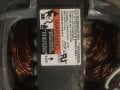
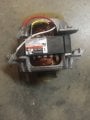
Thank you for the reply Max. I have included two images of the motor. It does indeed have a capacitor.
File May 03, 4 57 20 AM.jpeg File May 03, 4 58 08 AM.jpeg
 

Thread Starter

Blieu Foster

Joined May 2, 2017
9
Is posting the country you are in a possibility?
Or the brand name of the washing machine?
Or the model number?

"Agitator doesn't wag" isn't really enough to work with.

Here's a really hard question: Why are you asking electronic site if you can't build a circuit board?
It seems you need an assembled circuit board and you already know which one it is.:confused:
Thank you for the reply #12.

Unfortunately I wasn't very clear in my original post. I am converting a broken washing machine into a machine used to dye fabric. While you can dye fabric in a conventional washing machine they are not ideal.

I am afraid I am unable to answer your really hard question. the answer seems obvious to me but I have already admitted I am not very smart. I mistakenly assumed because I do not have the knowledge to build a circuit board I would seek knowledge from experts concerning solutions to meet my needs (as I stated "out of the box"). Your assumption that I already know which assembled circuit board I need would be incorrect. (I do know the serial number of the circuit board that is installed in my washing machine but that is not the one I need).

While I agree with you I was not as clear as I should have been in my original post I also agree you are absolutely correct in stating
"Agitator doesn't wag" isn't really enough to work with.
That is funny! Who gets credit for saying that?

Your other questions are easy to answer. I am in the USA. The washing machine is a Whirlpool Model # WTW4950XW0.

Thank you in advance for your help.
 

LesJones

Joined Jan 8, 2017
4,511
The motor is not the type of motor that is mostly used in washing machines which makes it more suitable for what you want to do. It is an induction motor which is fixed speed. The capacitor will be connected between the red and orange wire. (Orange as in your first post. It looks more like yellow in the pictures.) I thought a simple cam timer may do what you want but looking on ebay they are all expensive. I will have another look on ebay to see if there are any suitable timers or if there is a way to use two timers to do what you want.

Les.
 

Thread Starter

Blieu Foster

Joined May 2, 2017
9
The motor is not the type of motor that is mostly used in washing machines which makes it more suitable for what you want to do. It is an induction motor which is fixed speed. The capacitor will be connected between the red and orange wire. (Orange as in your first post. It looks more like yellow in the pictures.) I thought a simple cam timer may do what you want but looking on ebay they are all expensive. I will have another look on ebay to see if there are any suitable timers or if there is a way to use two timers to do what you want.

Les.
Thankyou Les. I appreciate your help.
 

JUNELER

Joined Jul 13, 2015
183
Hi,
Your motor have a 3 wires .
COLOR YELLOW.....
COLOR RED.......
COLOR WHITE.....
First you must know what color is center(common) ,let say color red is (common). Color yellow is your Line 1(live) and color white
is the line 2(neutral). A capacitor is placed one leg to center (common) and one leg to Line 1. Capacitor used as a starting.
Then reversing Line 1 and L2 will reverse the direction rotation.
 

Thread Starter

Blieu Foster

Joined May 2, 2017
9
Hi,
Your motor have a 3 wires .
COLOR YELLOW.....
COLOR RED.......
COLOR WHITE.....
First you must know what color is center(common) ,let say color red is (common). Color yellow is your Line 1(live) and color white
is the line 2(neutral). A capacitor is placed one leg to center (common) and one leg to Line 1. Capacitor used as a starting.
Then reversing Line 1 and L2 will reverse the direction rotation.
Thanks for the help Juneler. I understand how I could reverse the polarity on the motor. I am actually working on top of the washer at the back of the old (defective) circuit board. At the plug on the top I have a neutral which is white, a orange that rotates the motor CW, and a red that rotates the motor CCW. I need some type of switch to change back and forth from red to orange every 20 seconds or so with a hesitation between the change to prevent my motor from burning up.

Thanks again,
Blieu
 

MaxHeadRoom

Joined Jul 18, 2013
30,562
Don't you have the original gear box for the washer as that has a mechanical agitator built in, it would not be wise to agitate at that frequency by constantly reversing the motor.
Modern M/C's that use a new type of (Fischer-Paykel) motor can do this.
Max.
 

Thread Starter

Blieu Foster

Joined May 2, 2017
9
Don't you have the original gear box for the washer as that has a mechanical agitator built in, it would not be wise to agitate at that frequency by constantly reversing the motor.
Modern M/C's that use a new type of (Fischer-Paykel) motor can do this.
Max.
There is not a gearbox in this washer. It was designed to agitate by changing the motor direction. Originally the washer did have a sensor that measured RPM's of the tub and agitator. The control board would only switch the direction of the motor when the RPM=0. It changed at a much higher frequency than I would like it to but the RPM sensor ensured the motor would never be pulling against the inertia of the tub or agitator. It also ran a much shorter cycle... say 30 minutes instead of the 90 minutes I would like it to agitate, which is another reason I can not simply use the original control board.
 

MaxHeadRoom

Joined Jul 18, 2013
30,562
So you need 10 secs on, stop for some period and then, reverse for 10sec?
You could build a series of timers that could do this, OR there is something called a Smart Relay that has a quantity of internal timers that can be programmed.
Also it would give you any other process function you might need such as overall session time and/or control of other inputs/outputs..
It requires some simple kind of logic programming and some offer the software free.
There are several makes, and most have the same appearance as each other.
Max.
 

LesJones

Joined Jan 8, 2017
4,511
I think it should be possible to do what you want using three timers such as these a solid state relay such as this and a 12 volt power supply (At about 0.5 amp)

Timer 1 would be set to mode 4 with 10 seconds on time and about 5 seconds off time. This would drive the solid state relay which would switch the power on and off to the motor. It would also trigger timer 2 from the on to off transition.

Timer 2 would be set to mode 2 and a time of 2 or 3 seconds. The on to off transition would trigger timer 3 via a capacitor and resistor to create a short pulse.

Timer 3 would be set to mode 5 (This just toggles between on and off at each trigger pulse.) This woulld switch between applying the power to the red and yellow wires to change direction. Because of the 2 to 3 second delay of timer 2 it would only change state when the power fromm the solid state relay is off.

This all depends on if I have interpreted the strange wording describing the modes of operation in the advert.

Max's solution may be better using the "smart relay". I have never seen these so I don't know anything about them.

Les.
 

PhilTilson

Joined Nov 29, 2009
152
This is quite frustrating, Blieu, as the solution to your problem, for most people on this forum, would be very simple! The problem is that it would involve constructing a device to do the job. Whilst this would be fairly easy for someone with electronics construction skills, it would be very difficult - not to say hazardous! - for someone inexperienced in this field.

So your desire to use an off-the-shelf solution makes sense in all respects. The problem is that there isn't really anything off-the-shelf to do what you want directly. At least, there's nothing I can think of that could do the job for a sensible cost; process controllers could do it, but tend to be darned expensive!

I shall ponder your problem and see if I can find a reasonable compromise!

Phil
 

LesJones

Joined Jan 8, 2017
4,511
Another possible solution may be to use an Arudino and two solid state relays. If I was doing it I would use an 8 pin PIC or 8 pin ATtiny microcontroller with two solid state relays and program it in assembler but this woild not be practical for Blieu as it would have to be built and programmed. (Which would also require having a programmer.) The Arduino is already built and just needs a PC and USB cable to program it. Connector wires such as these could be used to connect screw terminal strip to the Arduino connectors. I would need to check that the Arduino outputs will drive a solid state relay directly. The Arduino Uno would probably be a good choice of Arduino type.

Code:
/*
 Agitator drive
 */
// the setup function runs once when you press reset or power the board
void setup() {
  // initialize digital pin 13 as an output.
  pinMode(13, OUTPUT);
  pinMode(12, OUTPUT);
}

// the loop function runs over and over again forever
void loop() {
  digitalWrite(13, HIGH);  // Start motor forward)
  delay(10000);  // wait for a 10 seconds
  digitalWrite(13, LOW);  // Stop motor
  delay(2000);  // wait for a 2 seconds
  digitalWrite(12, HIGH);  // Start motor reverse
  delay(10000);  // wait for a 10 seconds
  digitalWrite(12, LOW);  // Stop motor
  delay(2000);  // wait for a 2 seconds
}
I have tried this code on my Arduino Uno and it seems to work. (just driving two LEDs.)

Les.
 
Top