Mystery 16-pin DIL IC. Can you identify it?

Thread Starter

Alec_t

Joined Sep 17, 2013
15,103
I'm trying to repair the PWM controller for the 12V DC brushed motor in a TrooperGolf Trolley. The circuit includes an LM358 plus a mystery 16-pin DIL IC which annoyingly has had its type markings ground off. Reverse-engineering has so far identified the following connections (plus miscellaneous connections to resistors and caps from the other pins) :-
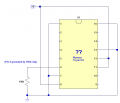
MysteryIC.PNG
None of the ususal logic, quad opamp or dual transconductance opamp ICs seem to have pinouts which would be consistent with these connections to the +V and ground rails.
Any suggestions as to which IC this might be?
 

ian field

Joined Oct 27, 2012
6,536
I'm trying to repair the PWM controller for the 12V DC brushed motor in a TrooperGolf Trolley. The circuit includes an LM358 plus a mystery 16-pin DIL IC which annoyingly has had its type markings ground off. Reverse-engineering has so far identified the following connections (plus miscellaneous connections to resistors and caps from the other pins) :-
View attachment 113895
None of the ususal logic, quad opamp or dual transconductance opamp ICs seem to have pinouts which would be consistent with these connections to the +V and ground rails.
Any suggestions as to which IC this might be?
Every once in a while - a secretive manufacturer slips up and misses the base number stamped on the underside of the chip.

Tracing out the circuit is a good start - its probably a PWM controller, and might even be a generic SMPSU chip.

There are various manufacturers that account for sets of base numbers, some big hitters are Allegro Micro, Unitrode and ST. Your detective work could even pay off. Match up which pins drive the power transistors and its pretty easy to see if the remaining pins fall into place.

Some equipment manufacturers pretty much copy the chip makers application example - you might even find something close to the schematic in a chip databook.
 

Thread Starter

Alec_t

Joined Sep 17, 2013
15,103
its probably a PWM controller, and might even be a generic SMPSU chip.
Thanks. Don't think its actually generating the pulses; rather setting the width. I have traced out the circuit. One pin of this IC drives the bases of a push-pull NPN/PNP pair which in turn drive the gates of two paralleled low-side NFETs.

Edit:
Had a browse through some PWM controller datasheets. The TL494 is looking a likely candidate. Will have to investigate further.
 
Last edited:

ian field

Joined Oct 27, 2012
6,536
Thanks. Don't think its actually generating the pulses; rather setting the width. I have traced out the circuit. One pin of this IC drives the bases of a push-pull NPN/PNP pair which in turn drive the gates of two paralleled low-side NFETs.

Edit:
Had a browse through some PWM controller datasheets. The TL494 is looking a likely candidate. Will have to investigate further.
The PWM chip *IS* what sets the width..................

The 494 is a member of a "genre" - a whole bunch of chips from various manufacturers with very similar internal circuitry. The biggest difference between different makes, is the pin layout.
 

Thread Starter

Alec_t

Joined Sep 17, 2013
15,103
That one's easy, it's the magic smoke receptacle.
Well it was. The dead IC has a small crack in the plastic body where the smoke escaped.
Further checking shows the TL494 or TL594 has the required pinout for all the functionality of the traced circuit, so I think I'll buy a 494 and see if that works or smokes. Simulation shows it should be ok.
I cut the dead IC out from the pcb today and jury rigged a temporary supply for the rest of the circuit. The LM358 got scorching hot, accompanied by that unmistakable aroma of cooking component :( . So that's another item to add to the shopping list!
 

ian field

Joined Oct 27, 2012
6,536
Well it was. The dead IC has a small crack in the plastic body where the smoke escaped.
Further checking shows the TL494 or TL594 has the required pinout for all the functionality of the traced circuit, so I think I'll buy a 494 and see if that works or smokes. Simulation shows it should be ok.
I cut the dead IC out from the pcb today and jury rigged a temporary supply for the rest of the circuit. The LM358 got scorching hot, accompanied by that unmistakable aroma of cooking component :( . So that's another item to add to the shopping list!
Its worth studying the datasheets for several nearby types - the core circuitry is very similar, but the way it drives the output transistor(s) can differ drastically between adjacent numbers. Some have an internal divide 2 flip-flop so they only do 50% duty cycle - the 384x family springs to mind; There are 4 in the family, there are 2 different UVLO values and each is available in either 50 or 100% duty cycle.

Also; a cracked chip usually means the output transistor(s) have failed violently and punched through.A dead short transistor blows the emitter resistor open and the base dumps the reservoir capacitor into the chip output pin.
 

Thread Starter

Alec_t

Joined Sep 17, 2013
15,103
Yes, I've ploughed through a few datasheets. The circuit layout is consistent with use of a 494 having its output control pin low so that the flip-flop is disabled and the two output bjt's are paralleled. The dead controller IC had both supply pins darkened by heat and was short-circuit between them. That suggests both output transistors had failed, as you point out. The most obvious fault on the board was a bulged main decoupling cap. I suspect its failure allowed spikes on the +V rail which killed both the controller and LM358.
 

ian field

Joined Oct 27, 2012
6,536
Yes, I've ploughed through a few datasheets. The circuit layout is consistent with use of a 494 having its output control pin low so that the flip-flop is disabled and the two output bjt's are paralleled. The dead controller IC had both supply pins darkened by heat and was short-circuit between them. That suggests both output transistors had failed, as you point out. The most obvious fault on the board was a bulged main decoupling cap. I suspect its failure allowed spikes on the +V rail which killed both the controller and LM358.
Sounds like a pretty comprehensive blow up.

There may be a few parts with visible damage that are easy - but you need to do a bit of part by part checking.

I'd go over the electrolytics as a matter of routine - Some of the component supply houses offer re-cap kits for popular products. Probably not for your PSU, but I'd Google just in case.
 

Thread Starter

Alec_t

Joined Sep 17, 2013
15,103
Electrolytics replaced. Other passives register ok on DMM, although a zener is questionable. It's marked '82' (or could be Z8 or 8Z) but 8.2V would be the wrong voltage for this circuit. It measures ~4.3V, but that seems a tad too low. 5.6 would be the voltage I'd expect (but that's guesswork). The zener sets the reference for what I now think is a 'switch off if the battery is discharged' sub-circuit using the LM358.
Actually this circuit is a speed controller, arguably not a PSU as such.
 
Top