My PA Speaker woes ....

Thread Starter

daba1955

Joined Apr 27, 2019
218
I've just about it it with my PA Speaker.

I've posted on this subject before, basically it's cheap Chinese crap. KAM

First off, I'm on my third power board. This board contains the rectification and smoothing of AC from the transformer. It also contains the "800W" (sic) audio amplifier, AND a charging circuit for the internal 7Ah Lead/Acid battery. I discovered that the manufacturer has changed the laws of physics, the amplifier chip used is a TDA7377, which the data-sheet says can only deliver 35W, even in bridge mode. So much for the advertised 800W !!

Then the battery died, and I've replaced it, but now discover that the charging circuit is putting 16.1V on to it. This is not going to be good for the battery is it ? Should it not go above 14.7V ? That's 2.45V per cell, 6 cells.

Think I'm going to put a separate charger in, that can hopefully treat the battery more kindly. I'm looking at this module ...

AliExpree Battry Charger

I realise I'm going to have to modify the power board so that it doesn't also charge the battery, but that might be a task in itself.

Anyone got any other recommendations what I could do ?

TIA
 

Thread Starter

daba1955

Joined Apr 27, 2019
218
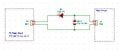
I'm thinking along the lines of using a diode to prevent the power board "charging" the battery, and adding a separate charger as above ....

KAM Charger.jpg
Does this look OK ?
 

BobTPH

Joined Jun 5, 2013
11,521
Simplest solution is replace the entire AC input and battery with a UPS having 12V output, since that is basically what you have that keeps failing.
 

Thread Starter

daba1955

Joined Apr 27, 2019
218
Simplest solution is replace the entire AC input and battery with a UPS having 12V output, since that is basically what you have that keeps failing.
Thanks for the suggestion BobTPH, and it could well be a solution. Finding just where to put the 12V onto the board might be a problem. And won't that solution be at a substantial cost ? Finding a suitable place for the UPS would also be a challenge, think it would have to be external, and that's yet another piece of kit to lug around.

It also means I'd have to modify the power rectification/amplifier board. And it'll make it a non-changeable item for the future. The UK distributor only charges £20 for a replacement board, and that's gonna tell you it's NOT an 800W amp. Just looking at it 3" square size, and hardly any heat-sinking you just know it's not....

Bear in mind we already have the battery backup circuitry on the power board, it's just that I believe it's giving the battery too many volts.

If I can offload the charging to a "sensible" charger, one that won't destroy the new battery I'll be good to go.
 

Thread Starter

daba1955

Joined Apr 27, 2019
218
My latest "solution", is to use a commercially available, and cheap, charging control module, the XY-L30A.

This module allows you to set the Voltages at which it on-board relay closes, to enable battery charging.

The way I have it wired, (see diagram), and the way it will be configured, means that the battery can only ever charge if there is power to the PA board, using an auxiliary 12V output on the board, which I know goes off when the "Power" switch is off. I'm happy with that scenario, because I never want to leave the battery permanently on charge ( I don't believe the module I have chosen goes into "trickle" mode, it's either charging, or not charging).

Power comes on to the PA board, the Aux 12V output energises the relay, which then applies the unregulated charging voltage to the charging module, which then in turn switches charging ON and OFF at preset voltage levels (measured as the battery voltage). The diode stops the silly voltage produced from the board going to the battery.

I'm believing this should work, but happy to accept comments from you knowledgable guys and gals.

TIA

KAM Charger.jpg
 

MisterBill2

Joined Jan 23, 2018
27,540
Oh Wow!!! You thought that the 800W meant 800 watts! IT REALLY MEANS 800 WHATS, ( a unit used to measure confusion).
Quite likely the battery helps filter and regulate the DC power for the amplifier. A battery is cheaper that a good quiet, stable, power supply design.
 

BobTPH

Joined Jun 5, 2013
11,521
Oh Wow!!! You thought that the 800W meant 800 watts! IT REALLY MEANS 800 WHATS, ( a unit used to measure confusion).
Quite likely the battery helps filter and regulate the DC power for the amplifier. A battery is cheaper that a good quiet, stable, power supply design.
Or it might have meant to say 800Wh meaning the battery capacity.
 

Thread Starter

daba1955

Joined Apr 27, 2019
218
Oh Wow!!! You thought that the 800W meant 800 watts! IT REALLY MEANS 800 WHATS, ( a unit used to measure confusion).
Quite likely the battery helps filter and regulate the DC power for the amplifier. A battery is cheaper that a good quiet, stable, power supply design.
Yep, I think you've got it, far east sellers absolutely LIE about their products. I once saw an advert for a 1,000,000 mAh "power bank" (phone charger etc.). Think about it, that's 1,000 Ah, or 1,000 A for 1 hour, or 1A for 1,000 hours, neither of which is even feasible.

I used the amp without the (defunct) battery installed last Saturday, while I was waiting for the new one to arrive. No Ill effects, the PA speaker performed perfectly OK. So, it is not a big "smoothing capacitor".

New battery installed, and the system works great on the new battery without the mains attached, but obviously I'm more than concerned that the battery voltage monitor I have installed was reading 16.1 (went up to 16.2) volts when on charge.

That means the cheap charging circuit is not capable of treating the battery correctly, and was probably the cause of the demise of the first battery. I don't want this "on the cheap" charging circuit to kill my new battery.

What do you think of my solution ? (post #5)
 

MisterBill2

Joined Jan 23, 2018
27,540
One simple, easy, and not at all efficient scheme would be putting a resistor and a diode into the charging portion of the system. Unfortunately it would still have the too-high voltage. The better but more complex scheme will be to add an actual voltage regulator, fed from the same 16 volt source, to provide the "float charge" voltage to the battery. That will greatly extend the recharge time, but it would save the battery.
 

BobTPH

Joined Jun 5, 2013
11,521
Chargers do not charge by voltage, they charge by current. If the battery internal resistance has increased in a dead battery, I can easily see the charger going up to 16V to try to maintain that current. Reading the voltage of the charger on a defunct battery is not meaningful.

What does the voltage read with the good battery installed?
 

Thread Starter

daba1955

Joined Apr 27, 2019
218
What does the voltage read with the good battery installed?
I mentioned it earlier - 16.2V !!

Found this on t'internet ....
" As you increase the voltage to get faster charging, the voltage to avoid is the gassing voltage, which limits how high the voltage can go before undesirable chemical reactions take place. Charging voltages range between 2.15V per cell (12.9V for a "12V" 6 cell battery) and 2.35V per cell (14.1V for a "12V" 6 cell battery). These voltages can be applied to a fully charged battery without overcharging or damage, since they are below the "gassing" voltage, and cannot break down the electrolyte. If the battery is not yet fully charged you can use much higher voltages without damage because the charging reaction takes precedence over any over-charge chemical reactions until the battery is fully charged. This is why a battery charger can operate at 14.4 to 15 volts during the bulk-charge phase of the charge cycle. "

That 16.2 V is going to destroy the battery, which is presumably why the previous battery died ....
 

MisterBill2

Joined Jan 23, 2018
27,540
I mentioned it earlier - 16.2V !!

Found this on t'internet ....
" As you increase the voltage to get faster charging, the voltage to avoid is the gassing voltage, which limits how high the voltage can go before undesirable chemical reactions take place. Charging voltages range between 2.15V per cell (12.9V for a "12V" 6 cell battery) and 2.35V per cell (14.1V for a "12V" 6 cell battery). These voltages can be applied to a fully charged battery without overcharging or damage, since they are below the "gassing" voltage, and cannot break down the electrolyte. If the battery is not yet fully charged you can use much higher voltages without damage because the charging reaction takes precedence over any over-charge chemical reactions until the battery is fully charged. This is why a battery charger can operate at 14.4 to 15 volts during the bulk-charge phase of the charge cycle. "

That 16.2 V is going to destroy the battery, which is presumably why the previous battery died ....
I wonder how accurate that assertion "found on the internet" actually is, and just which particular battery chemistry it is talking about. It is probably correct for one specific technology.
But of course, overcharging will always damage a battery. THAT is why I suggested regulating the charge voltage to the float voltage level. Like I suggested in post #9. And controlling the voltage will tend to keep the current under control.
 

Thread Starter

daba1955

Joined Apr 27, 2019
218
I wonder how accurate that assertion "found on the internet" actually is, and just which particular battery chemistry it is talking about. It is probably correct for one specific technology.
The battery is a sealed Lead-Acid "Gel" battery.

But of course, overcharging will always damage a battery. THAT is why I suggested regulating the charge voltage to the float voltage level. Like I suggested in post #9. And controlling the voltage will tend to keep the current under control.
Yes, that is what I'm trying to achieve with the circuit I posted. The output of the charging module can be set so that it will stop charging at a voltage level you can set, and it uses an on-board relay to disconnect the charging output.

The issue I am facing is that the BATT connection to the board is a single pair of wires that can supply power to the board for when the PA speaker is running off battery, but it is also the charging supply when the PA is running off mains. Putting the Diode there is intended to stop that 16.2V charging voltage from reaching the battery. The J13 12V Out is only active when the unit is switched on, regardless of whether it is running off battery or mains. The battery charging voltage of 16.2 is present whenever the PA is connected to the mains.

I want to avoid making modifications to the power board unless I have to. I have realised my RLY1 should be a n/c contact, so that it disconnects the charging circuit when the unit is powered ON (because J13 goes "live").

I also want my D1 to have a low Vf, and have been wondering if I can wire up a MOSFET somehow to achieve this. I have both N-Channel and P-Channel MOSFETs that have an extremely low "ON" resistance, and therefore a very low "Vf".

I'm slightly struggling to achieve the goals I have set, and would greatly appreciate any assistance....
 
Last edited:

MisterBill2

Joined Jan 23, 2018
27,540
Do you have a circuit schematic of the power board?? There are a lot of folks here who could understand it very well and provide some good advice. The fix might be simple. But not so obvious.
 

Thread Starter

daba1955

Joined Apr 27, 2019
218
Do you have a circuit schematic of the power board?? There are a lot of folks here who could understand it very well and provide some good advice. The fix might be simple. But not so obvious.
I have asked for one, but no reply after over a week.

Couple that with the fact that the board has a supposedly 12V supplementary output that just doesn't work....

I've been told in the past that this 12V output is actually a 12V Input, but either way using the spring type terminals makes it dangerous.

I'll try to map out the "power" configuration of the board, but double-sided boards are difficult to reverse engineer. I'll do my best.

But regardless of that, the "battery" connector on the board is two-way, supplying battery power to the board when the amp is not on mains power, and supplying "charging" voltage to the battery when on mains power. I need to limit the charging voltage to what will be safe for the battery.

If I can't work out a way to do it, I'm gonna just dispense with the battery altogether, and use the PA speaker on mains power only.
 

Ya’akov

Joined Jan 27, 2019
10,238
PbSO₄ (Lead Acid) battery chemistry wants to be floated at some voltage specified by the manufacturer on the battery housing or datasheet. A purpose-built Lead Acid charger will include a float function.
 

MisterBill2

Joined Jan 23, 2018
27,540
It should be possible to trace out the charging circuit on the PCB and then possibly adjust the charging voltage. I am aware that the TS does not want to modify the board, but changing a resistor value may not really be a modification, but rather an adjustment.
 

Thread Starter

daba1955

Joined Apr 27, 2019
218
It should be possible to trace out the charging circuit on the PCB and then possibly adjust the charging voltage. I am aware that the TS does not want to modify the board, but changing a resistor value may not really be a modification, but rather an adjustment.
I doubt, due to the cheapness of the overall design. that absolutely no thought has gone into the battery charging circuit. The board is *supposed* to have a 12V output (spring-loaded connections), but that doesn't work either, and has been admitted to me by the UK distributor that it is a known issue.

I have a gig tonight, must set to and disconnect the battery, don't want to destroy another one ....
 

MisterBill2

Joined Jan 23, 2018
27,540
I looked at post #1 again, and the only down side that I see is the voltage drop thru the series diode.
So the only requirements for the external charger will be: #1 being able to set the charge voltage and charge current limit to the required values, and #2, not discharging the battery when the charger is connected but not powered.
 

Thread Starter

daba1955

Joined Apr 27, 2019
218
I looked at post #1 again, and the only down side that I see is the voltage drop thru the series diode.
So the only requirements for the external charger will be: #1 being able to set the charge voltage and charge current limit to the required values, and #2, not discharging the battery when the charger is connected but not powered.
The charging module I am thinking of using just has a series relay contact which disconnects the charging current when the battery voltages reaches a setpoint, then resumes charging when the battery voltage falls below another setpoint, at least that's what it says it does. I don't think, therefore, that leaving the charger connected to the battery, but the charging Voltage off, will be an issue, but I've taken the battery out of the PA, got the charging module, two bench power supplies, and am going to wire it all up and run tests.

I've searched for a diode with a low Vf, they all seem to be a minimum of 0.6V, which I think will be ok.
 
Top