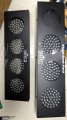
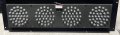
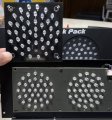
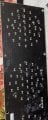
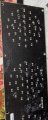
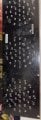
Yes sir, I can understand that, but sure that I checked correctly.For thr one boaard where nothing lit, are you sure you had the polarity correct?? A minor error like that could confuse things.
Make a video, Please!Ordered one of these newer light panels. Should be here Wednesday or Thursday. We shall see.
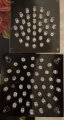
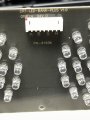
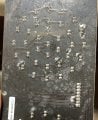
No I haven’t given up…yet. Seems so simple, but yet I’m just not clued in enough. First, it blows my mind that somehow (it appears) that all 45 LEDs are bad. As you said, simply applying a little power to them should show good or bad, and that appears to be total failure. I found another LED in my parts junk and it powers up fine with the little 5v supply…Let me ask this, just in case…when I tested each LED while still on the board, I touched each leg with the appropriate power leads. With them still being all tied together on the board, does this affect the outcome of bad or not?I will be interesting to see how close it is to the older ones. Have you given up attempting to fix the older ones??
No. Not unless there's a complete circuit. But with 45 LED's even a complete circuit would have very little effect on the one under test.With them still being all tied together on the board, does this affect the outcome of bad or not?
LED's are controlled by current, not voltage. Yes, you will have to reduce the "Current". That might be achieved by lowering the voltage or it might be achieved by - if a constant current source is used - change that current source; OR by adding appropriate resistance. HOWEVER, adding resistance means increased heat. AND the appropriate size (in wattage) is necessary too.When this new unit arrives, it’ll have 35 LEDs instead of 45, so if I could use it, I’m thinking I’d have to either add something to lower total incoming voltage, or add 10 more LEDs?…
That stinks. Just goes to prove that when it rains it pours.trees down from storms, I’ve been cleaning up, tractor broke down and had to go arrange new one
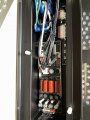
Imagine doing that every workday for 30+ years.It came today! Anxious to tear into it and see what we have. Pics and info coming shortly.
(also see another new post I just added—another failure! My ultrasonic cleaner quit! And I need a carburetor cleaned! )
94V is an odd voltage. Not that it's impossible, but be certain before you power it. To my experiences with PCB's 94V 0 typically was the fire rating of the board and not reflective of the voltage it operates at. So be careful you don't blow the new boards out.I believe the new panel runs at 94v, printed on the panel
Wondered the same thing. THAT inspired me to imagine a 24VAC source with a 1K5 resistor. 16mA shouldn't hurt an LED. The reverse voltage shouldn't cause any problems either. And regardless of the polarity the LED will still light.I presume you checked the LEDs with both polarities, right?
Stage Lighting? Certainly not going to be old style LED's. The super bright LED I just tested had no problems with 24V reverse volts.The early RED LEDs could not withstand a reverse voltage of ten volts.