Motorcycle Alternator

shortbus

Joined Sep 30, 2009
10,050
Are you putting a layer(or more) of Kapton tape over the "arms" of the stator before winding? The original may not have used an insulator since it would have been machine wound where tension could have been controlled , but hand winding is a whole nother ballgame.:) Plus a factory stator would have been vacuum dipped to make sure the varnish over the wires would saturate down to the stator core and between each layer.
 

Thread Starter

jimskeet

Joined Nov 14, 2016
17
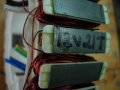
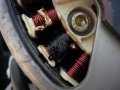
the stator has a layer of epoxy below the original winding. the first time it failed, this epoxy was burnt on a small area around one arm and got to bare metal. I fixed it by wounding some teflon tape around it. Now it failed again on the same spot. I will coat the area now with some epoxy.
 

shortbus

Joined Sep 30, 2009
10,050
Kapton tape will work much better. It's used for electric motor rewinding. Has a much higher voltage rating. Got mine on Ebay.
 

bwilliams60

Joined Nov 18, 2012
1,450
As a former rebuilder I can tell you that a lot more goes into winding one of them stators then wrapping wire around the fingers and that is why they cost so much to replace. Some of the cores were powder coated or epoxied and then after wrapping, they are Hipot tested and then dipped in insulating varnish and baked in an oven. There is also air cure varnish available but not as good. After baking, they are cleaned of excess varnish and tested again. The varnish is necessary because of the excessive amount of vibration on a bike. If yoe can get one for $160, thats the ticket. Stator failure is usually the result of excessive heat caused by low batteries. The alternator is forced to work hard and the unit overheats.
 

Thread Starter

jimskeet

Joined Nov 14, 2016
17
As a former rebuilder I can tell you that a lot more goes into winding one of them stators then wrapping wire around the fingers and that is why they cost so much to replace. Some of the cores were powder coated or epoxied and then after wrapping, they are Hipot tested and then dipped in insulating varnish and baked in an oven. There is also air cure varnish available but not as good. After baking, they are cleaned of excess varnish and tested again. The varnish is necessary because of the excessive amount of vibration on a bike. If yoe can get one for $160, thats the ticket. Stator failure is usually the result of excessive heat caused by low batteries. The alternator is forced to work hard and the unit overheats.
Thanks for your input. When you say low battery you mean an empty battery? Or an old battery that has lost its capacity.
 

shortbus

Joined Sep 30, 2009
10,050
Well I finished rewinding and I am ready to dip. How many times do you guys suggest dipping? 3 is good?
They are usually not dipped but put in a tank then a vacuum is drawn on the tank, to get it all the way into the winding. Dipping will only coat the outside and a few layers deep, if your lucky.
 

Thread Starter

jimskeet

Joined Nov 14, 2016
17
They are usually not dipped but put in a tank then a vacuum is drawn on the tank, to get it all the way into the winding. Dipping will only coat the outside and a few layers deep, if your lucky.
Well I know that but I do not have a vacuum myself :D
So just dipping it and not vacuuming how many times do you suggest I should do it?
 

Thread Starter

jimskeet

Joined Nov 14, 2016
17
Well I am from Greece and cause of this, fnding parts is a lot harder than usual... I have already dipped the stator 3 times. I just let it dry now for 24 hours and then install it on the bike. Lets hope ot last more this time. I am pretty sure the cause of my last failure was that I didn't coat the damaged insulation on the stator with some epoxy the first time. Cause the failure was on the exact same spot. I don't accept this as coincidence. The rest of the stator was fine
 
Last edited:

debe

Joined Sep 21, 2010
1,419
Its surprising what you can getaway with if you need to. This is a stator in a Inverter generator that burnt out the 12V winding due to a short in the inverter board. I just measured the wire size & number of turns & rewound it & sprayed the windings with varnish. Works great with a nother inverter board fitted.STATOR WINDING BURNT.JPG STATOR WINDINGS.JPG
 

bwilliams60

Joined Nov 18, 2012
1,450
When I say low battery, Imean low in charge.
Shortbus, thank you for adding on to my post. I didnt provide details because I didnt think anybody would try it. There is DIY varnishes that are used without a vacuum in the field. Not as effective but still work pretty good. The wire is already insulated so it is there to provide stability from vibration.
 
Top