Facebook
 Google
 GitHub
 Linkedin

I think the problem is still that you are insisting on basing your understanding of the voltage being developed on the distribution of electrons. But a changing magnetic field creates a changing electric field without there being any electrons, or anything else, around at all. That is what "light" is! Even in free space a changing magnetic field creates a changing magnetic field which creates a changing magnetic field, which....
Motional EMF from an Electron Flow Perspective
- Thread starter Gerry Rzeppa
- Start date
- Status
- Not open for further replies.
Scroll to continue with content

Yes, see below.I think the problem is still that you are insisting on basing your understanding of the voltage being developed on the distribution of electrons.
I understand that, really. But I'm not looking for a "theory of everything" regarding electrical phenomena. (If I may use an analogy, I'm interested in plumbing here, not the hydrologic cycle. I'm interested in how water behaves in the pipes in my house, not the way water evaporates from the ocean and forms clouds in the sky and rains on the mountains.) Specifically, I'm trying to describe this particular solder-less vacuum-tube guitar amplifier I built in terms a guitar-picking ten-year-old, who doesn't like math, can easily understand:But a changing magnetic field creates a changing electric field without there being any electrons, or anything else, around at all. That is what "light" is! Even in free space a changing magnetic field creates a changing magnetic field which creates a changing magnetic field, which....
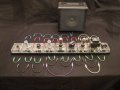
And in this context three things prevail:
1. The workings of vacuum tubes are invariably described in all the guitar-amp books in terms of electron flow (electrons "boiling" off the heated cathode, electrons being attracted or repelled by other electrons on the grid, electrons rushing across the void to smash into the plate, etc). These descriptions are simple and straightforward and are easily understood by the target audience because they are both familiar and tangible -- they use familiar terms like "boiling" and "rushing" and they deal with tangible "particles" rather than "waves".
2. Current entering both ends of the circuit (ie, from the power company and from the guitar pickup) is generated by the interaction of a magnetic field and metal wire. And the speaker works in a similar fashion. So again, we're dealing here with something easily "experienced" by the student: he can literally feel the attraction and repulsion of magnetic fields with just a couple of magnets, and he can easily imagine those fields pulling and pushing electrons around like a magnet moves iron filings.
3. Within the circuit we're working only with low frequencies (say, 60 to 8000 Hz), and we're using just a handful of discrete components. All connected together with copper wire. No light waves, no piezoelectric effects, no chemical reactions as in batteries, etc. Just electrons in copper wires, resistors, capacitors, transformers and tubes.
It's always bothered me that the insides of the tubes in guitar-amp circuits are invariably described the electron-flow way, and the rest of such circuits are invariably described mathematically from a conventional-current standpoint. I'm looking to fill this gap in the literature by providing a colorful, illustrated, end-to-end description entirely from the electron-flow perspective -- in terms attractive to a ten-year-old who'd rather be playing his guitar than doing long division.
I have a degree in mathematics (with honors!) and have a lot of practical experience with circuits (having designed and built many, both analog and digital). But as you have seen in this thread, there are gaps in my understanding, and it's extremely difficult to get folks who know what I need to know to say what they know in electron-flow terms. I'm thinking they may be reluctant to make statements that are true about copper wires at low frequencies because -- knowing "too much" for this little project -- they are aware that such statements won't hold universally and they don't want to mislead. Or whatever. But the problem (and the gap in the literature, and the musical ten-year-old) remain. Help!
Last edited:
Consider that transformer and you put a DC voltage across the primary and get a significant current flowing in the primary and, thus, a significant magnetic field (and flux) in the secondary. What is the voltage seen on the output of the secondary? It's zero! Now vary the input voltage on the primary at, say, 60 Hz and apply a much smaller magnitude voltage. You will get a much smaller current, and hence a much smaller magnetic field. But now you can have a significant voltage on the output of the secondary. What gives? It's because it is simply not sufficient to describe what is happening in terms of electrons and magnetic fields. There is something else going on and that something else is that the magnetic flux is changing and this, by itself, creates a non-conservative electric field and it is this field that results in the voltage that you measure. The secondary winding merely defines that path that the integral is performed over and the electrons in the wire move in response to the generated electric field. You are trying to imagine the electrons moving due to their interaction with the magnetic field and the electric field (and voltage) resulting from that.
For this example, how are you driving the primary side of the transformer. Are you putting in sinusoidal AC, or are you assuming a constant rate of change so that dB/dt is constant, or more precisely d(Flux)/dt is constant.I'm pretty sure we could wrap this up in just a couple of posts if you could supply a diagram showing the distribution of electrons in the secondary coil of a transformer when the field is "maxed out" in one direction. Something like this would do (darker blue indicating a greater concentration of free electrons):
View attachment 88330
That, plus a couple of plain English remarks on why those electrons accumulate when and where they do, I think, would do the trick.
It is not clear to me why this example will help you, but since you say it will, let's try to answer it. For the case of constant dB/dt, then the secondary side will have a constant EMF across it. Assuming that the secondary is open and not shorted, then there will be no current flow, and there will be a buildup of charges similar to what you showed. The EMF in the conductor needs to be counteracted by an electric field from the displaced charges. In this way the force on the charges in the conductor will be zero in equilibrium. If the forces are not zero, then you don't have equilibrium, and the charges will move, hence in this example, we know that constant EMF and no current flow results in equilibrium of the charges.
If the secondary is shorted, or closed through a resistor; or, if the primary is not driven by a constant rate of change (AC sinusoids for example), then the situation is not so simple. For sinusoids, you can derive what is called a steady state sinusoidal solution which, although not strictly equilibrium, does have similarities to an equilibrium solution, in that the sinusoidal variations are constant. That is, amplitude and phase of the sinusoids are constant.
Last edited:

I believe explaining electronics to the young man this way will confuse him and others.
Don't use that induction example. That's a terrible way to explain induction.
Go on ebay and shop for an ANALOG multimeter. Find one that can measure 40-50 uamps or so.
You can find these for less than $20. You can find some that even allow you to center meter at mid scale. This is handy. Although not needed.
Then buy some of those new high powered magnets. Buy them in cylindrical form, so you can make a strong magnetic bar.
Make a circular loop of wire and connect meter in series with a cut in the loop. Show the young man the current that is produced as you pass the magnet in and out of the loop. The mid scale meter is good for this, cause it shows current both ways.
Explain to him that the dams and power plants move the magnets for us, and the the wall plug is a cut in that loop. And that when we connect something to the loop like we connected the meter, that we can get current and do work.
Once he understands this concept and where the power comes from, then you can start to explain how we can change the power(voltage and current with resistance and later reactance).
When teaching to the young or inexperienced, always use closed and complete circuits for examples.
The necessary current path concept is what he needs to understand first. He must realize that he does not want to be PART of that path.
Especially with tube voltages.
Later, you can show him what changing the number of loops does.
With just these simple items and a resistor, you can show him the relationship of number of turns and the voltage and current across a resistor(load).
If you have an adjustable mechanical articulator for the magnet, and a scope, you can show him frequency.
But of course you can show him that with a guitar string.
Your amp looks great and it's great that you are teaching him.
Don't use that induction example. That's a terrible way to explain induction.
Go on ebay and shop for an ANALOG multimeter. Find one that can measure 40-50 uamps or so.
You can find these for less than $20. You can find some that even allow you to center meter at mid scale. This is handy. Although not needed.
Then buy some of those new high powered magnets. Buy them in cylindrical form, so you can make a strong magnetic bar.
Make a circular loop of wire and connect meter in series with a cut in the loop. Show the young man the current that is produced as you pass the magnet in and out of the loop. The mid scale meter is good for this, cause it shows current both ways.
Explain to him that the dams and power plants move the magnets for us, and the the wall plug is a cut in that loop. And that when we connect something to the loop like we connected the meter, that we can get current and do work.
Once he understands this concept and where the power comes from, then you can start to explain how we can change the power(voltage and current with resistance and later reactance).
When teaching to the young or inexperienced, always use closed and complete circuits for examples.
The necessary current path concept is what he needs to understand first. He must realize that he does not want to be PART of that path.
Especially with tube voltages.
Later, you can show him what changing the number of loops does.
With just these simple items and a resistor, you can show him the relationship of number of turns and the voltage and current across a resistor(load).
If you have an adjustable mechanical articulator for the magnet, and a scope, you can show him frequency.
But of course you can show him that with a guitar string.
Your amp looks great and it's great that you are teaching him.
Thanks, folks, but's that's all WAY too technical (not counting BR-549's post, which was sent while I was editing) for my purposes (described in post #22 above). I need something more accessible, like this:
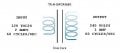
1. Electrons move back and forth in the input coil at a rate of two amps (which means roughly two salt-grain-sized clumps of them sliding past any spot you choose every second).
2. These electrons tend to pile up first at one end of the coil, then the other. (In the drawing, the darker blue at the bottom means there were more of them at the bottom than the top when the picture was taken.)
3. The motion of these electrons generates an invisible magnetic field (not shown because it's invisible) that pushes the electrons in the output coil around in a similar way.
4. Since the the output coil has twice as many loops, the field gets to work on twice as many electrons, and twice as many tend to pile up (first at one end, then at the other end). This gives us double the voltage of the input coil.
5. But since we're moving more electrons back and forth, they tend to bump into each other more. Not to mention the fact that it's harder to stop them, turn them around, start them up again, etc. And so we get only half as much flow in the output coil -- just one amp (or one salt-grain-sized clump past a spot per second).
Get the idea? I need something like that, only more technically accurate (where I've misrepresented something).
Ernest Rutherford once said something like, "If you can't explain your physics to a barmaid it is probably not very good physics." And we all know the similar quotes attributed to Einstein. So what do you say? Help!
1. Electrons move back and forth in the input coil at a rate of two amps (which means roughly two salt-grain-sized clumps of them sliding past any spot you choose every second).
2. These electrons tend to pile up first at one end of the coil, then the other. (In the drawing, the darker blue at the bottom means there were more of them at the bottom than the top when the picture was taken.)
3. The motion of these electrons generates an invisible magnetic field (not shown because it's invisible) that pushes the electrons in the output coil around in a similar way.
4. Since the the output coil has twice as many loops, the field gets to work on twice as many electrons, and twice as many tend to pile up (first at one end, then at the other end). This gives us double the voltage of the input coil.
5. But since we're moving more electrons back and forth, they tend to bump into each other more. Not to mention the fact that it's harder to stop them, turn them around, start them up again, etc. And so we get only half as much flow in the output coil -- just one amp (or one salt-grain-sized clump past a spot per second).
Get the idea? I need something like that, only more technically accurate (where I've misrepresented something).
Ernest Rutherford once said something like, "If you can't explain your physics to a barmaid it is probably not very good physics." And we all know the similar quotes attributed to Einstein. So what do you say? Help!
Last edited:
As I said this would be much easier to explain at a blackboard and a one on one discussion. I felt that I was responding to the questions presented in a reasonable way for someone with a degree in mathematics with honors, but obviously I missed the mark.
The key to this is a good understanding of Faradays law which is not easy to grasp without a good deal of thinking either with math or with visualization. Interestingly, Faraday himself was an experimentalist and exceptional visual thinker that did not use high level math at all. So the suggestion to study this with experiments is a good one.
I don't buy those quotes from physicists. Einstein took ten years to develop his theory of general relativity and I doubt you could ever explain that adequately to a barmaid. Sometimes you have to dig in and learn it properly.
The key to this is a good understanding of Faradays law which is not easy to grasp without a good deal of thinking either with math or with visualization. Interestingly, Faraday himself was an experimentalist and exceptional visual thinker that did not use high level math at all. So the suggestion to study this with experiments is a good one.
I don't buy those quotes from physicists. Einstein took ten years to develop his theory of general relativity and I doubt you could ever explain that adequately to a barmaid. Sometimes you have to dig in and learn it properly.
Last edited:
If by "this way" you mean, "by describing the rest of a guitar amp the same way the insides of a vacuum tube are typically described," I respectfully disagree.I believe explaining electronics to the young man this way will confuse him and others.
Induction isn't an example; it's something that needs explaining (1) at the guitar pickup; (2) at the speaker; and (3) at the power company (to explain where the power comes from).Don't use that induction example. That's a terrible way to explain induction.
Done. I love analog meters. Clocks too.Go on ebay and shop for an ANALOG multimeter. Find one that can measure 40-50 uamps or so. You can find these for less than $20. You can find some that even allow you to center meter at mid scale. This is handy. Although not needed.
Got 'em.Then buy some of those new high powered magnets. Buy them in cylindrical form, so you can make a strong magnetic bar.
Done it. And he says, "So something's moving in the wire, right, Dad?" And I say, "Yep. Electrons. If we can move that magnet fast enough to move 6 gazillion of them in one second (where 6 gazillion is about 6.2x10^18) we'll be making a whole amp of electrical current. But remember that electrons are very, very tiny. Nobody has ever seen one. So a gazillion of them is very small -- about the size of a grain of salt."Make a circular loop of wire and connect meter in series with a cut in the loop. Show the young man the current that is produced as you pass the magnet in and out of the loop. The mid scale meter is good for this, cause it shows current both ways.
Yes, done.Explain to him that the dams and power plants move the magnets for us, and the the wall plug is a cut in that loop. And that when we connect something to the loop like we connected the meter, that we can get current and do work.
Whoops! Lost him. He went off to play his guitar. Probably because we weren't saying anything about his amp.Once he understands this concept and where the power comes from, then you can start to explain how we can change the power(voltage and current with resistance and later reactance).
Sure. I don't have a problem with that. And if anything here has given you a different impression it's only because I'm using the most abbreviated examples I can because it's so hard to get anyone to talk in electron-flow terms. Unless, of course, we're inside a vacuum tube -- then everybody does it!When teaching to the young or inexperienced, always use closed and complete circuits for examples.
Yes, he gets that. You don't hang around a Dad who is building high-voltage amp kits with banana plugs without learning that right quick.The necessary current path concept is what he needs to understand first. He must realize that he does not want to be PART of that path. Especially with tube voltages.
I started this thread with a description of how the electrons move and accumulate in a straight rod and how that relates to voltage and current. That was discussed and we made some good progress (from my perspective). I now understand why the width of the rod doesn't affect the voltage, for example. Since then, I've asked for a similar description of how the electrons move in a coil. That's the problem we're working on now.Later, you can show him what changing the number of loops does.
I don't just want to show him the relationship (E=IR). He can find out about that by reading any elementary book on electronics. I want to describe to him the workings of his guitar amp in the same terms used to describe what happens inside the tubes. For example, I need to complete this sentence: "The electrons rush across the void in the tube and strike the plate and then..." Where do they go? Why do they go that way and not some other way?With just these simple items and a resistor, you can show him the relationship of number of turns and the voltage and current across a resistor(load).
Sure. But again, I want to tell him what the electrons are doing at different frequencies (for example, with a true AC signal, they're changing direction every so many fractions of a second).If you have an adjustable mechanical articulator for the magnet, and a scope, you can show him frequency. But of course you can show him that with a guitar string.
Thank you. I appreciate your (and everyone's) help here.Your amp looks great and it's great that you are teaching him.
It's not your fault. Lots of people assume a degree implies in-depth understanding. Unfortunately, I got my degree simply by memorizing the formulas and plugging in the numbers. With a little help from the folks at Hewlett-Packard who put this reverse-polish-notation delight on sale the very day I started my freshman year:As I said this would be much easier to explain at a blackboard and a one on one discussion. I felt that I was responding to the questions presented in a reasonable way for someone with a degree in mathematics with honors, but obviously I missed the mark.

Just $300! But worth every penny. Without that, I'm pretty sure the "plugging in the numbers" part would have done me in.
Let's go with visualization.The key to this is a good understanding of Faradays law which is not easy to grasp without a good deal of thinking either with math or with visualization.
I was reading the other day about electromagnetic induction on WikiPedia and came across this quote:Interestingly, Faraday himself was an experimentalist and exceptional visual thinker that did not use high level math at all. So the suggestion to study this with experiments is a good one.
"Faraday explained electromagnetic induction using a concept he called lines of force. However, scientists at the time widely rejected his theoretical ideas, mainly because they were not formulated mathematically."
I may not be a Faraday, but I can sure empathize.
It depends on what you mean by "adequately". Seems to me an adequate understanding of general relativity for a barmaid would be this: "At the speeds you're moving, you don't have to worry about this."I don't buy those quotes from physicists. Einstein took ten years to develop his theory of general relativity and I doubt you could ever explain that adequately to a barmaid.
But surprisingly, most of the time, you don't. At least not at first. I would venture to say that most world-changing inventions were constructed and productively employed long before they were fully understood. And in the less mechanical arts, we see it all the time: great songs written by people who can't read music; great paintings by people who know nothing of geometry and perspective; great books by authors without a high-school education; etc.Sometimes you have to dig in and learn it properly.
But clearly, we're drifting way too far into the philosophical aspects of this. Let's see if we can't get back to my technical questions regarding "Motional EMF from an Electron Flow Perspective" by starting at the other end of my circuit. Here's a slightly modified graphic of a guitar pickup from another site:
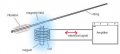
What's wrong (as in technically incorrect) with telling the kid something like this:
1. Three easy ways to make the electrons in a wire move are: (a) wave a magnet past the wire; (b) wave the wire past a magnet; and (c) put the wire near a magnet and wave another piece of metal near them both. Your guitar pickups use method (c).
2. The blue stuff in the picture is the invisible magnetic field that surrounds all magnets. Note that it touches both the guitar string and the coil of wire in the pickup. Note also that when nothing is moving, the electrons in the wire don't do anything interesting; they just kind of mill around.
3. But when you pluck the string, it upsets the magnetic field, first in one direction, then in the other direction. And this movement in the field makes the electrons in the wire move in a similar fashion, in concert (so to speak): first one way, and then the other way.
4. How often the electrons change direction depends on which note you've struck (about 82 times a second for a low E string, about 330 for the high E string).
5. How far the electrons move before turning around depends on how hard you hit the string.
Is any of that untrue?
Last edited:
True enough, if we don't split hairs. Certainly this is more than adequate for the barmaid since apparently we can just tell her, "Your profession does not involve this, so don't worry about it.". Certainly this is good enough for the average person who wants a general sense of how a pickup works. Certainly this is good enough for a technician to troubleshoot audio equipment.What's wrong (as in technically incorrect) with telling the kid something like this:
1. Three easy ways to make the electrons in a wire move are: (a) wave a magnet past the wire; (b) wave the wire past a magnet; and (c) put the wire near a magnet and wave another piece of metal near them both. Your guitar pickups use method (c).
2. The blue stuff in the picture is the invisible magnetic field that surrounds all magnets. Note that it touches both the guitar string and the coil of wire in the pickup. Note also that when nothing is moving, the electrons in the wire don't do anything interesting; they just kind of mill around.
3. But when you pluck the string, it upsets the magnetic field, first in one direction, then in the other direction. And this movement in the field makes the electrons in the wire move in a similar fashion, in concert (so to speak): first one way, and then the other way.
4. How often the electrons change direction depends on which note you've struck (about 82 times a second for a low E string, about 330 for the high E string).
5. How far the electrons move before turning around depends on how hard you hit the string.
Is any of that untrue?
I would say it is barely adequate for an unsophisticated engineer, and really below the level expected for an electrical engineer. And that explanation would not be adequate at all for a physicist, or anyone else that wanted a truly deep understanding of what is happening.
I guess the questions are, where are you now in this spectrum of individuals (i'm reasonably certain you are not a barmaid
 ), and where do you want to be in this spectrum in the future? Also, what are your remaining unanswered questions, because I seems to have lost track of the logical progression in this thread? I know your first question about "why does the width not matter" has been answered, and several other questions seem to have been answered. So, what remains?
Last edited:
Excellent reply; thank you.
Secondly, I'm also a firm believer that the kid's view at the mechanical level (which will be as easy and fun and practical and functionally successful as I can muster) ought to be somewhat at odds with the currently fashionable theoretical view; the hope being that a limbic attachment to simplicity and practicality, developed early in his career, will make him question everything as he learns how others see and have seen the subject. Perhaps then he'll be able to see things that others have missed. In short, teaching electron-flow analysis of a circuit not only broadens his outlook, but provides a basis for -- and an emotional leaning toward -- "out of the box" thinking in the future.
And I'm an iconoclast by trade. I promoted trivial table-like relational databases when everyone else was into complicated hierarchies and networks (www.era-sql.com). I've sold over 3,000 paintings that I created with a technique that anyone can learn in a single afternoon (https://www.kickstarter.com/projects/1335354839/art-for-the-rest-of-us). I've made computer programming even simpler than in was in the 1980's with a Plain English programming language and development system, written entirely in Plain English (www.osmosian.com/instructions.pdf). I'm looking to do something similar with electronics. "Electronics for the Rest of Us" would be a good tag line.
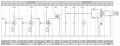
I would like to confirm certain insights that have arisen in discussions of this circuit from the electron-flow perspective with others, for example:
1. The center tap on the power transformer secondary, rather than being just another "voltage reference point" as it is usually described, is actually the "electron feed line" for the entire amp. Yes?
2. One of the two major functions of the power supply is to keep the top part of the circuit "vacuumed" more-or-less clean of free electrons. Yes?
3. The other major function of the power supply is to keep the bottoms of the "rechargeable batteries" off which the circuit actually runs (modules 8, 9 and 10 in the schematic) full of free electrons for the rest of the circuit to use. These units are today referred to as mere "filter capacitors," though they have been known in the past by the more accurate term "reservoir capacitors." Yes?
4. Grounding the circuit to the earth will make the amp safer because it will provide a common electron concentration level between this amp and other equipment. But the myriad electrons in the earth will not generally participate in the operation of this circuit (except for a relative few at start up and shut down) because it is simply easier for the circuit to use the electrons stored in the reservoir capacitors. Yes?
5. The electrons emerging from the top of the valves move in a single direction only with greater and lesser concentration and speed depending on the frequency and volume of the note(s) being amplified. We call this "varying DC" rather than "AC". But once those electrons "hit" the dielectric boundary in the coupling capacitor, they must eventually "bounce" back to be sucked up by the power supply via the plate resistors. And the electrons on the output side of these capacitors must also move in both directions. The coupling capacitors (and the output transformer, in similar fashion) are thus, among other things, "varying DC" to "true AC" converters (where DC means electrons moving in just a single direction, and AC means electrons moving first one way and then the reverse). Yes?
And then this question, which was left unresolved in other discussions:
6. It is agreed that the capacitors on the cathode legs of the valves serve as an "emergency supply" of free electrons when low notes are played and the draw from the tube is increased. What puzzles me is that the expert says those extra electrons are stored in the top of those capacitors rather than the bottom (like the reservoir capacitors mentioned above). I don't understand why this should be the case.
I'm also not entirely clear about:
7. The relationship between electron concentration and voltage. It was decided near the top of this thread that the ratio of accumulated electrons between two points determined the induced EMF. Is there a definition of voltage in such terms (similar to the definition of current -- "one amp equals one gazillion (6.2x10^18) electrons past a certain point per second")? Something like, "one volt equals one gazillion more electrons in one spot versus another"?
Plus a few other loose ends. You've mentioned that you think one-on-one conversations are more effective and I agree. If you prefer to discuss that way, we can do it via email (E-MAIL ADDRESS REMOVED). Or we can stay here and deal with the "multiple-conversations-at-once problem for the possible benefit of (and input from) others who may come across this thread. Your call.
MOD NOTE: Do not put e-mail addresses in publicly visible posts. The spam bots will vacuum it up very quickly (it may already be to late). Use PM instead.
I agree. Two points. First, I'm a firm believer in the "do first, then understand" school of thought. I believe we're more likely to get a great engineer, in the end, if we first make the kid a great mechanic.True enough, if we don't split hairs. Certainly this is more than adequate for the barmaid since apparently we can just tell her, "Your profession does not involve this, so don't worry about it.". Certainly this is good enough for the average person who wants a general sense of how a pickup works. Certainly this is good enough for a technician to troubleshoot audio equipment. I would say it is barely adequate for an unsophisticated engineer, and really below the level expected for an electrical engineer. And that explanation would not be adequate at all for a physicist, or anyone else that wanted a truly deep understanding of what is happening.
Secondly, I'm also a firm believer that the kid's view at the mechanical level (which will be as easy and fun and practical and functionally successful as I can muster) ought to be somewhat at odds with the currently fashionable theoretical view; the hope being that a limbic attachment to simplicity and practicality, developed early in his career, will make him question everything as he learns how others see and have seen the subject. Perhaps then he'll be able to see things that others have missed. In short, teaching electron-flow analysis of a circuit not only broadens his outlook, but provides a basis for -- and an emotional leaning toward -- "out of the box" thinking in the future.
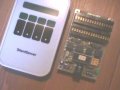
I see myself about half-way between Steve Jobs and Steve Wozniak. I have an eye for art and elegance and beauty, but I also know something about what it takes to make beautiful things actually function. Here, for example, is a digital device I designed and built -- with the components laid out as symmetrically as I could make them (artistically elegant outside and in):I guess the questions are, where are you now in this spectrum of individuals (i'm reasonably certain you are not a barmaid
And I'm an iconoclast by trade. I promoted trivial table-like relational databases when everyone else was into complicated hierarchies and networks (www.era-sql.com). I've sold over 3,000 paintings that I created with a technique that anyone can learn in a single afternoon (https://www.kickstarter.com/projects/1335354839/art-for-the-rest-of-us). I've made computer programming even simpler than in was in the 1980's with a Plain English programming language and development system, written entirely in Plain English (www.osmosian.com/instructions.pdf). I'm looking to do something similar with electronics. "Electronics for the Rest of Us" would be a good tag line.
The task I have set myself is explaining the circuit below (or something very much like it) entirely in electron-flow terms (as the operation of the valves is typically described):Also, what are your remaining unanswered questions, because I seems to have lost track of the logical progression in this thread? I know your first question about "why does the width not matter" has been answered, and several other questions seem to have been answered. So, what remains?
I would like to confirm certain insights that have arisen in discussions of this circuit from the electron-flow perspective with others, for example:
1. The center tap on the power transformer secondary, rather than being just another "voltage reference point" as it is usually described, is actually the "electron feed line" for the entire amp. Yes?
2. One of the two major functions of the power supply is to keep the top part of the circuit "vacuumed" more-or-less clean of free electrons. Yes?
3. The other major function of the power supply is to keep the bottoms of the "rechargeable batteries" off which the circuit actually runs (modules 8, 9 and 10 in the schematic) full of free electrons for the rest of the circuit to use. These units are today referred to as mere "filter capacitors," though they have been known in the past by the more accurate term "reservoir capacitors." Yes?
4. Grounding the circuit to the earth will make the amp safer because it will provide a common electron concentration level between this amp and other equipment. But the myriad electrons in the earth will not generally participate in the operation of this circuit (except for a relative few at start up and shut down) because it is simply easier for the circuit to use the electrons stored in the reservoir capacitors. Yes?
5. The electrons emerging from the top of the valves move in a single direction only with greater and lesser concentration and speed depending on the frequency and volume of the note(s) being amplified. We call this "varying DC" rather than "AC". But once those electrons "hit" the dielectric boundary in the coupling capacitor, they must eventually "bounce" back to be sucked up by the power supply via the plate resistors. And the electrons on the output side of these capacitors must also move in both directions. The coupling capacitors (and the output transformer, in similar fashion) are thus, among other things, "varying DC" to "true AC" converters (where DC means electrons moving in just a single direction, and AC means electrons moving first one way and then the reverse). Yes?
And then this question, which was left unresolved in other discussions:
6. It is agreed that the capacitors on the cathode legs of the valves serve as an "emergency supply" of free electrons when low notes are played and the draw from the tube is increased. What puzzles me is that the expert says those extra electrons are stored in the top of those capacitors rather than the bottom (like the reservoir capacitors mentioned above). I don't understand why this should be the case.
I'm also not entirely clear about:
7. The relationship between electron concentration and voltage. It was decided near the top of this thread that the ratio of accumulated electrons between two points determined the induced EMF. Is there a definition of voltage in such terms (similar to the definition of current -- "one amp equals one gazillion (6.2x10^18) electrons past a certain point per second")? Something like, "one volt equals one gazillion more electrons in one spot versus another"?
Plus a few other loose ends. You've mentioned that you think one-on-one conversations are more effective and I agree. If you prefer to discuss that way, we can do it via email (E-MAIL ADDRESS REMOVED). Or we can stay here and deal with the "multiple-conversations-at-once problem for the possible benefit of (and input from) others who may come across this thread. Your call.
MOD NOTE: Do not put e-mail addresses in publicly visible posts. The spam bots will vacuum it up very quickly (it may already be to late). Use PM instead.
Last edited by a moderator:
Some of what you say above is ok, but much of is is flawed. What particularly bothers me is that the idea to think only in terms of electron flow without considering potential and EMF. You even mention in point # 7 above that you are not clear about the relationship between electron concentration and voltage, but these are intimately linked. So, I feel your whole approach lead to more problems than simplifications. I could try to help you with some of those points above, although I'm a bit puzzled by a few of them, but I feel I would be doing you a disservice, and potentially could confuse others that happen to read this thread.
One key thing is that voltage times current is power, and consideration of electron flow alone is going to miss key aspects of energy conservation.
Basically, I'm not on board with your approach. The best thing I could suggest is that if you want to keep things as simple as possible, while still being reasonably on theoretical solid ground, then use circuit theory, which is a simplification of field theory and is quite suitable for the circuits you showed.
One key thing is that voltage times current is power, and consideration of electron flow alone is going to miss key aspects of energy conservation.
Basically, I'm not on board with your approach. The best thing I could suggest is that if you want to keep things as simple as possible, while still being reasonably on theoretical solid ground, then use circuit theory, which is a simplification of field theory and is quite suitable for the circuits you showed.
I'm sorry to hear that, but thanks anyway -- you did help to clear up a few things for me....I could try to help you with some of those points above, although I'm a bit puzzled by a few of them, but I feel I would be doing you a disservice, and potentially could confuse others that happen to read this thread...
"If by "this way" you mean, "by describing the rest of a guitar amp the same
way the insides of a vacuum tube are typically described," I respectfully
disagree."
No, I mean that you are trying to explain induction with an open conductor,
or circuit.
It takes a closed loop for current induction or circuit operation.
Current is KING. Nothing happens without current. When you touch a high
voltage line, it does nothing to harm you. Only when current flows, does
ANYTHING happen. This is why a bird and you can lite on a high tension wire
safely.
"Done it. And he says, "So something's moving in the wire, right, Dad?" And
I say, "Yep. Electrons. If we can move that magnet fast enough to move 6
gazillion of them in one second (where 6 gazillion is about 6.2x10^18) we'll
be making a whole amp of electrical current. But remember that electrons are
very, very tiny. Nobody has ever seen one. So a gazillion of them is very
small -- about the size of a grain of salt."
Not quite. It's hard to grasp the meaning of a magnetic field and to discern
the movement of electrons because we can't see them yet.
To see a magnetic field, youtube ferrofluids.
But to see the electron, we will have to wait. Meanwhile we can use an ammeter to see to current.
In electronics, electrons, tiny little charge particles are ASSUMED.
But in physics........................
"In the early 1700s, Francis Hauksbee and French chemist Charles François de
Fay independently discovered what they believed were two kinds of frictional
electricity—one generated from rubbing glass, the other from rubbing resin.
From this, Du Fay theorized that electricity consists of two electrical
fluids, vitreous and resinous, that are separated by friction, and that
neutralize each other when combined.[16] A decade later Benjamin Franklin
proposed that electricity was not from different types of electrical fluid,
but the same electrical fluid under different pressures. He gave them the
modern charge nomenclature of positive and negative respectively.[17]
Franklin thought of the charge carrier as being positive, but he did not
correctly identify which situation was a surplus of the charge carrier, and
which situation was a deficit."
Since then we have learned much. We have measured and refined and
specified.....all trying to get on the same page.
But the simple fact is we don't know what an electron is. We know what it's
measurements are. We know how it behaves under different inducements.
An electron has mass, but we still don't know what mass is. It also resents
being disturbed or moved and we really don't know why. It spins, but we
don't know why.
It has a equal magnetic field, whether the electron moves or not, no one
knows where the magnetic field comes from.
Not knowing the physical cause of these properties and relationships, makes
it hard to describe the real event on a weeds level.
The standard model is explained with the quantum model of the electron. This
model uses math equations for justification and calls it explanation. In
order for these equations to work, they have to vary two constants, length
and time.
This quantum model also has several variations. And it's like
microsoft......always updating.
SO....from time to time, the modern answer to the weeds question you asked,
will change.
I believe in an old model.
This is the theory of Ampere and Parsons and many others.
In this old model, there is physical cause for these properties and physical
cause for the relationships of these properties and the CONSTANTS.
I highly recommend Electronic Communication, second edition by Shrader.
I believe is explains current flow fairly well. You can get a good copy for about $30 on Amazon.
"I don't just want to show him the relationship (E=IR). He can find out about that by reading any elementary book on electronics. I want to describe to him the workings of his guitar amp in the same terms used to describe what happens inside the tubes. For example, I need to complete this sentence: "The electrons rush across the void in the tube and strike the plate and then..." Where do they go? Why do they go that way and not some other way?"
I believe that you misunderstand the fundamentals. I believe I can explain it to you, but we must start at the loop of wire and a magnet. Induction is key.
When certain metals and alloys cool and solidify, they form very small irregular clumps. These irregular shaped clumps form unbalanced and void electrical areas, causing SOME of the outer electrons of SOME atoms to become free. These free electrons are not using any of their fields to bond and therefore very energetic. These charge particles go to the surface of the media, because of charge repulsion. On the surface, the free electron can shine half of it's ass out into space without any repulsion or disturbance. The free electrons will try to form an equidistant grid on the surface like a hairnet, due to charge repulsion. And because of charge repulsion, these free electrons will move to maintain that grid. This is what a neutral conductor looks like.
The number of the free electrons, which is always on the surface, is small compared the the number of bonded electrons on the surface.
Even though conductors are drawn and shaped, the clumpiness causes uneven surface fields from the bonded atoms. These uneven fields cause resistance to all of the free electron grid moving in unison, so that it takes higher voltage, to move more electrons of the grid ...i.e. resistance. If all the free grid moved........it would be zero resistance, OR at the maximum current rating of the conductor.
The current rating of a wire is based on the number of free electrons of the conductor, not the power supply.
A power supply or an EMF, NEVER adds charge or electrons or current to a circuit.
It can only circulate or rotate the current that's ALREADY THERE.
The amp hour rating is not how much charge you can get out..............it's how much charge you can rotate.
This is all any power supply does.........is to maintain a difference in charge density. To maintain it.......the source must sink and source(rotate) equally at the same time. When you do that.......then the free electrons in the circuit flow, to try to equalize this density difference.
The voltage cause an upset in the density and the current tries to restore it.
This is all powered by charge repulsion.
Amperage is different than current. Current is measured in amperage, but amperage does not mean current. Amperage is charge flow at a point. Current is an ORDERED circular(complete path or rotation) charge flow. We only work with negative charge....therefore negative current. The plus and minus in front of a current magnitude, denotes DIRECTION, not the polarity(charge) of CURRENT. Current is always negative.
Current unifies the circuit. It's the only thing common in a circuit. It has mass and momentum.
In many ways....when you turn a circuit on, its like spinning a gyroscope, only it's an electrical gyroscope.
This is getting long fast. I'll see if you are with me, before I continue with induction.
way the insides of a vacuum tube are typically described," I respectfully
disagree."
No, I mean that you are trying to explain induction with an open conductor,
or circuit.
It takes a closed loop for current induction or circuit operation.
Current is KING. Nothing happens without current. When you touch a high
voltage line, it does nothing to harm you. Only when current flows, does
ANYTHING happen. This is why a bird and you can lite on a high tension wire
safely.
"Done it. And he says, "So something's moving in the wire, right, Dad?" And
I say, "Yep. Electrons. If we can move that magnet fast enough to move 6
gazillion of them in one second (where 6 gazillion is about 6.2x10^18) we'll
be making a whole amp of electrical current. But remember that electrons are
very, very tiny. Nobody has ever seen one. So a gazillion of them is very
small -- about the size of a grain of salt."
Not quite. It's hard to grasp the meaning of a magnetic field and to discern
the movement of electrons because we can't see them yet.
To see a magnetic field, youtube ferrofluids.
But to see the electron, we will have to wait. Meanwhile we can use an ammeter to see to current.
In electronics, electrons, tiny little charge particles are ASSUMED.
But in physics........................
"In the early 1700s, Francis Hauksbee and French chemist Charles François de
Fay independently discovered what they believed were two kinds of frictional
electricity—one generated from rubbing glass, the other from rubbing resin.
From this, Du Fay theorized that electricity consists of two electrical
fluids, vitreous and resinous, that are separated by friction, and that
neutralize each other when combined.[16] A decade later Benjamin Franklin
proposed that electricity was not from different types of electrical fluid,
but the same electrical fluid under different pressures. He gave them the
modern charge nomenclature of positive and negative respectively.[17]
Franklin thought of the charge carrier as being positive, but he did not
correctly identify which situation was a surplus of the charge carrier, and
which situation was a deficit."
Since then we have learned much. We have measured and refined and
specified.....all trying to get on the same page.
But the simple fact is we don't know what an electron is. We know what it's
measurements are. We know how it behaves under different inducements.
An electron has mass, but we still don't know what mass is. It also resents
being disturbed or moved and we really don't know why. It spins, but we
don't know why.
It has a equal magnetic field, whether the electron moves or not, no one
knows where the magnetic field comes from.
Not knowing the physical cause of these properties and relationships, makes
it hard to describe the real event on a weeds level.
The standard model is explained with the quantum model of the electron. This
model uses math equations for justification and calls it explanation. In
order for these equations to work, they have to vary two constants, length
and time.
This quantum model also has several variations. And it's like
microsoft......always updating.
SO....from time to time, the modern answer to the weeds question you asked,
will change.
I believe in an old model.
This is the theory of Ampere and Parsons and many others.
In this old model, there is physical cause for these properties and physical
cause for the relationships of these properties and the CONSTANTS.
I highly recommend Electronic Communication, second edition by Shrader.
I believe is explains current flow fairly well. You can get a good copy for about $30 on Amazon.
"I don't just want to show him the relationship (E=IR). He can find out about that by reading any elementary book on electronics. I want to describe to him the workings of his guitar amp in the same terms used to describe what happens inside the tubes. For example, I need to complete this sentence: "The electrons rush across the void in the tube and strike the plate and then..." Where do they go? Why do they go that way and not some other way?"
I believe that you misunderstand the fundamentals. I believe I can explain it to you, but we must start at the loop of wire and a magnet. Induction is key.
When certain metals and alloys cool and solidify, they form very small irregular clumps. These irregular shaped clumps form unbalanced and void electrical areas, causing SOME of the outer electrons of SOME atoms to become free. These free electrons are not using any of their fields to bond and therefore very energetic. These charge particles go to the surface of the media, because of charge repulsion. On the surface, the free electron can shine half of it's ass out into space without any repulsion or disturbance. The free electrons will try to form an equidistant grid on the surface like a hairnet, due to charge repulsion. And because of charge repulsion, these free electrons will move to maintain that grid. This is what a neutral conductor looks like.
The number of the free electrons, which is always on the surface, is small compared the the number of bonded electrons on the surface.
Even though conductors are drawn and shaped, the clumpiness causes uneven surface fields from the bonded atoms. These uneven fields cause resistance to all of the free electron grid moving in unison, so that it takes higher voltage, to move more electrons of the grid ...i.e. resistance. If all the free grid moved........it would be zero resistance, OR at the maximum current rating of the conductor.
The current rating of a wire is based on the number of free electrons of the conductor, not the power supply.
A power supply or an EMF, NEVER adds charge or electrons or current to a circuit.
It can only circulate or rotate the current that's ALREADY THERE.
The amp hour rating is not how much charge you can get out..............it's how much charge you can rotate.
This is all any power supply does.........is to maintain a difference in charge density. To maintain it.......the source must sink and source(rotate) equally at the same time. When you do that.......then the free electrons in the circuit flow, to try to equalize this density difference.
The voltage cause an upset in the density and the current tries to restore it.
This is all powered by charge repulsion.
Amperage is different than current. Current is measured in amperage, but amperage does not mean current. Amperage is charge flow at a point. Current is an ORDERED circular(complete path or rotation) charge flow. We only work with negative charge....therefore negative current. The plus and minus in front of a current magnitude, denotes DIRECTION, not the polarity(charge) of CURRENT. Current is always negative.
Current unifies the circuit. It's the only thing common in a circuit. It has mass and momentum.
In many ways....when you turn a circuit on, its like spinning a gyroscope, only it's an electrical gyroscope.
This is getting long fast. I'll see if you are with me, before I continue with induction.
I understand that it takes a closed loop for circuit operation. But I'm under the impression that it does not take a closed loop to have an imbalance of electrons (say, in a battery, or a charged capacitor, or even in a moving rod in a uniform magnetic field as in the standard "motional EMF" example described at the very top of this thread)....you are trying to explain induction with an open conductor, or circuit. It takes a closed loop for current induction or circuit operation.
I think I'm okay on current. My mental picture is that described on the Wikipedia: "An electric current is a flow of electric charge. In electric circuits this charge is often carried by moving electrons in a wire."Current is KING. Nothing happens without current. When you touch a high voltage line, it does nothing to harm you. Only when current flows, does ANYTHING happen. This is why a bird and you can lite on a high tension wire safely.
That "Not quite" was in response to this statement of mine:Not quite.
"So something's moving in the wire, right, Dad?" And I say, "Yep. Electrons. If we can move that magnet fast enough to move 6 gazillion of them in one second (where 6 gazillion is about 6.2x10^18) we'll be making a whole amp of electrical current. But remember that electrons are very, very tiny. Nobody has ever seen one. So a gazillion of them is very small -- about the size of a grain of salt."
I'm not clear which parts of that statement you consider accurate/inaccurate.
I understand. I'm thinking of electrons simply as part of a model at a useful level of abstraction. Like a programmer thinks of pixels even though a single pixel may physically be various things on different kinds of display devices.It's hard to grasp the meaning of a magnetic field and to discern the movement of electrons because we can't see them yet.
Interesting effects, but I don't see how that helps a kid understand guitar amps any better than the old standards with iron filings:To see a magnetic field, youtube ferrofluids.
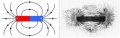
More precisely, "we can use an ammeter to measure and/or alert us to the flow of current," yes? We don't "see" anything flowing with an ammeter, just as we don't see water flowing with an hydraulic flow meter.But to see the electron, we will have to wait. Meanwhile we can use an ammeter to see to current.
Yes. That's a key part of the "model at a useful level of abstraction" I mentioned above.In electronics, electrons, tiny little charge particles are ASSUMED.
I understand that. Which is probably why Ken Amdahl in his book, There are No Electrons: Electronics for Earthlings, chose to invent "greenies" which behave much like the "electrons" of yesteryear and which suffice to describe most common electrical circuits and components at a level suitable for beginners. As I mentioned in another post, I'm searching for a model that works at the plumbing level, for journeymen, as it were, not necessarily a model expansive enough to describe the entire hydrologic cycle.But in physics...the simple fact is we don't know what an electron is. We know what it's measurements are. We know how it behaves under different inducements. An electron has mass, but we still don't know what mass is. It also resents being disturbed or moved and we really don't know why. It spins, but we don't know why. It has a equal magnetic field, whether the electron moves or not, no one knows where the magnetic field comes from. Not knowing the physical cause of these properties and relationships, makes it hard to describe the real event on a weeds level.
I've noticed. It would be nice if everyone would preface their remarks with qualifiers like, "according to the XXX model," and even nicer if they would clearly distinguish between theories and verified facts. But unfortunately, none of us has time for that.The standard model is explained with the quantum model of the electron. This model uses math equations for justification and calls it explanation. In order for these equations to work, they have to vary two constants, length and time. This quantum model also has several variations. And it's like microsoft......always updating. SO....from time to time, the modern answer to the weeds question you asked, will change.
Lay it on me.I believe in an old model.
I'm okay with that.This is the theory of Ampere and Parsons and many others. In this old model, there is physical cause for these properties and physical cause for the relationships of these properties and the CONSTANTS.
I'll look into it.I highly recommend Electronic Communication, second edition by Shrader. I believe is explains current flow fairly well. You can get a good copy for about $30 on Amazon.
That's quite possible.I believe that you misunderstand the fundamentals.
Okay.I believe I can explain it to you, but we must start at the loop of wire and a magnet. Induction is key.
Best description of a neutral conduction yet. But I still don't have a clear picture. Here's what I'm told a copper atom is like:When certain metals and alloys cool and solidify, they form very small irregular clumps. These irregular shaped clumps form unbalanced and void electrical areas, causing SOME of the outer electrons of SOME atoms to become free. These free electrons are not using any of their fields to bond and therefore very energetic. These charge particles go to the surface of the media, because of charge repulsion. On the surface, the free electron can shine half of it's ass out into space without any repulsion or disturbance. The free electrons will try to form an equidistant grid on the surface like a hairnet, due to charge repulsion. And because of charge repulsion, these free electrons will move to maintain that grid. This is what a neutral conductor looks like. The number of the free electrons, which is always on the surface, is small compared the the number of bonded electrons on the surface.
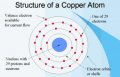
Is that "valence electron" in the outermost shell "bonded" or "free"? How many bonded and free electrons can a copper atom have? What do the atoms look like (a) inside a copper wire; (b) on the surface of the wire but not part of the "grid"; (c) on the surface and part of the "grid"?
I get that.Even though conductors are drawn and shaped, the clumpiness causes uneven surface fields from the bonded atoms. These uneven fields cause resistance to all of the free electron grid moving in unison, so that it takes higher voltage, to move more electrons of the grid ...i.e. resistance. If all the free grid moved........it would be zero resistance, OR at the maximum current rating of the conductor.
I get that too. If I said something that made you think otherwise, I misspoke.The current rating of a wire is based on the number of free electrons of the conductor, not the power supply.
Ditto.A power supply or an EMF, NEVER adds charge or electrons or current to a circuit.
Is "current" the right word? I thought that sentence was going to say, "It can only circulate or rotate the free electrons that are ALREADY THERE."It can only circulate or rotate the current that's ALREADY THERE.
Again, by "how much charge you can rotate" do you mean "how many electrons you can rotate"?The amp hour rating is not how much charge you can get out..............it's how much charge you can rotate.
Yet again, I'm not clear if you're using the words "charge" and "electrons" interchangeably.This is all any power supply does.........is to maintain a difference in charge density. To maintain it.......the source must sink and source(rotate) equally at the same time. When you do that.......then the free electrons in the circuit flow, to try to equalize this density difference.
Based on what you said above, I would have said "The voltage causes an upset in the density and charge repulsion attempts to restore it." In other words, my understanding is that the free electrons in the circuit "want" to be evenly distributed (because they "don't want" to be next to each other). It takes an outside force (as yet undefined, but that you've been calling voltage) to push those free electrons out of their "peaceful" grid-like arrangement on the surface of the conductors. Venturing further: Since these "out of place" electrons will mutually repel one another and "want" to return to their balanced, grid-like arrangement, it seems to me that we could define voltage as a measure of how many "out of place" electrons are in one spot versus another; but that would mean that voltage was not quite the right term for the outside force that moved them in the first place. Help!The voltage cause an upset in the density and the current tries to restore it.
In two places: (a) mutual repulsion of electrons in the conductor, and (b) mutual repulsion between the electrons in the conductor and the outside force (like a moving magnet) that pushes them around. Yes?This is all powered by charge repulsion.
It's my understanding that (in the context of basic circuits like a guitar amp) current is the movement of electrons in the wires and other components; amperage is a measure of that flow: 1 amp being 6.2*10^18 electrons moving past a given point per second. Yes?Amperage is different than current. Current is measured in amperage, but amperage does not mean current. Amperage is charge flow at a point. Current is an ORDERED circular(complete path or rotation) charge flow.
Yes, I'm okay with that. I think.We only work with negative charge....therefore negative current. The plus and minus in front of a current magnitude, denotes DIRECTION, not the polarity(charge) of CURRENT. Current is always negative.
I would think so, since when you say current I think, "flow of electrons" (electrons being the "charge carriers", having both mass and, when moving, momentum). Yes?Current unifies the circuit. It's the only thing common in a circuit. It has mass and momentum.
That particular analogy doesn't help me.In many ways....when you turn a circuit on, its like spinning a gyroscope, only it's an electrical gyroscope.
I'm with you in spirit, I think, even if I don't have the technical details right yet. Onward!This is getting long fast. I'll see if you are with me, before I continue with induction.
Last edited:
I have to interject a point here.
It seems there is a desire to try to explain circuit operations in terms of current flow (electron flow) only. Why, are you restricting yourself in this way? If you look at the topic of electromagnetics, you will find various defined quantities including, electric field, magnetic field, scalar potential, vector potential, charge density, charge, current density and current. Also, various principles are quantified, including, charge conservation, charge continuity, energy conservation, time varying electric field equates to spatially varying magnetic field, time varying magnetic field equates to spatially varying electric fields etc ...
This is complicated stuff, but that's the way it is. Trying to interpret all of these principles/phenomena in terms of current flow alone is a terribly bad idea. As I mentioned, circuit theory is the road to simplifying the understanding. In circuit theory we establish simpler rules and think in terms of voltage, current, resistance, inductance, capacitance, impedances etc. This is a great simplification but still considerably more involved than thinking in terms of current flow alone.
I keep hearing talk about "the kid" and I'm not sure if this is a real kid, or a hypothetical one. In either case, how old is this kid, and why do we think he would not be able to quickly understand the basics of circuit theory? Often kids are very pliable and can easily learn new concepts and develop intuitive feeling for them. They usually do this much better than adults. Personally, I started learning electronics at age 13 and developed intuition for voltage and current (both) very quickly. I was so accepting of these new ideas that for a very long time my intuition about electrical phenomena was much better than my feeling for mechanical phenomena, and when I later learned the formal theory of mechanics, I would often recast the analysis in terms of circuit theory to understand it better.
I'm totally mystified by the motivation to simplify thing so much that the logic falls apart. Of course things are not making sense with this approach. It is a fundamentally flawed approach.
It seems there is a desire to try to explain circuit operations in terms of current flow (electron flow) only. Why, are you restricting yourself in this way? If you look at the topic of electromagnetics, you will find various defined quantities including, electric field, magnetic field, scalar potential, vector potential, charge density, charge, current density and current. Also, various principles are quantified, including, charge conservation, charge continuity, energy conservation, time varying electric field equates to spatially varying magnetic field, time varying magnetic field equates to spatially varying electric fields etc ...
This is complicated stuff, but that's the way it is. Trying to interpret all of these principles/phenomena in terms of current flow alone is a terribly bad idea. As I mentioned, circuit theory is the road to simplifying the understanding. In circuit theory we establish simpler rules and think in terms of voltage, current, resistance, inductance, capacitance, impedances etc. This is a great simplification but still considerably more involved than thinking in terms of current flow alone.
I keep hearing talk about "the kid" and I'm not sure if this is a real kid, or a hypothetical one. In either case, how old is this kid, and why do we think he would not be able to quickly understand the basics of circuit theory? Often kids are very pliable and can easily learn new concepts and develop intuitive feeling for them. They usually do this much better than adults. Personally, I started learning electronics at age 13 and developed intuition for voltage and current (both) very quickly. I was so accepting of these new ideas that for a very long time my intuition about electrical phenomena was much better than my feeling for mechanical phenomena, and when I later learned the formal theory of mechanics, I would often recast the analysis in terms of circuit theory to understand it better.
I'm totally mystified by the motivation to simplify thing so much that the logic falls apart. Of course things are not making sense with this approach. It is a fundamentally flawed approach.
Ok, I believe this old revised theory not only explains electrons, but it unifies everything in the cosmos.
Premise: There is only one physical entity in the universe. Charge. Small "c" is not the speed of light. Small c is the speed of charge. c was not measured. c was determined mathematically by Weber. He determined that c was the velocity that charge needs to attain to produce a magnetic field equal to the electric field. c is the constant velocity of charge. Charge always has a tangential velocity of c. However, at this speed, the electric and magnetic fields distort to such an extant, that it causes the charge to arc(turn). The sharpness of this turn, depends on external fields. Even though the velocity is constant, the constant change of direction with the arc..............constitutes acceleration. Without any external interference(ground state), the loop that a NEGATIVE charge makes is about .5 picometers in diameter. This loop of charge has constant velocity and at the same time........it has acceleration. Now this is not a speck of charge that rotates in a circle at c. The whole loop or ring, is even density charge. The number of electric field lines is fundamental, constant, and called elemental charge....-e. A proton has an equal +p elemental charge. Now this circulated charge is CURRENT. A ground state electron has about 20 amps. A proton(and an electron under the right conditions) has 100s of thousands of amps! There are only two stable particles, electrons and protons. Neutrons are not stable, that's why we have decay. And neutrinos are stable but are neutralized and do not react with other particles. More on this later.
Now for the hard part. Take some notebook paper and draw a origin with a 2" radius. Do not rotate yet. This radius is the radius of the charge loop. We will call it big R. R is the magnitude of charge repulsion of the ring. R wants to expand and blow the ring apart.
At the end of R, not the origin end, but the tip end...........IS the origin of another radius. This radius is called small r.
Big R rotates in the plane of the paper. Small r rotates perpendicular to the paper. It rotates up and down thru the paper.
r is the magnitude of the magnetic field. In the ground state, for every rotation of R we will get one rotation of r. This one to one.........gives an equal confining magnetic pinch effect that is equal to the electric repulsion effect. We now have balance and stability.
This small r causes a magnetic moment perpendicular at the origin of big R. This is because all the magnetic field lines enter the top of the loop, and exit the bottom of loop. This is the cause of the magnetic pole that is perpendicular to the loop.
The charge travels in a circular helix. The charge spins on the surface of a torus as it rotates. We have one spin rotating on another spin. It's one spin on the end(and perpendicular) of another spin.
If you stand at a distance from a one to one charge ring, even though the true path is on the surface of a toroid, the path will appear to be an ELLIPSE.
Planets look like they travel in an elliptical path, but in reality...they also travel on the surface of a toroid. Yes, this model also unifies gravity with charge. This model unifies everything.......because there is only one thing......charge.
The number of r can only change in integers. This is the n number or energy level. Modern science says shell level.......but that is not true. There are no electron shells.
The math says that the n number can be 0, 1/4, 1/3, 1/2............and multiples of one, but we have not found a particle with a number less than one. This needs further study, because if we could decrease the n number, it would be a HUGE source of energy.
Ok, we have a charge loop at c and a magnetic field. And we have size. These ground state electrons are hard to find. We can find them in atom nuclei, but for a free ground state, it would have to be close to absolute zero.
The electrons that we work with have much larger n numbers.
Even though the loop has a ring shape(and therefore a disk shaped field), because of the rotation, not too far from the particle....the electric field has a spherical shape. Close to the particle, the magnetic field has a pumpkin shape. But again, not too far away, it appears spherical.
These two equal spherical fields can have an effect on other particles without exchanging energy. These two fields always work together. The electric will repel or attract, depending on polarity. But the magnetic always lines up. This north pole will always line up with a south pole.
This is how free electrons line up on a surface, not only are they electrically equidistant, they are lined up north-south magnetically. Particles are always effected by these two fields equally.
But in order to change the energy level(n number), we must use induction. In order for induction to take place, an external EM field must penetrate the interior area of the loop.
Let's go back to the ground state. Remember it's one to one rotation with about .5 uumeters.
Because the ring has circumference(length), it takes time for rotation. This gives the particle a RPM. Modern science calls this radians per sec. This is proper, because radians per sec means area per sec, which is vital. But we don't want to get too far in the weeds yet.
Instead of using RPMinute, we will use RPSecond. This is frequency. So if we divide c by the circumference(wavelength), we will get frequency. A particle in ground state is at it's fundamental frequency. Pick any part of the ring for a reference point. We will call it the precession point. As long as the particle is isolated or undisturbed......this precession point location will remain constant. If I put a little EM in the center of the loop, the precession point will rotate. Which way it rotates(precession point moves left or right), depends on the polarity of the EM field. If I stick a little EM in the ring, the P point will move, and when I withdraw the EM field, the P point will return to where is was.
How far and fast that the P point changes, depends on the magnitude and speed of the EM.
The speed has much more effect than the magnitude.
If I induce the EM field fast enough, I can put another loop in r. If I can put the EM field into the charge fast enough, so that the precession point rotates twice the fundamental, the P point will add another turn to r.
This causes the magnetic density to double. This causes the R to half, so that the charge repulsion doubles, to match the new magnetic density. The charge ring is now at half the diameter that is was. It also now has double the frequency.
So now that particle is at a higher energy level. Even though the magnitude of the electric and magnetic did not change........the density doubled. Also the physical size of the particle halved.
The frequency doubled. Frequency is a measure of the angular rotation. This is angular momentum. Angular momentum is mass. The mass doubled. The size decreased!
Mass is the angular momentum of charge. It's only apparent. There is no mass. Only charge momentum. Angular momentum(and therefore mass) changes with energy level. The size of the particle is inversely related to energy! The heavier OR the more energy a particles has.......the SMALLER the particle is.
This is how mass and energy convert. There is no quantum effect or magic.
Inertia. The angular momentum causes equal, and balanced, symmetrical fields. When an external field distorts these fields, these two fields push back and try to restore the symmetry. If the fields can not restore the shape..............the electron will move.....so that it can restore field shapes.
Inertia and mass are closely related..........if not the same thing.
So....we have charge, magnetic moment, mass, inertia, spin, and angular momentum and massXenergy conversion.
Charge is charge. Magnetism is the rotation of charge. Mass is the angular momentum of charge.
Inertia is the resonance of charge.
All of these properties are related and exchanged thru the resonance of charge. This is a DC resonance!
All energy, force and action in the cosmos, goes thru and is transferred thru the resonance of charge.
We still need to discuss the proton, particle bonding, true atomic structure, adsorption and emission, ..........oh and decay.
But right now I need to take a break.
If anyone wants to see the math and experiments for all this......PM me.
Premise: There is only one physical entity in the universe. Charge. Small "c" is not the speed of light. Small c is the speed of charge. c was not measured. c was determined mathematically by Weber. He determined that c was the velocity that charge needs to attain to produce a magnetic field equal to the electric field. c is the constant velocity of charge. Charge always has a tangential velocity of c. However, at this speed, the electric and magnetic fields distort to such an extant, that it causes the charge to arc(turn). The sharpness of this turn, depends on external fields. Even though the velocity is constant, the constant change of direction with the arc..............constitutes acceleration. Without any external interference(ground state), the loop that a NEGATIVE charge makes is about .5 picometers in diameter. This loop of charge has constant velocity and at the same time........it has acceleration. Now this is not a speck of charge that rotates in a circle at c. The whole loop or ring, is even density charge. The number of electric field lines is fundamental, constant, and called elemental charge....-e. A proton has an equal +p elemental charge. Now this circulated charge is CURRENT. A ground state electron has about 20 amps. A proton(and an electron under the right conditions) has 100s of thousands of amps! There are only two stable particles, electrons and protons. Neutrons are not stable, that's why we have decay. And neutrinos are stable but are neutralized and do not react with other particles. More on this later.
Now for the hard part. Take some notebook paper and draw a origin with a 2" radius. Do not rotate yet. This radius is the radius of the charge loop. We will call it big R. R is the magnitude of charge repulsion of the ring. R wants to expand and blow the ring apart.
At the end of R, not the origin end, but the tip end...........IS the origin of another radius. This radius is called small r.
Big R rotates in the plane of the paper. Small r rotates perpendicular to the paper. It rotates up and down thru the paper.
r is the magnitude of the magnetic field. In the ground state, for every rotation of R we will get one rotation of r. This one to one.........gives an equal confining magnetic pinch effect that is equal to the electric repulsion effect. We now have balance and stability.
This small r causes a magnetic moment perpendicular at the origin of big R. This is because all the magnetic field lines enter the top of the loop, and exit the bottom of loop. This is the cause of the magnetic pole that is perpendicular to the loop.
The charge travels in a circular helix. The charge spins on the surface of a torus as it rotates. We have one spin rotating on another spin. It's one spin on the end(and perpendicular) of another spin.
If you stand at a distance from a one to one charge ring, even though the true path is on the surface of a toroid, the path will appear to be an ELLIPSE.
Planets look like they travel in an elliptical path, but in reality...they also travel on the surface of a toroid. Yes, this model also unifies gravity with charge. This model unifies everything.......because there is only one thing......charge.
The number of r can only change in integers. This is the n number or energy level. Modern science says shell level.......but that is not true. There are no electron shells.
The math says that the n number can be 0, 1/4, 1/3, 1/2............and multiples of one, but we have not found a particle with a number less than one. This needs further study, because if we could decrease the n number, it would be a HUGE source of energy.
Ok, we have a charge loop at c and a magnetic field. And we have size. These ground state electrons are hard to find. We can find them in atom nuclei, but for a free ground state, it would have to be close to absolute zero.
The electrons that we work with have much larger n numbers.
Even though the loop has a ring shape(and therefore a disk shaped field), because of the rotation, not too far from the particle....the electric field has a spherical shape. Close to the particle, the magnetic field has a pumpkin shape. But again, not too far away, it appears spherical.
These two equal spherical fields can have an effect on other particles without exchanging energy. These two fields always work together. The electric will repel or attract, depending on polarity. But the magnetic always lines up. This north pole will always line up with a south pole.
This is how free electrons line up on a surface, not only are they electrically equidistant, they are lined up north-south magnetically. Particles are always effected by these two fields equally.
But in order to change the energy level(n number), we must use induction. In order for induction to take place, an external EM field must penetrate the interior area of the loop.
Let's go back to the ground state. Remember it's one to one rotation with about .5 uumeters.
Because the ring has circumference(length), it takes time for rotation. This gives the particle a RPM. Modern science calls this radians per sec. This is proper, because radians per sec means area per sec, which is vital. But we don't want to get too far in the weeds yet.
Instead of using RPMinute, we will use RPSecond. This is frequency. So if we divide c by the circumference(wavelength), we will get frequency. A particle in ground state is at it's fundamental frequency. Pick any part of the ring for a reference point. We will call it the precession point. As long as the particle is isolated or undisturbed......this precession point location will remain constant. If I put a little EM in the center of the loop, the precession point will rotate. Which way it rotates(precession point moves left or right), depends on the polarity of the EM field. If I stick a little EM in the ring, the P point will move, and when I withdraw the EM field, the P point will return to where is was.
How far and fast that the P point changes, depends on the magnitude and speed of the EM.
The speed has much more effect than the magnitude.
If I induce the EM field fast enough, I can put another loop in r. If I can put the EM field into the charge fast enough, so that the precession point rotates twice the fundamental, the P point will add another turn to r.
This causes the magnetic density to double. This causes the R to half, so that the charge repulsion doubles, to match the new magnetic density. The charge ring is now at half the diameter that is was. It also now has double the frequency.
So now that particle is at a higher energy level. Even though the magnitude of the electric and magnetic did not change........the density doubled. Also the physical size of the particle halved.
The frequency doubled. Frequency is a measure of the angular rotation. This is angular momentum. Angular momentum is mass. The mass doubled. The size decreased!
Mass is the angular momentum of charge. It's only apparent. There is no mass. Only charge momentum. Angular momentum(and therefore mass) changes with energy level. The size of the particle is inversely related to energy! The heavier OR the more energy a particles has.......the SMALLER the particle is.
This is how mass and energy convert. There is no quantum effect or magic.
Inertia. The angular momentum causes equal, and balanced, symmetrical fields. When an external field distorts these fields, these two fields push back and try to restore the symmetry. If the fields can not restore the shape..............the electron will move.....so that it can restore field shapes.
Inertia and mass are closely related..........if not the same thing.
So....we have charge, magnetic moment, mass, inertia, spin, and angular momentum and massXenergy conversion.
Charge is charge. Magnetism is the rotation of charge. Mass is the angular momentum of charge.
Inertia is the resonance of charge.
All of these properties are related and exchanged thru the resonance of charge. This is a DC resonance!
All energy, force and action in the cosmos, goes thru and is transferred thru the resonance of charge.
We still need to discuss the proton, particle bonding, true atomic structure, adsorption and emission, ..........oh and decay.
But right now I need to take a break.
If anyone wants to see the math and experiments for all this......PM me.
Not only in terms of electron flow, but with electron flow as the common anchor point.I have to interject a point here. It seems there is a desire to try to explain circuit operations in terms of current flow (electron flow) only.
"Orienting" would be a better word than "restricting." The first reason for this orientation is that vacuum tubes -- the primary component of guitar amps of this kind -- are invariably described that way. The second reason is that I personally find electron-flow descriptions easy to follow. And the third reason is that there are insights regarding circuit design and tuning to be gained from the electron-flow perspective that are not easily seen from other perspectives (a few of them described in my post #31 above).Why, are you restricting yourself in this way?
I'm not trying to interpret all of those principles/phenomena in terms of current flow. I'm trying to describe the workings of a guitar amp in terms that a ten-year old can easily and quickly grasp. I'm old (62) and don't have a lot of time left to cover all the material I'd like (in this and many other subjects). So I've decided to leave the kid knowing "something about everything" -- he can learn "everything about something" on his own, after I'm gone.If you look at the topic of electromagnetics, you will find various defined quantities including, electric field, magnetic field, scalar potential, vector potential, charge density, charge, current density and current. Also, various principles are quantified, including, charge conservation, charge continuity, energy conservation, time varying electric field equates to spatially varying magnetic field, time varying magnetic field equates to spatially varying electric fields etc ... This is complicated stuff, but that's the way it is. Trying to interpret all of these principles/phenomena in terms of current flow alone is a terribly bad idea.
Again, not current flow alone. Consider these three images:As I mentioned, circuit theory is the road to simplifying the understanding. In circuit theory we establish simpler rules and think in terms of voltage, current, resistance, inductance, capacitance, impedances etc. This is a great simplification but still considerably more involved than thinking in terms of current flow alone.
At one level of abstraction, they have nothing in common: a photograph, a schematic diagram, some text. But at a different level of abstraction, they're all the very same kind of thing: black pixels on a white background. That's the kind of relation between the lower physical level of a guitar amp, and the higher functional level of the amp, I want the kid to walk away with. I want him to see that "interstage couplings" and "current amplifiers" and "voltage amplifiers" and "transformers" and "filters" all have one thing in common -- the movement of electrons in the circuit. Electrons strike me as the "pixels" of electronics.
The kid is real; the child of our old age. Mixed up in a dish, frozen, thawed months later, implanted in my lovely wife's way-past-childbearing-56-year-old womb, and now nearly ten years old. This is he at about six years of age:I keep hearing talk about "the kid" and I'm not sure if this is a real kid, or a hypothetical one. In either case, how old is this kid...

We felt so much like the Biblical Abraham and Sarah (being so old and having prayed so long for a child) that we named him Chuckles (after Abe and Sarah's Isaac -- Isaac is Hebrew for "laughter").
Frankly, I'm hoping he will continue the family tradition and grow up to be a dyed-in-the-wool iconoclast like dear old dad. So I've taught him to paint, not by "eyeballing" things, but -- like Norman Rockwell and many of the great masters -- by tracing the outlines of a photograph or projected image. I've taught him to play drums, piano, and ukulele without reference to that God-awful system of musical notation that is typically forced on kids from day one (and which he can learn later if he feels the need). I'm teaching him to program in English rather than some horrid derivative of the "C" language. In mathematics, he'll know and admire Kronecker long before he learns about Cantor. In physics I'll be taking him from Newton to Fredkin; Einstein can wait. And he'll be steeped in a philosophy of science much more like Berlinski's than Sagan's....why do we think he would not be able to quickly understand the basics of circuit theory? Often kids are very pliable and can easily learn new concepts and develop intuitive feeling for them. They usually do this much better than adults. Personally, I started learning electronics at age 13 and developed intuition for voltage and current (both) very quickly. I was so accepting of these new ideas that for a very long time my intuition about electrical phenomena was much better than my feeling for mechanical phenomena, and when I later learned the formal theory of mechanics, I would often recast the analysis in terms of circuit theory to understand it better.
Consider, for a moment, these words of Berlinski (A Tour of the Calculus, pages 308 and 306):
"The long and extraordinary meditation on [the] meaning [of continuity] is coming to an end. The mathematics that has gone into the meditation has become too rebarbative and the system of rules by which it is animated too complicated to sustain a large community of purpose. It requires unusual abilities to become a mathematician, that and years of painful training in which the intellect is forced to bend upon itself. Like sixteenth-century counterpoint, or the rituals of the Persian Court, the thing has become overly elaborate, and in science as in art what is overly elaborate is destined to disappear."
"Despite a few attempts by mathematicians here and there to participate in the life of the biological sciences, mathematics has played NO role in molecular biology and seems destined to play none. No achievement in molecular biology requires mathematics beyond finger counting for its comprehension. But even stranger, there is this: that the thought world of molecular biology would in its major aspects be instantly comprehensible to someone who knew nothing of science, modern physics, Newton, continuity, or the calculus.... [It is] an intellectual landscape far simpler than the one inhabited by mathematicians.... Mathematical science requires theories; molecular biology, facts. The very nature of science as a distinctive human activity is ineluctably changing."
This, I believe, is a glimpse of the scientific world of tomorrow: small integers and simple relationships; where it is recognized that the universe is much more an algorithm than a equation. I could be wrong, of course. But as you say, kids are pliable; Chuckles will be able to bounce back if he sees he's on the wrong track.
Time will tell. I'm not into beating my head against the wall. But the proof of the pudding is in the eating and until I get at least one circuit out of the oven (ie, described in electron-flow terms), we've nothing to taste and thus judgement is premature.I'm totally mystified by the motivation to simplify thing so much that the logic falls apart. Of course things are not making sense with this approach. It is a fundamentally flawed approach.
That's very interesting, and even inspiring, background you mention here. Thank you.
I'll give this some more thought to see if I can add anything constructive.
One thing I can say is that you mention that you are not restricting yourself to electron flow alone, and you mentioned that you did not quite grasp the relation between charge concentration and voltage. Perhaps then, this is the missing piece to consider. As I mentioned, circuit theory deals with voltage and current, so if you grasp voltage/potential concepts in terms of charge distributions and EMF in terms of flux change (Faraday's law) and chemical energy (batteries), then combining that with electron flow probably gives you enough solid footing.
Admittedly, 10 years old seems too young to get into too much detail, so some basic understanding of voltage combined with the concept of current flow may be useful and sufficient. Even when water flow is considered, the idea of pressure is needed to really get the gist of what is happening, and voltage is analogous to pressure.
I'll give this some more thought to see if I can add anything constructive.
One thing I can say is that you mention that you are not restricting yourself to electron flow alone, and you mentioned that you did not quite grasp the relation between charge concentration and voltage. Perhaps then, this is the missing piece to consider. As I mentioned, circuit theory deals with voltage and current, so if you grasp voltage/potential concepts in terms of charge distributions and EMF in terms of flux change (Faraday's law) and chemical energy (batteries), then combining that with electron flow probably gives you enough solid footing.
Admittedly, 10 years old seems too young to get into too much detail, so some basic understanding of voltage combined with the concept of current flow may be useful and sufficient. Even when water flow is considered, the idea of pressure is needed to really get the gist of what is happening, and voltage is analogous to pressure.
- Status
- Not open for further replies.
| Thread starter | Similar threads | Forum | Replies | Date |
|---|---|---|---|---|
| F | Semiconductors’ flow of electron is still confusing me | General Science, Physics & Math | 1 | |
| B | Electron Streams | General Science, Physics & Math | 2 | |
| B | Electron Affinity | General Science, Physics & Math | 2 | |

|
What is the electron? | General Science, Physics & Math | 4 | |
| S | motional EMF unerstanding | General Electronics Chat | 5 |