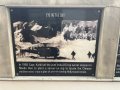
Navy Seabee Richard C. Legg, 26, was impaled against the ceiling by a metal shield plug •
Army Specialist John A. Byrnes, 22, who improperly pulled the control rod, was slammed against a concrete wall, his ribs piercing his heart •
Army Specialist Richard Leroy McKinley, 27, was knocked unconscious and lived two hours, dying from head wounds in an ambulance waiting for a doctor to arrive from Idaho Falls to determine how best to care for him.
Navy Seabee Richard C. Legg, 26, was impaled against the ceiling by a metal shield plug •
Army Specialist John A. Byrnes, 22, who improperly pulled the control rod, was slammed against a concrete wall, his ribs piercing his heart •
Army Specialist Richard Leroy McKinley, 27, was knocked unconscious and lived two hours, dying from head wounds in an ambulance waiting for a doctor to arrive from Idaho Falls to determine how best to care for him.
Agreed, though keeping in mind the cited case was over 60 years ago, and designs and procedures have since changed (or, at very least, should have) to account for the causes. There are currently 436 active reactors in the world (excluding those on submarines and other craft), so the catastrophic disaster rate is sitting at under 1% (SL-1, 3-Mile Island, Chernobyl, and Fukushima being the cases I'm aware of).
Agreed, though keeping in mind the cited case was over 60 years ago, and designs and procedures have since changed (or, at very least, should have) to account for the causes. There are currently 436 active reactors in the world (excluding those on submarines and other craft), so the catastrophic disaster rate is sitting at under 1% (SL-1, 3-Mile Island, Chernobyl, and Fukushima being the cases I'm aware of).
I work with lots of former Navy reactor techs that all helped to make that great safety record but I still worry about robust containment on small nuclear modular reactors in the case of the unknown and the unexpected.
Then there's the Demon Core that makes everything else seem safe as sitting in a bank vault on a clear day. It's hard to believe these guys were actually doing this stuff. It's pure nuts.
There are currently 436 active reactors in the world (excluding those on submarines and other craft), so the catastrophic disaster rate is sitting at under 1% (SL-1, 3-Mile Island, Chernobyl, and Fukushima being the cases I'm aware of).
Then there is Windscale, the UK’s worst nuclear accident.
The accident could have been far worse if Sir John Crockfort, the renowned British physicist, had not insisted on attaching some expensive filtering atop the chimneys.
Search for it. A fascinating story.
Then there is Windscale, the UK’s worst nuclear accident.
The accident could have been far worse if Sir John Crockfort, the renowned British physicist, had not insisted on attaching some expensive filtering atop the chimneys.
Search for it. A fascinating story.
So if I'm reading this right...there were so many design flaws (that were known about, warned about, and largely ignored in the name of finishing on time and under budget) that catastrophe was inevitable. Even Price and Crockfort's filters appear to have been criticized right up until the reactor failed.
Overblown dangers in the article but if it could be found that's good. There were a few innocent people being hurt when some of the Soviet units found.

 Facebook
 Google
 GitHub
 Linkedin