Make Turntable with Stepper Motor

Thread Starter

Heri Suprapto 1

Joined Nov 12, 2017
7
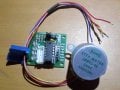
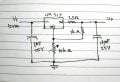
It's still part of the same project I've posted before but different parts, this is a turntable with a motor and voltage regulator. On YouTube they use synchronous motor, short story I bought stepper motor with driver in my local store, I intend to run this stepper motor like dc motor that I connect to voltage regulator to set the speed of rotation. Can it be done without driver and microcontroller?
 

Attachments

Sensacell

Joined Jun 19, 2012
3,769
When driving a stepper motor, the supply voltage has nothing to do with speed of rotation.

You need a source of clock pulses that cause the driver to step.
 

philba

Joined Aug 17, 2017
959
Like was said, a stepper isn't a good choice for a turntable that needs smooth rotation. And small steppers like that are pretty coarse - typically 7.5 deg/step. For continuous rotation you are better off using a small dc motor with a belt drive and PWM control of the speed using a rotation sensor with a microcontroller. PID control of the speed might be overkill.
 
Last edited:

OBW0549

Joined Mar 2, 2015
3,566
You will not only not get smooth rotation with a stepper motor, you will get a lot of vibration as well and that vibration will be in the audio range.

Also, as has been noted, you do not drive a stepper motor like you would an ordinary DC motor, by varying the drive voltage; you vary its speed by varying the frequency of the pulses driving it.

All things considered, a stepper motor is a VERY poor choice for driving a turntable if you want smooth rotation.
 

Sensacell

Joined Jun 19, 2012
3,769
A simple trick is to use a stepper running on low-voltage AC, (transformer) use a capacitor to make a phase-shift network to turn it into an AC synchronous motor.

Winding A gets straight AC, winding B has a capacitor in series to shift the phase.
It will run smooth and quiet, but you have no choice of RPM.
 

MaxHeadRoom

Joined Jul 18, 2013
30,562
As you pointed out in your OP, the traditional method is by AC synchronous motor, they are much quieter and smoother and no rpm regulation is needed.
There are quite a few sources out there and not that expensive.
Max.
 

Thread Starter

Heri Suprapto 1

Joined Nov 12, 2017
7
I tried not to add more electronic components, finally I bought Micro Speed Reduction Gear Motor 6v with 60 rpm, I did not know it will work or not.
 

philba

Joined Aug 17, 2017
959
If it's similar to the 30 RPM one you posted, it might work but looks fairly low power. Depends on your turntable mechanism - weight, balance and friction.
 

philba

Joined Aug 17, 2017
959
A stepper motor can work well to display jewelry on a store window. Same as a re-purposed record player.
What's not clear is what the turntable is for. If it's to rotate vinyl records for audio pickup then a stepper is really not suitable. Mechanical gears may not be suitable either. They induce jitter which adds interference. That's why smooth belts have been used a lot for that type of application.

If it's for something like a rotating display, it would probably be ok.

For precise rotational positioning for things like 3D scanning, a stepper is a good choice.
 

MaxHeadRoom

Joined Jul 18, 2013
30,562
If it's to rotate vinyl records for audio pickup then a stepper is really not suitable. Mechanical gears may not be suitable either. They induce jitter which adds interference. That's why smooth belts have been used a lot for that type of application.

.
Also why synchronous motors have been traditionally used.
Max.
 

Thread Starter

Heri Suprapto 1

Joined Nov 12, 2017
7
Mmm .. I bought this: https://www.tokopedia.com/bintangha...lver-lazy-susan-kolaher-meja-putar-mini-murah, and this: https: // www.tokopedia.com/arduinouno/12-n20-dc-6v-60rpm-slowdown-mini-micro-motor-gearbox-gear-box-n20.

The material I use is cardboard, box-shaped, motorized turntables inside, on one side I put a hole for the heater to be attached from a hair dryer set with a dimmer. In front of the heater there is a ntc thermistor connected to a 555 timer and a relay, two voltage regulators, one for the fan from the heater, the other for the motor for turntables. The plan is to rotate while heating the filament, then the base of the turntable is also made of two layers of cardboard 8 mm, the load on it is a filament for 3d printers, about 1kg.

At first I did want to use a synchronous motor, so I canceled because I was thinking that the voltage was about 12 v and had made a voltage regulator for it. And overall I want to be as simple as possible.
 
Top