Low temperature soldering

Thread Starter

engr_david_ee

Joined Mar 10, 2023
361
We are having piso-electric sensor coins. We need to attach cables by soldering at low temperature. We know that Sn63Pb37 has 183 degC that usually need around 280 degC on soldering tip.

I have heard about low temperature solder but I don't know exactally which one. Kindly suggest.
 

Thread Starter

engr_david_ee

Joined Mar 10, 2023
361
Yes, Conductive epoxy could be an option. Any idea which conductive epoxy can be used.
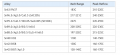
From the table of low temperature soldering only Sn48/ln52 with melting temperature 118 degC seems to be a solution with peak re-flow 140 to 150 degC. Is that expansive solder ?
 

Thread Starter

engr_david_ee

Joined Mar 10, 2023
361
How low.
True.
But if you rapidly solder the wire with a small soldering iron tip, the solder and sensor coin won't go much above 183°C
I have tried soldering with Sn63Pb37. This require soldering tip temperature not less then 250 degC. Otherwise we really need longer to melt it and it would be a smooth and shiny solder joint.
 

Tonyr1084

Joined Sep 24, 2015
9,744
But if you rapidly solder the wire with a small soldering iron tip, the solder and sensor coin won't go much above 183°C
This is fundamentally true. Here's what goes on in the soldering process: You need to make a thermal bridge first. Thermal mass is important. A LARGE solder ball on the tip of your iron will bring a lot of heat in a very short period of time. You tin your iron with enough solder to create the bridge so you can transfer heat into the joint to be soldered. Apply a small amount more of solder and you'll accomplish the task. That "Bridge" is what transfers heat from the iron to the product being soldered. Though you have your iron set at a higher temperature, dwell time as well as thermal contact will control the final amount of heat that gets to the product. Dwelling a long time will thoroughly heat the joint. Dwelling a shorter time will transfer less heat. But you need to transfer enough heat to accomplish the joint. By "Rapidly solder(ing) the wire with a small soldering tip" you reduce the amount of thermal mass.

I've known people who flux a joint and bring a blob of molten solder to the joint. They rapidly make the connection but don't realize the amount of stress they've introduced into the board by causing heat expansion faster than the board can transfer it away from the joint. That stress can cause fractures inside the glass body of the PCB (Printed Circuit Board).

Another damaging habit is to heat the joint, let it cool then heat it again - and repeating this action. Some places will refuse a board if they learn a joint has been reworked more than three times. They'll want that board scrapped. Don't believe this? Consider NASA, the Military and Medical devices. Life critical and mission critical needs dictate the amount of times you can rework a solder joint. I share this to impress on you that you want to get in there and accomplish the task in as short a period of time as is possible while still producing a reliable joint. Going at it a second time just adds to the stress and reduction of life span.

Happy soldering. It's not hard, just takes practice and technique.
 
Top