Low Power Class AB Amplifier

Ian0

Joined Aug 7, 2020
13,158
You probably remember from single-transistor amplifiers that the voltage gain is proportional to Gm multiplied by the load resistance.
In this case the load resistance of Q4 is the 400Ω resistor R12.
(R6-R7-Q3 are pretending to be a zener diode, so you can ignore them here)
Assuming that the capacitor C6 remains charged, you can see that the voltage across R12 will remain (relatively) constant.
A constant voltage across a resistance is a constant current. A constant current has a very high impedance (because the current doesn't vary with the voltage). The gain of Q4 is Gm x load impedance. The load impedance is very high because it is a constant current. Therefore the gain of Q4 is much higher than it would be without C6.
 

Thread Starter

RRRRSSSS

Joined Jun 16, 2023
128
You probably remember from single-transistor amplifiers that the voltage gain is proportional to Gm multiplied by the load resistance.
In this case the load resistance of Q4 is the 400Ω resistor R12.
(R6-R7-Q3 are pretending to be a zener diode, so you can ignore them here)
Assuming that the capacitor C6 remains charged, you can see that the voltage across R12 will remain (relatively) constant.
A constant voltage across a resistance is a constant current. A constant current has a very high impedance (because the current doesn't vary with the voltage). The gain of Q4 is Gm x load impedance. The load impedance is very high because it is a constant current. Therefore the gain of Q4 is much higher than it would be without C6.
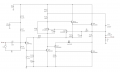
Thanks to all you guys!
RS
 

MrAl

Joined Jun 17, 2014
13,722
Hello again,

If you really want to get into this here is a good 5 watt design i think. The THD is very low, less than 0.04 percent (that's not 4 percent it is really 0.04 percent which is 4 hundredths of a percent). The design was made by a guy who's last name i think is Nelson-Jones. I had to do some modifications though to use modern transistors, but the total THD is still under 0.04 percent.
To use with a microphone or other low output device you'd have to add a preamp. The input has to be about 0.5v peak to get the full 5 watts output.
 

Attachments

Thread Starter

RRRRSSSS

Joined Jun 16, 2023
128
Hello again,

If you really want to get into this here is a good 5 watt design i think. The THD is very low, less than 0.04 percent (that's not 4 percent it is really 0.04 percent which is 4 hundredths of a percent). The design was made by a guy who's last name i think is Nelson-Jones. I had to do some modifications though to use modern transistors, but the total THD is still under 0.04 percent.
To use with a microphone or other low output device you'd have to add a preamp. The input has to be about 0.5v peak to get the full 5 watts output.
Thanks MrAl. I will sim this circuit.

RS
 

crutschow

Joined Mar 14, 2008
38,544
I had a problem with your circuit until I removed all your node references.
Perhaps there was a duplicate that shorted the nodes together.

But a big problem is the the quiescent bias current through the output transistors is over 3A, which is way too high.
It should be in the tens of mA.

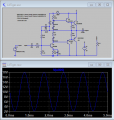
Circuit below:
 

Attachments

Ian0

Joined Aug 7, 2020
13,158
There's definitely something weird in the region of Q12 and Q13, which normally is a Vbe multiplier to set the bias.
I wondered if it was some form of autobias circuit.
 

MrAl

Joined Jun 17, 2014
13,722
Thanks Mr Al.
I did a sim on the circuit in post #23. The THD is 0.33%. Not sure why.
With 500mV input it prodcues a Vout of 8.5 volts and Pout of 9.77 Watts.
When I pressed Ctrl-L, I got this.
Hello there,

Maybe this was a 10 watt amplifier I'll have to check that.

You are seeing a higher THD probably because you did not set the maximum time step size. Try setting that to 1e-6 (1us) and you should see something under 0.05 percent.

However, there is also a bias problem as Cruts noted. We'd have to fix that to make this anything actually useable.
 
Last edited:

Ian0

Joined Aug 7, 2020
13,158
For SPICE to do distortion calculations properly, it seems to need .OPT PLOTWINSIZE=0, otherwise I found it gives different figures every time it runs.
 

MrAl

Joined Jun 17, 2014
13,722
I had a problem with your circuit until I removed all your node references.
Perhaps there was a duplicate that shorted the nodes together.

But a big problem is the the quiescent bias current through the output transistors is over 3A, which is way too high.
It should be in the tens of mA.

Circuit below:
Hello there,

Yes, I am seeing 3 amps in the two output driver transistors also. This means something is wrong with the bias.
Maybe he didn't realize that while he was looking at the THD during the design.

I am seeing now 0.048 percent THD in LT Spice, but it's not worth it if the quiescent power dissipation is 90 watts !
That's totally nuts.

Maybe this is a good lesson in staying away from random web-based designs. Nice THD numbers but we'd have to find a way to fix the bias.
 

MrAl

Joined Jun 17, 2014
13,722
For SPICE to do distortion calculations properly, it seems to need .OPT PLOTWINSIZE=0, otherwise I found it gives different figures every time it runs.
Hi,

I also find that if the step size is too large or no step size specified the THD will look higher than it really is, and that is simply because a larger step size will not produce as accurate a waveform as a small step size in most cases.
 

Thread Starter

RRRRSSSS

Joined Jun 16, 2023
128
Hi,

I also find that if the step size is too large or no step size specified the THD will look higher than it really is, and that is simply because a larger step size will not produce as accurate a waveform as a small step size in most cases.
I don't know where you find decent circuits. The ones on the internet are crap as are the
ones in any text book that I've seen. I am attempting to find a reasonably decent circuit
that actually works right and that I can understand. The Marley circuit in post #11 seems
to be alright (0.42 % THD) in the sim but as a novice I may be missing something.
RS
 
Last edited:

BobTPH

Joined Jun 5, 2013
11,559
Since everyone else is posting their favorite amp circuit, I will post mine.

5 clean Watts into 8 Ohm at 20V supply. If a different supply voltage is used, R7 and R2 need to be adjusted to center the output and set the idle current.

This is my re-work of the LilTiger amp published in PopTronics in 1967. I coveted this amp when I was 15, but could not afford the parts. It is incredibly simple, producing very reasonable performance (my version shows .13% distortion.) The original used 45V and produced 18W.


Here is the original article! LilTiger

1696682637429.png
 

Ian0

Joined Aug 7, 2020
13,158
I don't know where you find decent circuits. The ones on the internet are crap as are the
ones in any text book that I've seen. I am attempting to find a reasonably decent circuit
that actually works right and that I can understand. The Marley circuit in post #11 seems
to be alright (0.42 % THD) in the sim but as a novice I may be missing something.
RS
You can trust @crutschow 's circuit.
If you want better THD, then improvements are just modification of that circuit.
Change R2 for a constant circuit circuit. Add a current mirror load for Q1 and Q2. Change Q4 to a darlington.
If you want to know about audio amps then read Doug Self's or John Linsley Hood's books.
 

Ian0

Joined Aug 7, 2020
13,158
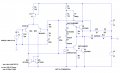
Here's mine:
I think it's called "QuasicompReduced" because there is a more elaborate version somewhere.
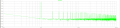
SPICE reckons 0.0006% THD. You can see most of the harmonics at below -111dB.Screenshot from 2023-10-07 14-03-35.pngScreenshot from 2023-10-07 13-52-52.pngScreenshot from 2023-10-07 14-03-35.png
 

Attachments

Last edited:

Thread Starter

RRRRSSSS

Joined Jun 16, 2023
128
Since everyone else is posting their favorite amp circuit, I will post mine.

5 clean Watts into 8 Ohm at 20V supply. If a different supply voltage is used, R7 and R2 need to be adjusted to center the output and set the idle current.

This is my re-work of the LilTiger amp published in PopTronics in 1967. I coveted this amp when I was 15, but could not afford the parts. It is incredibly simple, producing very reasonable performance (my version shows .13% distortion.) The original used 45V and produced 18W.


Here is the original article! LilTiger

View attachment 304384
Thanks BobTPH. Could you possibly send me the .asc file or a larger image as I am having trouble reading some of the values etc.
Man that takes me back 50 cent magazines! I will sim this circuit.
 
Last edited:

crutschow

Joined Mar 14, 2008
38,544
One thing to measure in all your sims, that is quite important, is the output transistors' DC bias current with no signal.
My sim of Mr. Al's circuit showed over 3A, witch is obviously way to high.
That current still gives a nice AC output but will dissipate a lot of excess power.
 
Top