Lost Craft, Lost Knowledge

jgessling

Joined Jul 31, 2009
82
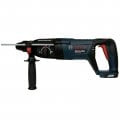
That’s actually pretty funny. In 2008 I went to live with my wife in Lagos, Nigeria. She was on duty with the oil company and I was off so what the heck? Amongst the materials I received before moving was a bunch of stuff about the electrical service. Supposed to be 210 V at 50 hz. I brought my hand drill similar to that picture and it was the best thing ever.
First of all, the electricity was off regularly so what does it matter the specs? Secondly her house was built out of cement blocks that were mostly sand. My hand drill worked great around the house for hanging pictures or similar duty. While the other husbands were fussing about their drills and battery chargers I just took my hand drill out and got it done. A fun three years though, I tried not to talk too much with those suburban Americans with their battery problems. And their complaining about lack of football on the TV stations.
 

Thread Starter

Ya’akov

Joined Jan 27, 2019
10,235
[
This was my first hand drill as a teenager.
This was my first drill as a teenager. A Yankee #41. Mine was a Bell System drill I found in the street. I still have it somewhere...

1618176765190.png

Now, though I have several:

Bosch Bulldog with the vacuum extraction unit...
s-l1600.jpg

Two smaller Bosch hammer drills, but the smaller, bristles gets the most use:

1618176973053.png

Plus, the 12V version in my electrical tool bag, along with the impact driver. And, I have the 18V brushless impact driver.

None of which I found in the street.
 

Irving

Joined Jan 30, 2016
5,118
Ah, nostalgia. I too was taught by my father to wipe a lead joint and he had a star drill with a big rubber grip to protect the hand. IIRC the rubber perished and crumbled away many years ago, it must have been over a 100years old when I last saw it. He left school at 15 with no qualifications and worked in his father's shop until he joined the UK army as an apprentice mechanic at the end of WW2 and after the war became a toolmaker. It was my mother that got him through teacher training in the early '60s and he taught practical engineering skills to apprentices - basically how to use a machine shop and repair & maintenance techniques. He taught me how to not only how use a lathe & a milling machine but how to repair them.

There pretty much wasn't anything mechanical he couldn't fix! Would never touch anything electrical though, go figure.

A few years back I renewed the approx 90y old white metal bearings on my c1913 lathe with an in situ meltout, re-pour and reaming.

My kids, sadly, showed no interest in any of this. Fortunately my nephew does and since the age of 15 runs his own bicycle repair & refurbishment business which has been doing really well during the last year - who'd have guessed? He's now doing an engineering degree and wants to be a artisan custom bicycle builder.

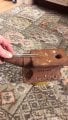
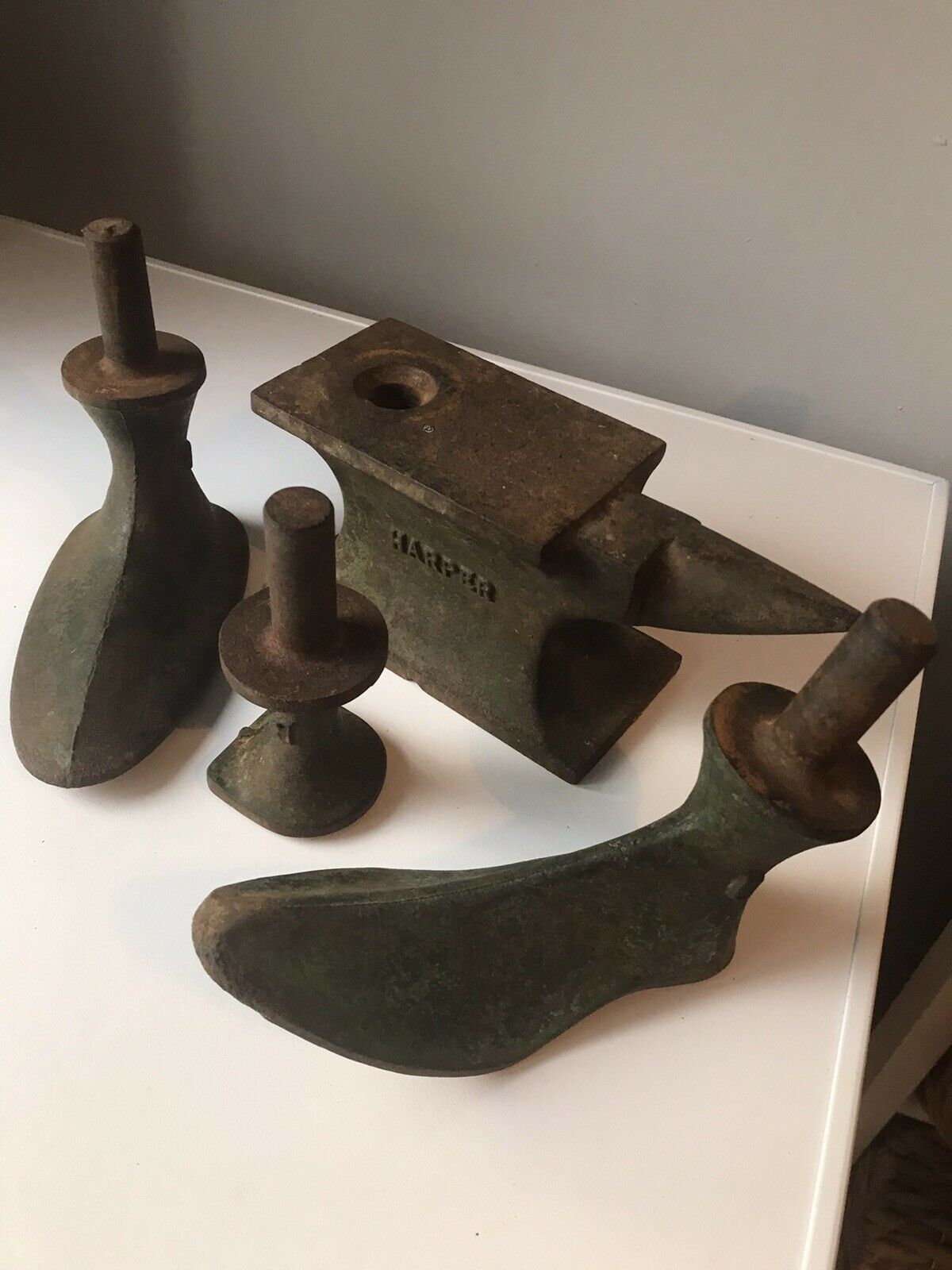
Recently he discovered this anvil in his mother's garage. I didn't know it still existed - it belonged to my grandfather, my dads dad. It's a small anvil, no more than a foot or so long and 9 or 10" high.

What was my grandfather's business?

IMG-20210409-WA0000.jpg
 
Last edited:

SamR

Joined Mar 19, 2019
5,487
Too small for smithing, so farrier. I still have some of my paternal grandfather's smithing tools including the anvil.
 

Thread Starter

Ya’akov

Joined Jan 27, 2019
10,235
Anyone remember Pump screwdrivers?
Or as we called them Yankee screw drivers!
See the top of my post #63 above, Max. That's a Yankee drill. I had a Yankee A, Inherited it from one of my relatives but can't recall which now. They were great but dangerous with slotted screws.
 

Irving

Joined Jan 30, 2016
5,118
Too small for smithing, so farrier. I still have some of my paternal grandfather's smithing tools including the anvil.
Interesting guess but unlikely in east central London even in the C1930s. No, he was a cobbler by trade, making shoes to order (sadly while I still have some of his tools the lasts and foot irons/anvils have long been lost) but supplanted that with general tinkering, making & fixing small domestic/business items. He wasn't allowed to work with precious metals, you had to be trained and accredited for that (though I suspect he did) but could make/fix most anything else metallic. It was an ethic I was brought up on; fix rather than dispose of, important especially amongst the poor in east London in the early/mid 20th century.
 

Irving

Joined Jan 30, 2016
5,118
When I was a lad something broke (I don't remeber what it was) and I said to Mom that I could fix it. She said "Don't you dare! I've been trying to get rid of that thing for years."
I have vague recollections of my mum saying much the same. Sadly my wife has the dispose ethic:(:rolleyes:
 

SamR

Joined Mar 19, 2019
5,487
Interesting, never knew or thought of cobblers using anvils. Did think it a bit large though for the precious metals trade. Traveling tinker definitely.
 

Thread Starter

Ya’akov

Joined Jan 27, 2019
10,235
So, I ordered a ¾" star drill a while ago. It took a very strange route via USPS...

Melrose MA --> Indianapolis IN --> Louisville KY --> New Orleans LA --> Indianapolis IN --> South Bend IN --> ME!

Yes, it arrived!

tempImageiaXn8E.gif
 

MaxHeadRoom

Joined Jul 18, 2013
30,658
A friend of mine's father was an old school blacksmith, he was a descendant of the family of the village blacksmith where he lived.
I recall one instance where they had found an old lecturn in the basement of one of the local Oxford universities, turned out to be studded in gems and dated from the time of sir Thomas Moore.
The college asked him to restore it, I always remember him carting it back to the village in his old 1/2 ton truck.
Probabally a priceless Item! :cool: :D
 
Top