I have no idea why I used 2 transistors, thanks for spotting that. I will try to drive the LED with T2 only, and see what happens. This circuit dates back 10 years, and I can't remember if there was any reason for using two. Thanks again -- I knew there would be errors!
Low current LED's are easily visible. I use them routinely with my MCU circuits at less than rated current. How much light do you need? Will a 1 mA or 2 mA LED suffice? NB: I run such LED's at less than rated current.
Thanks, but my application needs bright light to provide fairly strong illumination for an object. I've also tried some surface-mount LED's at 20mA but they didn't provide quite enough light. 20mA seems about the lower limit for the warm or neutral white LED light I need.
Yes. By the way, I checked the quiescent current for my circuit with the ME2108/7555 combination (with one AA battery for power). The multimeter was showing 71 micro-amps. With the LED on, it was 26mA, which is where I set it with the resistor. At least the 26mA reading seems accurate, but I wonder about the 71 micro-amps. Are inexpensive multimeters accurate at that low current, I wonder.
If you are stepping up 1.5 volts to 5 volts and the current on the 1.5 volt input is 26 mA then the LED current will only be about one quarter of that. so the LED current will be current must only be about 6.5mA. (Allowing some loss due to the fact that the step up converter will not be 100% efficient.
Thanks, but my application needs bright light to provide fairly strong illumination for an object. I've also tried some surface-mount LED's at 20mA but they didn't provide quite enough light. 20mA seems about the lower limit for the warm or neutral white LED light I need.
Thank you crutschow and LesJones, I've learned a few things from this thread, and need to do some testing and pondering. Due to my limited knowledge of electronics, I'm not able to come up with any quick responses to the many helpful comments I've seen here.
Three years is a long time, more than enough, for the battery. One year is all I would be looking for. I'm concerned about quiescent current partly because I would prefer prefer going to AAA which is about 1/3 the mAh of AA. In the planned new version, the smaller size of AAA is a plus, because the circuit and battery need to be concealed in a small space. Also, I want to use a third IC, a proximity sensor, instead of the touch button, and this will have a modest current draw. I didn't mention it, because I didn't want to complicate my questions.
I measured the current going through the negative side of the ("output" end) of the ME2108 board (which includes a small inductor and a few other components) and the ground of the main circuit (on the breadboard). I was concerned about meter accuracy because I've "heard" some comments (somewhere, I don't remember) about low current inaccuracies in meters. I've been looking at the Power Ranger from LowPowerLab, and the micro-Current (I'm not sure that's the right name) by Dave Jones. Maybe I'm confused about the necessity of having one to accurately measure micro-amps in my application, though.
Omitting information does not help. (The proximity sensor.) It would be much better to give all the information about what you are trying to achieve. You have not said what the purpose of this device is. I will make the assumption that you plan to use a proximity sensor such as the HC-SR501. That will have to be powered all the time for it to work. the data sheet gives the quiescent current as 50 uA and it requires a voltage of 5 volts. This means you will have to run the step up converter all the time. So this means you will be drawing about 200 uA from the 1,5 volt cell all of the time. I have not looked up the Ah rating of AA and AAA cells so you will need to check how long they will last supplying this current. You MAY also have problems with switching noise from the step up regulator getting into the low level circuits of the proximity detector. I don't see any way to calculate if this will be a problem. You will just have to build it and see if it is a problem. The HC-SR501 has a built in timer so you would not need the original timer.
I have attached the datasheet for the HC-SR501.
The purpose of the device is for illumination of an object which requires a specific kind of lighting. This need is met by a 5mm white LED which draws 30mA at about 3.5V: 100 LED Leds 4500K White Pure Neutral Ultrabright 5mm + Resistances A1B21.A2C48 | eBay The circuit will be concealed in the frame which holds, or the base which supports, the three-dimensional object which is to be illuminated. This base or frame will be made of wood. The circuit will be incorporated (in a hollow area) into the wood, just below an outer surface of the wood frame or base (less than 2mm). The user would need to basically touch the wood in close proximity to the underlying sensor pad, to trigger the device. This part of the circuit has not been tested by me so far, but seems feasible based on the proximity sensor mentioned further down. All the other parts of the circuit have been tested by me with numerous boards, and work well.
A block diagram (with 2 blocks) might look like this 1) Detection of a human hand or finger by close-proximity (around 3mm or less to the sensor pad on the circuit), 2) Thereby triggering a timer for illumination for 1 to 2 minutes, then shutting down to a quiescent state.
The desired requirements would be: 1) powered by by a single small 1.5V battery, preferably AAA NiMH or alkaline, 2) a single board which holds the battery and circuit which is as small as practical, roughly 1 inch X 3 inches X 1/2 inch depth allowance, 3) components selected for long-term use without the need for frequent battery replacement or recharging, for example 6 months to 2 years.
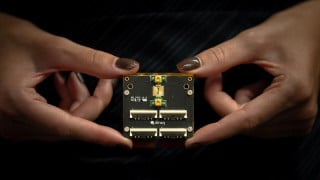
The proximity sensor is Azoteq IQS231A which is available from Mouser iqs231a_datasheet-1062577.pdf (mouser.com) I have tested the inexpensive evaluation board (also available from Mouser) and this device is very impressive. This is the "unknown" part of my planned circuit, which is why I was hesitant to talk about it.
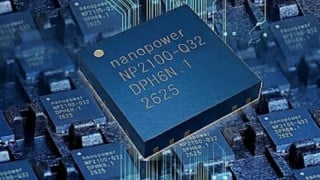
In the past, my timer has been the low-power version of the 555, which is the 7555 ICM7555, ICM7556 Datasheet (renesas.com) Recently I tested my circuit (minus the proximity sensor) with the booster IC and the 7555 and LED, with a single AAA battery, and it only lasted 2 months. But this test was flawed, because the NiMH battery showed a full charge at 1.2V, when it should have been ~1.4V. Something may have been wrong with the battery. This experience made me think about a quiescent current problem, so I started looking for a nano-power timer such as TPL5110 TPL5110 Nano-Power System Timer for Power Gating datasheet (Rev. A)
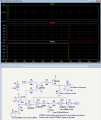
For lowest quiescent power, below is the LTspice simulation of an example circuit using the one-shot to apply power the converter (simulated by E1) from the one-shot signal to Q2 and Q1:
Notice that the converter is only powered during the one-shot period (red trace)
The quiescent current draw is then just the leakage current of Q1 and Q2, which is very small (likely smaller than the self-discharge current of the battery).
Note that R6 is just to simulate the converter load.
Edit: The obvious advantage of this technique, is that the efficiency of the converter and the current draw of the one-shot is now of only minor concern.

 Facebook
 Google
 GitHub
 Linkedin