Facebook
 Google
 GitHub
 Linkedin
Hi everyone,
I'm currently a Master's student in electronics engineering, and I’m doing an internship within an association promoting sustainable mobility. My project is to design a system that generates and converts electricity from a bicycle, for educational and awareness purposes.
I don't have any technical supervision during this internship, so I’d rather ask here, rather than make a poor design decision, especially since I’m working with supercapacitors, which I know can be dangerous.
I am quite concerned about the way I've managed the supercapacitors, and I do not know if the protection I've added are enough or not.
For the energy storage I've planned to use 12 supercapacitors of 2.7 V / 500 F, which I often see in diy projects. I don’t fully understand why theses values are choosen most of the time, so I'm open to suggestions if better values exist for my system.
My idea was to use an esp32 to send data via Bluetooth, and then display them in a mobile app and allow user to control the outputs
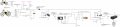
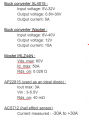
Any feedback would be a huge help, so if anything in the schematic seems off or incorrect, please don't hesitate to let me know !
Thanks a lot in advance
I'm currently a Master's student in electronics engineering, and I’m doing an internship within an association promoting sustainable mobility. My project is to design a system that generates and converts electricity from a bicycle, for educational and awareness purposes.
I don't have any technical supervision during this internship, so I’d rather ask here, rather than make a poor design decision, especially since I’m working with supercapacitors, which I know can be dangerous.
I am quite concerned about the way I've managed the supercapacitors, and I do not know if the protection I've added are enough or not.
For the energy storage I've planned to use 12 supercapacitors of 2.7 V / 500 F, which I often see in diy projects. I don’t fully understand why theses values are choosen most of the time, so I'm open to suggestions if better values exist for my system.
My idea was to use an esp32 to send data via Bluetooth, and then display them in a mobile app and allow user to control the outputs
Any feedback would be a huge help, so if anything in the schematic seems off or incorrect, please don't hesitate to let me know !
Thanks a lot in advance
Attachments
-
 242.3 KB Views: 14
 -
 62 KB Views: 12