Looking for a radiocontrol tinkerer genius...

Thread Starter

Externet

Joined Nov 29, 2005
2,624
Hi.
Perhaps someone has a brilliant method/suggestion...

A cord or string, 3mm diameter is to be held from slipping. A servo or solenoid mechanism should release it. That is the easy part.
The fun part : The actuator is inside a sealed bag. The string is outside the bag. The plastic bag wall is 1mm thickness. In plans there is a solenoid, or a R/C servo as actuator.

As far as I have gone is... instead of pinching the cord, to have a washer between knots on the string. The washer held from slipping from a 'scissor' style mechanism (not a cutting scissor)
When the arms of the scissor open wide enough, the washer is not stopped any more from being released.

In other words... think of a helium balloon. Hold its string firm with a mechanism outside a bag. Actuate its release from inside the bag on an electromechanic method.
If there is an off-the shelf re-purposable gadget in the market, better.:oops:
 

Bernard

Joined Aug 7, 2008
5,784
I have a slightly different vision than the bag; start with a drum, maybe 4 in. in dia. 2 in. long with a long 1/8 in. shaft that extends into a watertight box via O ring seal. On the inside of the box there is a disc attached to the shaft with a hole, or holes, on perimeter. A solenoid , linear actuator,or servo holds disc in place with a pin thru
a hole. A sonic receiver will deliver a pulse to a driver for solenoid which pulls the pin from a hole, releasing drum, allowing bouy to float to the surface.
If V supply is limited to 3 V then if necessary a DC-DC step -up could charge a hi value cap. to activate solenoid?
 
Last edited:

Bernard

Joined Aug 7, 2008
5,784
I believe the force on the string is about 4.5 lb. The whole thing is about 20 ft. under water.
 
Last edited:

cmartinez

Joined Jan 17, 2007
8,722
Hi.
Perhaps someone has a brilliant method/suggestion...

A cord or string, 3mm diameter is to be held from slipping. A servo or solenoid mechanism should release it. That is the easy part.
The fun part : The actuator is inside a sealed bag. The string is outside the bag. The plastic bag wall is 1mm thickness. In plans there is a solenoid, or a R/C servo as actuator.

As far as I have gone is... instead of pinching the cord, to have a washer between knots on the string. The washer held from slipping from a 'scissor' style mechanism (not a cutting scissor)
When the arms of the scissor open wide enough, the washer is not stopped any more from being released.

In other words... think of a helium balloon. Hold its string firm with a mechanism outside a bag. Actuate its release from inside the bag on an electromechanic method.
If there is an off-the shelf re-purposable gadget in the market, better.:oops:
A sketch of what you want would come in handy...
 

cmartinez

Joined Jan 17, 2007
8,722
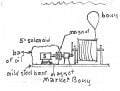
Simple sketch of submerged bouy with release mech. inside an oil filled bag.View attachment 129333
I'd consider using a ball and spring plunger and a disk with holes on its perimeter for the plunger to latch and hold the mechanism. Then release it by applying a short burst to the electromagnet, and re-lock it when necessary with another electric burst of reverse polarity.
 
Last edited:

GopherT

Joined Nov 23, 2012
8,009
Hi.
Perhaps someone has a brilliant method/suggestion...

A cord or string, 3mm diameter is to be held from slipping. A servo or solenoid mechanism should release it. That is the easy part.
The fun part : The actuator is inside a sealed bag. The string is outside the bag. The plastic bag wall is 1mm thickness. In plans there is a solenoid, or a R/C servo as actuator.

As far as I have gone is... instead of pinching the cord, to have a washer between knots on the string. The washer held from slipping from a 'scissor' style mechanism (not a cutting scissor)
When the arms of the scissor open wide enough, the washer is not stopped any more from being released.

In other words... think of a helium balloon. Hold its string firm with a mechanism outside a bag. Actuate its release from inside the bag on an electromechanic method.
If there is an off-the shelf re-purposable gadget in the market, better.:oops:

This is essentially a bomb drop mechanism used in RC airplanes. There are several designs commonly made by DIY RC hobbyists. Many Google videos.
 

GopherT

Joined Nov 23, 2012
8,009
Hi.
Perhaps someone has a brilliant method/suggestion...

A cord or string, 3mm diameter is to be held from slipping. A servo or solenoid mechanism should release it. That is the easy part.
The fun part : The actuator is inside a sealed bag. The string is outside the bag. The plastic bag wall is 1mm thickness. In plans there is a solenoid, or a R/C servo as actuator.

As far as I have gone is... instead of pinching the cord, to have a washer between knots on the string. The washer held from slipping from a 'scissor' style mechanism (not a cutting scissor)
When the arms of the scissor open wide enough, the washer is not stopped any more from being released.

In other words... think of a helium balloon. Hold its string firm with a mechanism outside a bag. Actuate its release from inside the bag on an electromechanic method.
If there is an off-the shelf re-purposable gadget in the market, better.:oops:
How do you plan to get the rope back to the surface once the balloon is released?
 

Thread Starter

Externet

Joined Nov 29, 2005
2,624
Hi. thanks for your collaboration. Do not think I have it decided yet.

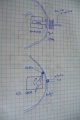
There is a snap shackle that offers suitability; a servo lever; a bellows sort of mechanism could be applied... There is much more that needs to be considered on my side, but there is progress under the hair.

Shackle.png

Bagged.JPG
 

cmartinez

Joined Jan 17, 2007
8,722
Hi. thanks for your collaboration. Do not think I have it decided yet.

There is a snap shackle that offers suitability; a servo lever; a bellows sort of mechanism could be applied... There is much more that needs to be considered on my side, but there is progress under the hair.

View attachment 129370

View attachment 129369
What use are you planning to give this mechanism? Would it be a one time off? Or would it have to rewind afterwards?
 

Thread Starter

Externet

Joined Nov 29, 2005
2,624
There is no rewinding. It is to be a release-only mechanism. Zillion and a half extra details omitted on purpose or you guys will go crazier than me and wander way off topic. Believe it. Just take it simply as "cord release mechanism trough a plastic wall isolation" IF can be called 'simple'

Near the reverse of this: ----> https://en.wikipedia.org/wiki/Acoustic_release

OOoooops... Am giving too much to wander off topic. Stay in narrow topic, please. Yes, there is commercial device$ on the market.
 
Last edited:

cmartinez

Joined Jan 17, 2007
8,722
There is no rewinding. It is to be a release-only mechanism. Zillion and a half extra details omitted on purpose or you guys will go crazier than me and wander way off topic. Believe it. Just take it simply as "cord release mechanism trough a plastic wall isolation"
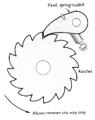
In that case, you could use a simple ratchet mechanism to perform the release.

Screen shot 2011-04-20 at 23.08.14.png
 

cmartinez

Joined Jan 17, 2007
8,722
The amount of force needed to release it would depend on the pawl and ratchet's geometry, the locking force involved, and their corresponding materials.
 

Bernard

Joined Aug 7, 2008
5,784
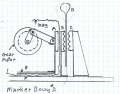
Another line clamp which uses servo or gear motor such as: All Electronics, Cat # DCM-470, $5.75, 6 V, 150 mA, about 30 RPM, good torque at 3V, 1/2 in. crank is removeable. & Cat #DCM-365, $8.95, 6V DC, 110 mA, 80 RPM, good down to 1.5V @ 12 RPM- no crank, 4 mm flattened shaft.( I have one & used the other ).
B & C are matching waffle plates to give a good grip on line, maybe brass or plastic, supported with thin spring brass or stainless steel. Clamps could hold inner mounting plate, E, to main mounting plate, F.
I have never tried running a motor in oil, & would still prefer a water tight plexiglass box with O ring seal for plunger.Marker Bouy # 2 00000.jpg
 

Thread Starter

Externet

Joined Nov 29, 2005
2,624
Thanks.
I also never understood how fuel injection pumps run flooded in gasoline without exploding. Has to be lack the of oxygen and temperature.
 
Top