Looking for a gold medalist...

Thread Starter

Externet

Joined Nov 29, 2005
2,627
Greetings. There is teachers with superb knowledge and not so good teaching skills; and teachers with excellent teaching abilities and not superb knowledge.

Today I want a gold medalist teacher with excellent teaching ability that can convey the knowledge clearly : Explain radiation resistance, return loss, power density, feedpoint impedance, standing wave ratio, reflection coheficient, radiation efficiency, pertinent for a receiving antenna. Yes, I do have search engines too.
 

SamR

Joined Mar 19, 2019
5,472
Do you have a NanoVNA? And, most of what you are asking is not pertinent for a receiving antenna... My biggest suggestion for a receiving antenna is antenna tuner to match the resonant frequency, preamp to amplify the signal, and some noise blanking to cut the Signal to Noise ration down a bit. A MFJ-1040C Transceiver Preselector does wonders for receivers and incorporates all of what I suggested and more.
 
Last edited:

Thread Starter

Externet

Joined Nov 29, 2005
2,627
Thanks, Sam. That is why am after learning. If the antenna is meant for a large reception spectrum, a tuner would work only for a single and nearby frequencies, needing to adjust waaaaay too often for preselection. -Out of consideration- No network analyzer.
 

nsaspook

Joined Aug 27, 2009
16,257
Thanks, Sam. That is why am after learning. If the antenna is meant for a large reception spectrum, a tuner would work only for a single and nearby frequencies, needing to adjust waaaaay too often for preselection. -Out of consideration- No network analyzer.
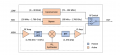
We had wide-band antennas and wide-band receivers much like a modern SDR (wideband RF front ends are essential) in the 70's. Your classic RF voltage detector to find 'signals' and selective systems to select only the desired energy.

1767391598224.png

https://play.fallows.ca/wp/radio/software-defined-radio/sdr-receiver-rf-front-end/
 

SamR

Joined Mar 19, 2019
5,472
a tuner would work only for a single and nearby frequencies, needing to adjust waaaaay too often
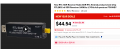
Not at all. 2 knobs, one a bandswitch marked with the receiving bands (soldered point on a coil), second is a variable capacitor that you twist to get maximum volume out of the speaker. Really simple. The other choice would be a Software Defined Radio (SDR) which is a basic radio but the signal is digitized by the hardware of the computer and software does the filtering, memory frequencies saved, tuning in point for each frequency, and much more. Of course, the antenna is very important as well so having a Resonant antenna for the frequency bands desired is a great starting point to make reception better. But SDR can get pricey. But a simple computer dongle with a cable fitting for coax to the antenna is way cheaper and still not bad at all. I have been telling people for over 50 years that tuned antennas are far cheaper than better radios however. WOW the price jumped substantially! The used to be ~15USD... And even about the same price on Amazon! But, don't bother with getting one with the dinky antenna and use a long wire or tuned resonant SWL antenna preferably. Even my quite expensive HF and VHF/UHF radios are built using SDR now with band frequency waterfall displays.
1767393210854.png

As to your initial question, SWR (Standing Wave Ratio) is a measurement of the impedance matching between the radio and antenna. Most radios have 50Ω impedance and to get maximum signal passing from the radio to antenna the antennas impedance must match. Which is where tuners come in. Adjustable capacitors and coil in a Pi configuration. If not matched, a transmitters signal will be reflected back into the radio, which is not a good thing. Tube radios were much more "forgiving" than the early solid state ones but they have come a long ways since the 70s. Now, the transmitters (at least the new better ones) have built in Auto Tuners although you do have to push a button to engage it. My Icom IC-7760 will remember (without my doing anything) the tuning setting once it has been done, so every time I go back to that frequency or within ~5% of it the radios memory knows what the setting is. More later...
 

SamR

Joined Mar 19, 2019
5,472
Ignoring the tuner for a bit, let's look at it step by step. Between the radio and the antenna are a couple of pieces of hardware. Coax 50Ω impedance transmission line. Assuming the radio has 50Ω impedance (most do) it matches the impedance of the radio which is good. Outer UV resistant plastic coating for outdoor exposure. Beneath that is a layer of usually copper woven sheathing but sometime aluminum foil or a metalized plastic foil, I prefer copper or even silver coated copper. This layer is grounded to preferably a ground rod outside the building. This protects the inner conductor from common mode noise in the environment from electromagnetic sources. Below that is a layer of dielectric material, preferably plastic foam. The center is the conductor, usually copper wire either solid or stranded and also sometimes silver coated. Plain copper is fine and stranded is more flexible than solid of course. Between the Coax and Antenna is another device called a Balun (Balanced to Unbalanced). This is the impedance matcher between the antenna and coax/radio. Different types of antennas have different impedances, so it has to be the correct ratio of impedances. This is the very basics of antennas but I add another device, a lightning suppressor. This goes in the coax outside the building. It is basically a spark gap. As atmospheric charges build up on the antenna, at a specific voltage (~250V) on the center conductor it drops it to ground before it gets dangerously high in order to prevent it from reaching the high voltage to initiate a lighting strike. Only God can actually suppress a lightning strike, and it would be catastrophic if it made it into the building, so suppression is advised.

I'll skip power density, SWR is the reflection coefficient (measurement of return loss), and radiation efficiency as these are more measurements of a transmitting antenna and not as relevant to receiving. Power density does relate a bit to the matching of impedances to get maximum power transfer from the signal on the antenna to the radio with minimum attenuation.

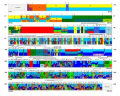
Now, let me ask you a question before going further. What are you wanting to listen to? The Electromagnetic Spectrum is huge and the RF spectrum is only a small part of it! In fact, the Cell Phone portion of it is illegal to listen to without a warrant for some strange reason. :cool:
1767403065020.png
PNG Graphical Chart of Radio-Frequency Spectrum Allocation (2022)
The RF spectrum is further divided into ELF extra low frequency, SLF super low freq, ULF ultra low freq, VLF very low freq, LF low freq, MF middle freq, HF high freq, VHF very high freq, UHF ultra high freq, SHF super hi freq, EHF Extremely high freq, and THF Tetra Hertz freq. Of wich each is even further divided. I operate in the HF to UHF ranges with my gear and MF includes your AM broadcast band.
Very high frequency - Wikipedia
Still to go is wavelength and antenna resonance...
 
Last edited:

Thread Starter

Externet

Joined Nov 29, 2005
2,627
Thanks. Aside from the concepts on the post#1 listed parameters I want to learn, Saw your software defined dongle works for DVB-T too... That is a large spectrum, like 50MHz to 600MHz.

...signal passing from the radio to antenna...
That is not reception related.

...Now, the transmitters (at least the new better ones) have built in Auto Tuners although...
That is not reception related.

Power density does relate a bit to the matching of impedances to get maximum power transfer from the signal on the antenna to the radio with minimum attenuation.
If the receiver front end works with mosfets with huge input impedance; is matching the impedance from the antenna to the receiver still important ? Is then power transfer replaced by signal amplitude (voltage 'transfer') Like... Why loading the signal with a lower impedance matching the antenna if not loading it increases its amplitude (and sensitivity) ?

Different types of antennas have different impedances,
Yes, and: does the same antenna present different impedances at the frequency it is happening to receive at the moment ?
Like in the TV spectrum, the output impedance of the antenna while receiving 80MHz being different than when receiving 500MHz ?

The terms 'return loss' , 'radiation resistance' ... are of recent use/implementation, perhaps a couple of decades. Before only SWR was considered and that denoted the behavior of an antenna (in transmission). What produced that change in terminology ?
 

SamR

Joined Mar 19, 2019
5,472
That is not reception related.
Sure it is, it goes both ways...

If the receiver front end works with mosfets with huge input impedance; is matching the impedance from the antenna to the receiver still important ?
Yes, it is the impedance at the antenna connection that matters. The rest is handled in the radio's circuitry.

Is then power transfer replaced by signal amplitude (voltage 'transfer')
You can't have voltage transfer without current, so you end up with power transfer. And to get proper maximum transfer you have to match the impedance. I'm speaking here from a practical standpoint and not theoretical. I'm sure it's much deeper than that. Once that signal is in the radio's circuitry it is then tuned to the resonant frequency, amplified, filtered, and the actual signal removed from the carrier in voice transmission. For CW and Data transmissions it's a bit different but still amplified and filtered.

Yes, and: does the same antenna present different impedances at the frequency it is happening to receive at the moment ?
No. But there is the entire spectrum of signals on the antenna that the radio has to select from by tuning to the resonant frequency to detect.

What produced that change in terminology ?
Not really a change in terminology but used in different instances. Some are used to describe theoretical or measured aspects and some used as operational aspects. SWR is the ratio of 2 different values for example. The forward wave versus the reflected wave due to the resistance of impedance mismatch if I understand it correctly. I'm not the theoretical expert but have lots of operational experience. The physics of antennas and signal transmission is pretty heavy theory. I have thousands of pages of books on antenna designs and theory.

As to antennas- You start with Frequency and its wavelength. Wavelength = Speed of Light/Frequency. Done in metric of course. So it is Meters = 30E7/Freq. The wavelength is critical for antenna resonance (especially if you don't use an antenna tuner). In order for the antenna to resonate on a frequency the antenna must be a length equal to a factor of the wavelength. We use 1/4 wavelengths as the factor. So a 10 meter band/4 is 2.5 meters which means that for an antenna to resonate on 10 Meters it has to be a multiple of 2.5 meters in length. The longer the antenna is in those factors the more "widebanded" it is and the more gain also since more antenna is collecting the signals. A 2.5 meter antenna is therefore somewhat impractical which is why those short car top antennas don't work so well (but they do work)! Also note that factors of 2.5 meters also work for 20M, 40M, 60M, 80M, etc. A good place to start is the ARRL's Basic Antenna book which is available from the ARRL or even on Amazon. The most basic SWL antenna is the Long Wire Antenna. Which is simply a piece of wire hung in the air of as long as you can. No Balun, no coax, simply a wire brought in to the antenna connection of the radio. It's not resonant, it's not protected from common mode noise, it's not impedance matched, but you will get a signal from it. To improve reception, it would need to be resonant on the frequency you wish to listen to or made so by using a tuner. As well as coax fed and impedance matched. Luckily, short wave broadcasters use thousands of watts of power for their transmissions. Ham radios on the other hand are usually 100 watts with legally up to 1kW PEP (peak envelope power) max amplifiers (in actuality up to 5kW or more illegally). I make do on 200 watts and have worked New Zealand on CW with 100W. And worked Australia with 200W on sideband from here in coastal Georgia. But, they and I were using resonantly tuned antennas.

It's not very hard to build a resonant wire antenna for the frequencies you want to cover. A spool of 14awg wire, couple of insulators, balun, and coax. Or simply throw up a wire in the air and go for it. Lots of designs out there to work from...
 
Last edited:

SamR

Joined Mar 19, 2019
5,472
I don't have a discone as they are rather compact and designed more for VHF and high frequencies. Always wanted one and may one day get one for the SDR dongle to scan the upper frequencies. Great antennas for receiving the police, municipal, and marine frequencies though as well as the 2M and 70cm ham bands. I've even seen some advertised as being tuned to use on the lower HF CB frequencies as well which is 11 Meters ~29MHz. Higher frequencies than "Short Wave". But then, any antenna will pick up some low gain signals of any untuned nonresonant frequency.
 

nsaspook

Joined Aug 27, 2009
16,257
Thanks. Aside from the concepts on the post#1 listed parameters I want to learn, Saw your software defined dongle works for DVB-T too... That is a large spectrum, like 50MHz to 600MHz.


That is not reception related.


That is not reception related.


If the receiver front end works with mosfets with huge input impedance; is matching the impedance from the antenna to the receiver still important ? Is then power transfer replaced by signal amplitude (voltage 'transfer') Like... Why loading the signal with a lower impedance matching the antenna if not loading it increases its amplitude (and sensitivity) ?


Yes, and: does the same antenna present different impedances at the frequency it is happening to receive at the moment ?
Like in the TV spectrum, the output impedance of the antenna while receiving 80MHz being different than when receiving 500MHz ?

The terms 'return loss' , 'radiation resistance' ... are of recent use/implementation, perhaps a couple of decades. Before only SWR was considered and that denoted the behavior of an antenna (in transmission). What produced that change in terminology ?
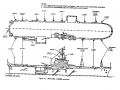
VSWR tells you little about actual power transfer to/from the air via the antenna. VSWR is a transmission line parameter. We ran 100's of feet of helix cable from the output of a antenna match (to match the transmitter output impedance, not the antenna impedance) that ran at very high SWR to fan and long wire transmission antennas from the top of the superstructure to lower levels and did the same with receive antennas. The helix cable was very low loss and could withstand huge levels of RF volts and current without skipping a beat.
1767459845440.png
1767459980513.png
First, see what it means with physical waves.

http://www.antenna-theory.com/tutorial/txline/transmission3.php
One thing that becomes obvious is that the ratio of Vmax to Vmin becomes larger as the reflection coefficient increases. That is, if the ratio of Vmax to Vmin is one, then there are no standing waves, and the impedance of the line is perfectly matched to the load. If the ratio of Vmax to Vmin is infinite, then the magnitude of the reflection coefficient is 1, so that all power is reflected. Hence, this ratio, known as the Voltage Standing Wave Ratio (VSWR) or standing wave ratio is a measure of how well matched a transmission line is to a load.
One thing that's important to remember about an antenna is how currents and fields reinforce in the out-going direction instead of cancel like in a transmission line to create a standing wave nodes on the antenna that combine with the propagating radiation to affect the wave impedance at that point in space near the antenna.

 
Last edited:

SamR

Joined Mar 19, 2019
5,472
The big buggboo is SNR, the signal to noise ratio. Noise is generated in many ways both manmade and natural. I used a Heathkit HW-101 tubed radio back in the 70-80s. Saturday mornings are peak time for ham radio operators. I once had to offer to replace the spark plug in a neighbor's lawn mower as each time it fired off on Saturday morning it would crash the radio reception with noise. That was a "noisy" radio and using it in the summer months on 40 & 80 meters was almost impossible due to atmospheric noise from lightning and cloud static discharges. Even so I worked the world with that radio. Radio specifications will include such measurements as sensitivity, selectivity, spurious signal rejection, ANF Automatic Noise Filter attenuation, NR Noise Rejection attenuation, all measured in decibels. To me they don't mean much except for comparison of one radio to another. My current solid-state and software derived signals rig is very good at attenuating and rejecting noise and operating on 40 & 80 meters in the summer is not a problem except the noise floor can be a bit higher than winter conditions. What does that mean? Radios usually have an S Signal meter. Scaled 1 - 9dB and then in red increments of 10dB over up to ~70dB over. Typical noise floor for me is ~3 on the S meter depending on frequency. Higher frequencies are quieter. And a real strong signal can be 20 - 30dB over. We give each other signal reports as to how well we receive each other's signal. It's a Readability and Strength RS report. Fully clear and understandable is a max of 5 and barely readable is 3. 1 is unreadable but hear something and 2 would catching bits of understandable signal. The Strength reading is the S-meter so a 5 by 9 report is clearly readable with a S meter of 9 which is about perfect. IF they are very close or using beams and an amplifier it can climb up to 20 or even 30dB over but anything higher is not usually seen unless it's your next-door neighbor with his amplified beam antenna pointing at your antenna. Then it's time to kick in the attenuator of the receiving radio.

All of this is dependent on atmospheric signal propagation and reception conditions and very importantly the amount of Solar Radiation the atmosphere is currently experiencing which depends on the time of day. Solar radiation Ionizes the Ionospheric layer of our atmosphere causing electromagnetic waves to bounce off of them and return to earth at an angle. Hence my signals don't just wander straight out to space but can even bounce back and forth a few times between the surface of the planet and the ionosphere layer allowing me to communicate with the "other" side of the planet from me I.E. Australia or receive broadcasts on short wave from China! Additionally, since we are talking about electromagnetic signals, the current magnetic properties of our planet also effect propagation. The book I mentioned earlier covers this and it is another subject entirely to itself. Let's just say that atmospheric conditions DO effect signal propagation and reception. So, the noise floor varies due to many factors from 1 - ~5dB for horrid conditions which is rarely but remember that the signal strength to noise ratio SNR is the key to reception. And due to the great filtering algorithms from SDR the receiver is superb at eliminating noise in my radio making it much easier to manipulate and ultimately hear signals received. SDR has been a real game changer in radio reception.

Signal-to-noise ratio - Wikipedia
Amateur radio - Wikipedia
 

Ya’akov

Joined Jan 27, 2019
10,226
Greetings. There is teachers with superb knowledge and not so good teaching skills; and teachers with excellent teaching abilities and not superb knowledge.

Today I want a gold medalist teacher with excellent teaching ability that can convey the knowledge clearly : Explain radiation resistance, return loss, power density, feedpoint impedance, standing wave ratio, reflection coheficient, radiation efficiency, pertinent for a receiving antenna. Yes, I do have search engines too.
Howdy. I thought I‘d give a shot at answering your question. Some of what I says might be redundant—I read through the thread but could have missed things. In any case here is my take on your question from an angle that I think might provide some inside.

I am not going to take your question in the order you asked it because of the various dependencies involved.

Feedpoint Impedance
One way of approaching your question is to use impedance as an anchor. It connects a lot of concepts.

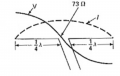
The feedpoint of an antenna varies with the frequency of interest. If we take the example of a center-fed ½λ dipole (for reasons that will become more clear) at an arbitrary frequency of 100MHz, and ignore, for sake of this discussion practical things like end effects, the overall length is about 1.5m, each leg being 750mm

1767542718626.png

The ideal impedance at the feedpoint is 73Ω. This is the point of the currrent antinode and the voltage node. That is, the spot at which the current standing wave is at its maximum and the voltage standing wave is at its minimum for 100MHz. It is the place where there is no reactive component.

For any other frequency, there will be either capacitive or inductive reactance. The determining factor is which standing wave—I or V—leads, that is, is greater at the feed point.

  1. Capacitive—I leads V, the case for an electrically short antenna (below resonance)
  2. Inductive—V lead I, the case for an electrically long antenna (above resonance)

So, for any frequency other than 100MHz, the antenna‘s impedance with shift from the expected 73Ω depending on the magnitude of the difference. This is true for any simple antenna, such as a dipole or monopole. You might expect to have find a good match at harmonics—such as 200MHz—but that‘s not the case due to the configuration of the standing waves at that frequency not matching the chosen feedpoint.

VSWR (aka SWR)
Voltage standing wave watio is a scalar value derived from reflection coefficient (Γ) quantifying the impedance mismatch. Γ is a complex ratio, while SWR is just a simple ratio making it useful (if a blunt instrument) for practical impedance matching. The name explains that is is concerned with voltage.

Practically, due to the way it is measured, it doesn’t matter if the V wave or the I wave is mismatched—the reactance is what is being measured. This does mean that SWR can only tell us the magnitude of the reactive component, not if it is C or L reactance..

SWR says nothing about the effectiveness of the antenna, only the impedance match.

Reflection Coefficient (Γ)
Reflection Coefficient describes the fraction of the signal that is reflected due to impedance mismatch. It is the basis for both SWR and Return loss.

Return Loss
This is a logarithmic measure of reflected power based on Γ (Reflection Coefficient): \(\text{RL (dB)} = -20 \log_{10}|\Gamma|\)
Perhaps non-intuitively, a higher return loss means a better match.

Radiation Resistance
This is a notional value that represents a resistor which, if placed at the feedpoint, would dissipate the same energy as the antenna radiates in free space (or for recieving, how much energy it couples from the field.) It is a model for effectiveness, not something practical. It can be used to compare the efficiency of antennas, but you can‘t measure it, only derive it.

I hope this is helpful. It is a complicated topic because the various terms are not really on the same footing, and there is a lot of confusion in more informal literature about it.
 

Ya’akov

Joined Jan 27, 2019
10,226
Antenna Reactance is a very deep rabbit hole...
The fundamental relationship of reactance to antenna length and feed point is extremely elucidating. It gives a decent intuitive path for reasoning about theoretical antennas that loosely maps onto practical antennas and can fit more closely coupled with some “rules” that don’t have the same intuitive flow.

But its true that antennas, in general, require a comprehensive grasp of the math that describes there behavior as soon as you move from an isotropic radiator in free space to a real piece of wire somewhere on earth.

I believe, though, that the apparent fool’s errand of trying to understand antenna behavior beyond the popularized aspect (e.g.: SWR, impedance matching, &c.) is actually very possible if you start with something deeper than “a resonant antenna with the right impedance at its feedpoint” as the essential character of a “good” antenna and go just a little deeper into what is happening electromagnetically with the transceiver-feedline-antenna system.

I am not a math person, much as I regret it. So I stick to basics in math and models that let me reason about these things. I came to find out that Faraday had the same disability and relied entirely on others to derive mathematical descriptions of his insights. We needed both Faraday with his amazing intuition and Maxwell with his sharp mathematical mind to advance electromagnetics.
 

nsaspook

Joined Aug 27, 2009
16,257
That main problem IMO with understanding antennas, Rf radiation, and EM is general is how basic electricity and then electronics is taught and explained at a young age. It's hard to rewrite the first impressions of calculations with circuit theory if you don't also realize what the limitations and conditions are for those calculations.

https://forum.allaboutcircuits.com/...ception-about-electricity.183285/post-1684952

https://www.physicsforums.com/insights/circuit-analysis-assumptions/
A recurring problem on PF is raised by students who may have learned about components and CA and wish to go a “little bit” deeper to understand electrical conduction. To make it worse, many are unwilling to go further with serious study and unwilling to deal with math beyond what they already know. Sometimes, the tip-off is when the student mentions electrons.

Fields are simplified in the very practical and useful circuit theory with no geometrical information to lumped circuit components with zero sized interconnects. No need for Mr Poynting in a traditional electronics education until maybe RF or high speed digital. For a traditional physics education where force and energy are basics Mr Poynting is talked about early and often.

 
Last edited:
Top