Longevity of a laser diode ?

Thread Starter

Externet

Joined Nov 29, 2005
2,624
Hello.
From what I learned, lowering the driving current can increase the longevity of a laser diode but cannot be less than the lasing current treshold that would turn the emission off.
First; do I have it right ?
Second, how to make a ~0.5 Watt optical-power green laser (pointer type or not) with proper cooling/heat sink run for a year in continuos mode CW ? Is there one capable of such duty ? Should the chosen be way underpowered to achieve longevity, like a 1 Watt laser running at half or less its rated power ?

What degenerates in the diode emitter that loses brightness/life/reliability/quality ?
 
Last edited:

nsaspook

Joined Aug 27, 2009
16,250
What degenerates?
https://comptes-rendus.academie-sciences.fr/physique/item/10.1016/S1631-0705(03)00097-5.pdf
7. Conclusions
Laser diode degradation is the result of the interaction between different intrinsic (material properties, crystal defects,
quality of the interfaces, . . . ) and external factors (packaging, bonding, temperature, injection current, facet coating, . . . ), which
introduce profound changes in the materials forming the active parts of the devices, with the result of a decrease in the quantum
efficiency. The many inputs that contribute to the degradation render difficult a full understanding of the physical processes
governing degradation. High quality heterostructures, free of defects with sharp interfaces and reduced stresses, and facets with
optimal coatings are required to guarantee long lifetime devices. The main degradation modes present specific defect signatures
for each type of laser.
In general, it's like most products, if you buy a quality diode, it will last longer in the same operational conditions.

https://www.digikey.com/en/articles/reliability-and-lifetime-of-leds
 

panic mode

Joined Oct 10, 2011
4,864
Any reason to run it in continuous and not pulsed mode? In pulsed mode current peaks can be large and still run cooler (depending on duty cycle)
 

Thread Starter

Externet

Joined Nov 29, 2005
2,624
Hi.
Just the suspicion (right or not) that pulsing can stress it more than continuously at lower power. Pulsing would have to be at visual persistence cycles to perceive as not, as would be in motion. The goal is reliable long life, not necessarily brightness, and never pushed to limits.
 

sparky 1

Joined Nov 3, 2018
1,218
Thermal and optic reflection impact junction while the power source cable can introduce inductance.
When the power goes off the energy held by inductance is released as a spike that hits the junction
compromising the junction material. Just lowering current as the junction becomes compromised is not enough.
After thermal and optics are addressed, It is the quality of the driver and wave type all of which best located near the diode that has
the most influence life expectancy when maintained at a reasonable current. The cost of a good CC adj supply for larger lasers are
$350 and up and do not address all the concerns. Inexpensive pcb laser 40 Watts with lens for small dot or trim capability is not designed to last.
Having said that an 80W run at half current and installing much better cooling might increase life. The system using mirrors might be better.
You get what you pay for.
 
Last edited:

panic mode

Joined Oct 10, 2011
4,864
what is the exact product (part number/datasheet)? what the application?
if it is sensing, pulsed mode has advantage as it allows differentiating and cancelling interference.
all diodes last longer when run at lower current. life is proportional to generated heat. this is how semiconductors are artificially aged to determine longevity. large current pulse may damage part so choosing something within specs is appropriate. but also modulating it allows further decrease in current.
 

MisterBill2

Joined Jan 23, 2018
27,180
Laser diode packages certainly do have a finite lifetime, and then the output level drops. So if anybody is stupid enough to keep the lasers on constantly when the system is only needed for an hour or two a day, they will certainly suffer the demise of the device.
And then the stupid fools complain that their expensive instruments no longer work, and the original source no longer produces the laser package that size.
So if you think that lasers last forever if you leave them constantly powered, that is an error. Possibly incandescent light bulbs MIGHT last longer, maybe, but diode lasers DO NOT. The result is that the systems that should have lasted 15to 20 years have stopped working after being on continually for five years.

So what sort of fool believes that it is OK to disregard the supplier's advice??
NOTE: If this sounds like a really bitter complaint about not following advice, that is exactly correct.
 

sparky 1

Joined Nov 3, 2018
1,218
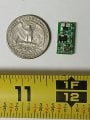
Variable Constant Current source for laser diode
other side is more populated, has Op amp, Vref, Transistor
potentiometer, resistors pcb will fit in a metal tube.
5 - 7V in, up to 200mA Adj output, cost about $6
without modifying it, is the current constant?
How many leds will this maintain until the temperature increases 5 degrees
Will the small CC board do 50mA what value multiturn pot will I need
and how can I compensate for 5 degree change.
Using meter measure current change
setting CC at 10mA increasing by increments of 10 to 50mA
while monitoring Temp.

My guess is the size makes it temperature dependent,
on the other hand the op amp and transistor latest revision
makes this an interesting test, What do the on/off transients
look like on the scope?

Any suggestions are welcome.

cc laser.jpg
 
Last edited:

MisterBill2

Joined Jan 23, 2018
27,180
First, neither laser diodes nor LEDs tend to have much of a starting current inrush like incandescent lights do. Thus any measured"inrush" is due to the driver circuit needing time to become stable, rather than the device itself. Thus a correctly designed driver circuit will avoid that problem. So the challenge is cost versus performance, a common area in designing almost everything.

The small PCB shown might be good enough, or maybe not, depending on variables we do not see.
 

sparky 1

Joined Nov 3, 2018
1,218
I needed to go back rethink the constant current from a more basic approach.
The laser cc supply likely uses a sense resistor, possibly the other op amp provides the 2.4V Ref. The output should be constant
as the battery voltage drops the current is maintained.

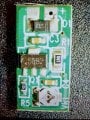
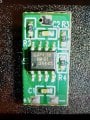
Below is the tiny CC laser diode source: side A and side B

cc laser B..jpgcc laser A.jpg


Side A has a D822 NPN 3A transistor, 10k pot. These parts suggest thermal compensation.
Side B has a dual op amp with 2.5V Ref AP4310 A AP4310A (diodes.com)
 
Last edited:

MisterBill2

Joined Jan 23, 2018
27,180
Aside from "everything else", the normal failure mode for semiconductor light emitting devices is that the output drops to some defined level below the initial value. So with the lasers in my product it was that the laser intensity dropped below the sensor trigger setting level. So a visual inspection would not reveal the actual failure. So the non-skilled service techs would dismantle the assembly and randomly replace parts, instead of declaring that they could not locate the problem.
 
Top