LM317 reg., input vs output

Thread Starter

oh_uh_okay

Joined Aug 24, 2025
47
About 15 years ago, I built several of these small TREAD power boards:
https://web.archive.org/web/20100611215224/http://tangentsoft.net/elec/tread/
https://web.archive.org/web/20100612020142/http://tangentsoft.net/elec/tread/misc/sch-v1.1.pdf
I am currently using one to power a phono preamp that needs 23VDC / 25mA.
The TREAD design is mostly based on LM317 datasheet suggestions.
For the AC xformer I am using I am using is a +/-15V 25VA Talema -- with 120VAC in, I get about 36VAC out.
On the TREAD, at TP1, I read about 45VDC, which seems a bit high for a little 317.
The main issue is that the 317 runs very hot unless one installs a large heat sink. The total mA draw at AC input (wall socket) is 40mA (about 3.8W) with pre-amp connected . And with the phono preamp disconnected, I still read about 14mA draw at AC mains.
Any way to make the TREAD run more efficient?


Above: Phono preamp with tiny TREAD in center of photo with LED.
 

MrChips

Joined Oct 2, 2009
34,649
Resistive power loss.

The input is 45 VDC. The output is 23 VDC @ 0.025 A.
The LM317 has to dissipate (45 V - 23 V) x 0.025 A = 22 V x 0.025 A = 0.55 W.
That is not excessive that a proper heatsink could not handle.

However, a switched mode power supply (SMPS), a buck DC-to-DC converter, will run lot more efficiently and will generate little heat.
 

WBahn

Joined Mar 31, 2012
32,730
With an input of 36 VAC, I would expect the output of your rectifier to be upwards of 50 V, so 45 V is very much in the ballpark. So if that seems like too much, why are you doing it?

The max input to output voltage differential is spec'ed at 40 V, so if your output is set at 23 V, you are well within the recommended specs -- provided you have adequate heat sinking.

If you are drawing 40 mA from 120 VAC, that's 4.8 W, not 3.8 W. That heat has to go somewhere. You are dropping about half your voltage across the regulator, so about half of the power is going to be dumped by it, or about 2.5 W. I don't know what case you are using, but even if it's a TO-220, you can expect to see a significant temperature rise, something on the order of 60°C or more.

Why don't you want to use an appropriate heat sink?

Now, your numbers aren't making a lot of sense.

You say that you are drawing 40 mA from the wall socket (and I'm assuming that's RMS). You have a transformer that looks like it's stepping down at a ratio of about 3.33:1, so the current being drawn from the output is about 133 mA. Yet you say your load is spec'ed to be satisfied with no more than 25 mA. So where is the rest going?

You need to make better measurements to find out just where the current is going in order to know why you are dumping so much heat and what you can do about it.

Once that's resolved, you can transfer heat from the regulator to upstream components using either resistors or diodes of some combination.
 

Jerry-Hat-Trick

Joined Aug 31, 2022
789
Maybe just use a similar transformer with +/- 10V secondaries? Or use an LM2596 buck converter which can accept an input voltage of 45VDC. Ready built modules incorporating the LM2596 are widely available at low cost. If you really want a really low ripple which the LM317 can provide, let the buck feed the linear regulator by adjusting the LM2596 output to 3V above your required 23V so the LM317 won’t need a heatsink
 

Thread Starter

oh_uh_okay

Joined Aug 24, 2025
47
The TREAD was meant as a small-footprint replacement for a larger kit called STEPS.
https://web.archive.org/web/20100611215018/http://tangentsoft.net/elec/teps/

If you look at my photo, you'll see the STEPS board with the xformer. The STEPS also uses much of the the same core topology of the TREAD. So STEPS is also based on LM317, LT1086CT, etc.
https://web.archive.org/web/20100612015526/http://tangentsoft.net/elec/teps/misc/steps11-sch.pdf
I did not populate the STEPS board much farther than the xformer, so I'm just tapping off the step-downed AC.
Yes, the ideal solution would be to use an xformer with lower VAC.
tangentsoft.net is run by an audio diyer that got some attention two decades ago. I think he removed many of the projects from his site (hence the Archive links) because of issues such as the one I described.
Why don't you want to use an appropriate heat sink?
I did increase the size of that small sink in the photo, to a larger sink, a few days ago.
In any case, I prefer efficiency, but still want a clean, linear supply for sensitive kits like phono electronics.
For taking metrics, I just use a Killawatt ; or break the ckt and measure the current with a Fluke 87.
 
Last edited:

crutschow

Joined Mar 14, 2008
38,349
The transformer appears to have to two 15V labeled windings with apparently about 18Vac output each.
If you connect the two windings with the center grounded, you can build a 2-rectifier, full-wave configuration which should give you over 24Vdc out using Schottky rectifiers.
You should then be able to get 23Vdc output using a low-drop-out (LDO) type regulator.
For example, Microchip has many LDOs with only a few hundred mV dropout voltage.

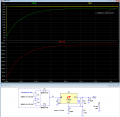
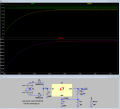
Edit: Below is the LTspice sim of such a circuit using a 1V dropout regulator I had a model for:
Likely better is one with only a few hundred mV dropout.
(One could be built with <100mV dropout using a PNP or P-MOSFET power transistor and a TL431 programmable reference, if desired. Circuit upon request.)

1775837532276.png
 
Last edited:

Irving

Joined Jan 30, 2016
5,024
If you connect the two windings with the center grounded, you can build a 2-rectifier, full-wave configuration which should give you over 24Vdc out using Schottky rectifiers.
You should then be able to get 23Vdc output using a low-drop-out (LDO) type regulator.
The doesn't give much scope for regulation if you allow for +/-15% tolerance on AC input voltage. Assuming 18v rms is nominal, the low side would only be 15v rms, a tad low maybe?
 

crutschow

Joined Mar 14, 2008
38,349
The doesn't give much scope for regulation if you allow for +/-15% tolerance on AC input voltage.
I'm going by the voltage he measured at the transformer output.
He has 120V, 60Hz AC, which means he's likely in North America, where the voltage is usually more tightly regulated than that.
 
But the simplest solution by far is a heatsink. As explained in post #2 the LM317 only has to dissipate 0.55W and if it gets too hot it will just shut down. In free air without a heatsink it may cope with up to 1.0W but a heatsink makes sense in case you touch it! Just using a short length of flattened copper pipe would do
 

crutschow

Joined Mar 14, 2008
38,349
Line voltage does swing a bit, and can dip to 114VAC at times.
If you line voltage actually does that, than my proposed scheme likely won't work.

Anytime I've measured mine at my house it's always with about a volt of 120 unless there's a heavy load on the circuit.
 

AnalogKid

Joined Aug 1, 2013
12,066
I am currently using one to power a phono preamp that needs 23VDC / 25mA.
23 V is a strange number. Plus, that is a *lot* of headroom for a phono preamp, no matter what the circuit is.

What is the actual operating voltage range on the datasheet/product sheet?

Link to product page?

ak
 

WBahn

Joined Mar 31, 2012
32,730
But the simplest solution by far is a heatsink. As explained in post #2 the LM317 only has to dissipate 0.55W and if it gets too hot it will just shut down. In free air without a heatsink it may cope with up to 1.0W but a heatsink makes sense in case you touch it! Just using a short length of flattened copper pipe would do
The TS says that the circuit is pulling 40 mA from the 120 VAC source, so that's 4.8 W. The 0.55 W is based on the load drawing 25 mA, so that's less than 0.6 mW delivered to the load. If the regulator is dissipating 0.55 W, where's the other 3.6+ W being dumped?
 

jaclement

Joined Apr 15, 2009
60
I'm pretty sure you don't need precisely 23 volts on a preamp circuit. If you run the tansformer as full wave centertapped, and use shokley didodes you could run the 313 at a lower voltage and the preamps should work fine. you could still get about 18 volts regulated with little powewr dissapated in the 317 .Since you alreadey have eveything but the diodes in the pictor ,give it a try.
 

AnalogKid

Joined Aug 1, 2013
12,066
The TS says that the circuit is pulling 40 mA from the 120 VAC source, so that's 4.8 W. The 0.55 W is based on the load drawing 25 mA, so that's less than 0.6 mW delivered to the load. If the regulator is dissipating 0.55 W, where's the other 3.6+ W being dumped?
Some in the rectifiers, more in the transformer. The coils and core are encapsulated inside a die-cast heatsink-design housing for a reason.

ak
 

WBahn

Joined Mar 31, 2012
32,730
Some in the rectifiers, more in the transformer. The coils and core are encapsulated inside a die-cast heatsink-design housing for a reason.

ak
So... 75% of the power is being lost in the rectifiers and transformer????

If the current in the primary is 40 mA and the step-down ratio is 3.33:1, that means the secondary current is about 133 mA. If only 25 mA is going into LM317 and then to the load, where is the rest of it going?

Or, coming from the other direction, if only 25 mA is being pulled out of the rectifier to power the regulator and load, then ignoring losses, that primary current would be about 7.5 mA. Why is it drawing 40 mA (more than 5 times as much).

Accepting that the transformer has losses, does it really make sense that instead of the current being stepped up by a factor of 3.33, it is actually stepped down by a factor of 1.6?

Small power transformers are typically in the 60% to 75% efficiency range. Not the 25% range.
 

Thread Starter

oh_uh_okay

Joined Aug 24, 2025
47
23 V is a strange number. Plus, that is a *lot* of headroom for a phono preamp, no matter what the circuit is.

What is the actual operating voltage range on the datasheet/product sheet?

Link to product page?
It's a typical Chinese clone kit. About $60 USD total. A gazillion of them on Ali and eBay. Often, the Chinese "rip off" western audiophile brands, like Naim and McIntosh, and offer decent, ECONOMICAL diy kits.
https://pinkfishmedia.net/forum/threads/naim-fully-discrete-phono-amplifier-mm-riaa-diy-kit.301680/
https://www.ebay.com/itm/135268337080

Plus, that is a *lot* of headroom for a phono preamp, no matter what the circuit is.
Huh? ! I guess the "Kid" in "AnalogKid" means you're still in analog nursery school.

On the chalkboard:

Phono preamps often have that much voltage headroom or higher. A Radio Shack $20 phono preamp (1980-87) uses this topology:

https://www.audiosciencereview.com/...-review-vintage-phono-stage.19624/post-645626

I'll let y'all guess why phono preamps need that much headroom.
 

MrChips

Joined Oct 2, 2009
34,649
Headroom in an audio amplifier and headroom in a linear power supply are two different things.
Don't conflate the two.
 

Thread Starter

oh_uh_okay

Joined Aug 24, 2025
47
Headroom in an audio amplifier and headroom in a linear power supply are two different things.
Don't conflate the two.
Well that's an excuse outta directly answering the headroom query if I've ever heard one. But maybe you're excused because AAC is not really an audio-specific community. Do you want us audiophiles to take our business elsewhere?
 
Top